Sometimes. Technology is very path-dependent; to invent z, you need to have invented w, x, and y first. And even with infinite resources that takes time. We’ve been working on fusion for half a century and it might be ready in another half century. Will more investment help? Yeah, but tokamaks take time to build, and you don’t know how to build the next tokamak until after you’ve done all your experiments with the current one. You can’t have iPhones in 1986 no matter how much money you throw at it because the underlying processor and battery tech isn’t there.
Possibly relevant, given your choice of fusion as an example, is the somewhat famous graph from the 1976 U.S. Energy Research and Development Administration report on nuclear fusion[0]. We're obviously looking at a number of projections and can't know whether they were right or wrong, but it is noteworthy that we're not even pursuing a plan we believe will ever lead to nuclear fusion ("fusion never").
[0]: https://commons.wikimedia.org/wiki/File:U.S._historical_fusi...

Wikipedia, citing "Ward (2005). Dr. Space: The Life of Werner von Braun. ISBN 978-1-591-14926-2."
> Apollo program director Sam Phillips was quoted as saying that he did not think that the United States would have reached the Moon as quickly as it did without von Braun's help. Later, after discussing it with colleagues, he amended this to say that he did not believe the United States would have reached the Moon at all.
Wernher von Braun worked on rockets since the 1930's, inspired by the writings of Hermann Oberth, whom he later worked with at Peenemünde. The first V-2 rockets were launched in 1944. Von Braun continued working on rockets continuously until he retired in the 1970's, after working on the Apollo program.
Electricly powered vehicles existed before the American civil war, it’s taken until now for them to have any hope of success in the market.
Funding a fusion program would be like buying a car while your license is suspended.
Also, fusion could be orders of magnitude more efficient than fission, to the point where we can solve literally all of our sustainability problems just by throwing energy at the problem. Too much CO2 in the atmosphere? Build a factory that uses electricity to extract CO2 from the air, combine it with water, and recycle it back into hydrocarbons. Not enough water? Build desalination plants--the only reason we don't is because they're energy-intensive and energy is expensive. Need a sustainable source of nitrogen-based fertilizers? Extract nitrogen from the air. Batteries don't store as much energy as hydrocarbons? Manufacture EVEN MORE hydrocarbons out of the air and water and then use them to power your airplanes, in a closed-loop system where you're not even increasing the net amount of CO2 in the atmosphere.
You can make a great sustainability case with fission. With fusion, you can make an incredible sustainability case and take away all of the fears involved. And by the time we get around to inventing it, odds are we're going to be fucked enough not to have any other choice but to adopt it.
A lot of what Tesla has been doing is low hanging fruit. Supply chain optimization. Industrial design. Roboticization. These things aren’t science, they’re engineering. They’re applying known principles to the litany of problems an electric car entails.
There’s not much new science in a Tesla. Most of it could have been done years ago. There is some iteration required of course, but that’s why starting earlier would’ve made a difference.
But later, these oil mafias systematically destroyed that to the extent that many people in US believe that climate change is fiction.
My point being, sustainable sources of fuel are being either systematically undermined or for the lack of interest.
if we did not have $$$ from the oil interests against these alternate fuel then just imagine how much R &D would have happened till now!!
Even Nicholas Tesla had an electric car's design back in the 1800s, if that tech had been evolved to say Hydrogen fuel or ethanol or anything that doesn't shoot down our atmosphere then things would have been remarkably different now.
So, yes, there is a path dependent approach to science and technology, but for alternate fuel, the path was made ugly by $$$ from the oil interests
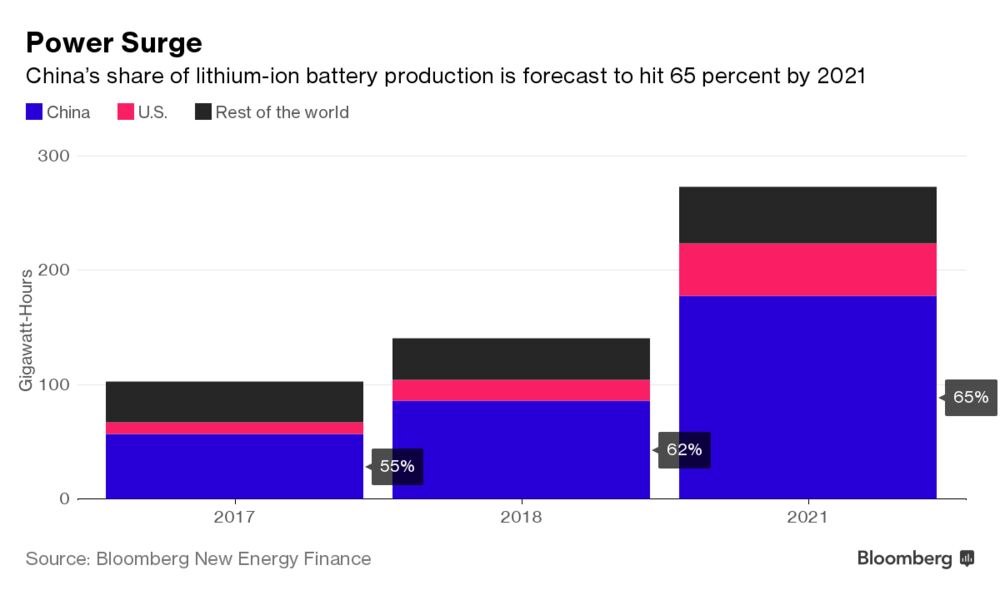
If what you said was true, only Panasonic would have cheap batteries. Not lg and Samsung.
Imagine an alternative reality where fast wireless communication was omnipresent and laptops developed as dumb terminals which used little power. Battery technology might be where it was 40 years ago. It's also possible that, in 50 years, people will look back at the Tesla of today as stupid and foolhardy - striving to make electric cars with stone age battery tech, when a revolution in 2025 changes everything.
Car companies are not in the business of advancing technology but making money. They will advance technology if they can sell more cars. Now with Tesla they have to respond and are slowly doing so.
Musk's motivation is technology for technology's sake. That's a totally different motivation than traditional car companies and that's the reason why Tesla is ahead in technology. It remains to be seen who ends up ahead in terms of business success.
This said, continuing to throw money at a problem such that it leads to more and more people developing a skill set in the space would overtime help, but then again, they could reduce the amount of investment down the line, and you'd still have people who were highly specialized in said domain to target that problem anyways (abet being paid less).
The reasoning "batteries are expensive" is circular.
As Musk said, technology doesn't advance as a function of time but as a function of R&D investment. See atomic bomb or space race for the most dramatic example of how throwing money at the problem compressed the timeline.
Car batteries did not get cheaper because 2 years passed but because Tesla and Panasonic invested 5 billion dollars in a giant batter factory. And by creating a demand for lots of batteries, there's incentive for many others to invest in researching better batteries. And before that, cellphones and laptops were driving investment in battery research.
I see no reason why all this couldn't happen 10 years ago if car makers invested a sliver of their profits into electric car R&D instead of, you know, putting it all in Diesel and then writing software to cheat emission numbers.
And as a corollary, if Tesla didn't push the whole field forward with giant investments, BMW would be "objectively" saying in 2030 that batteries are too expensive to make electric cars viable.