I'm not sure I understand what you're predicting exactly. The big breakthrough of bitcoin is having a globally shared ledger without requiring any trust. In my experience most relational databases have a relatively straightforward trust model (i.e. the DB belongs to the organization using it and is fully trusted). In these situation the blockchain is completely overkill and unnecessary as far as I can tell.
There are cases where one might want to distribute the database for redundancy or archival (like the contents of Wikipedia for instance) but in this case you trust the original issuer and you only need to be able to validate the authenticity and integrity of a copy which can be easily achieved by having Wikimedia signing a hash (or merkle tree) of the dump. All these technologies are involved in the blockchain but they're not innovations. Basically you have bitcoin minus the mining, so just a fancy linked list of SH256 hashes.
On the other hand if you have a use case where you want to arbiter a database across untrusted people then you must make mining rewarding enough that you reach a critical mass that makes attacks impractical. I can't imagine how you could do that without the "coin" part. People mine cryptocurrencies not because they want to protect it but rather because they want to make a profit out of it. Remove the mining rewards out of Bitcoin and watch as the mining power collapses to a tiny fraction of its current value. If you want to protect your distributed Wikipedia article history and there's no direct monetary reward for it I doubt you'll reach a very high hash rate which will make it relatively easy for a dedicated attacker to rewrite history.
The "coin" moniker is not just a lack of imagination by people working with this technology, it's an integral part of why it works in the first place.
General bookkeeping and shared transaction logs that improve trust and transparency. Improving trust don't always require massively distributed ledgers. Just sharing them with counterparty and having mutual cryptographic agreement is enough for many applications.
Hopefully we do leave the laughable ICO era behind, and even if traditional relational databases get cryptographic features, but I feel the sum of capabilities the new technology can offer is larger than that.
I'm unsure if incentives (the coins) must be a part of every application of this technology. I was open to thinking that it might not, but recently saw this presentation from a Andreessen Horowitz's partner [1] where he strongly asserts that yes, it must, and I'm thinking he might have a point.
Large part of financial innovation in the last century is based on the idea that is now called coin. It's called derivative.
If you have something valuable that can be traded, it can be made into derivative and traded in existing markets. Practically anything, physical things, electricity, indexes, future events or prices, insurances, storage capacity, contracts, mortgages, price differences, ... only the sky is the limit.
New technological solutions can hopefully expand this existing trend but it's already very efficient.
Nitpick, though an interesting one. What you are describing is "securitization" more so than a derivative.
There are essentially five things you can do in finance: move cash flows in time (e.g. lending), move them between holders (e.g. buying and selling shares), chop them up into securities (e.g. an IPO), assemble them into portfolios (e.g. CDOs) and write derivatives against them (e.g. insurance). The newcomer is securitization. It first arose in 900 CE in the Song Dynasty in common memory through the 1602 Dutch East India Company public share offering.
ICOs look like a combination of the first (buy a token now, redeem it for services later) and third (they look like shares, though what exactly we're chopping up continues to evade me). Bitcoin itself looks like number two minus any cash flows. Or, more simply, gambling.
Bitcoins are derivatives for the blocks in the blockchain. You find a new block and you have a coins. Bitcoin value depends on the value of the underlying, the blockchain network.
* sigh *
You can't math something into having value.
Bitcoin is structurally deflationary fiat, but it's still fiat. It's not scarce if no one wants it.
Why would people want it? Possibly because mathematical limits suggest it's going to be a store of value -- people want gold because of a kind of civilization-scale madness. But Gresham's law might just kick in, everyone hoards bitcoin to the max and then it has no value because it has no liquidity.
Thus the value of bitcoin is either zero or infinity.
Agreed, though with the caveat that this is for transactional systems closer to the settlement/long term storage layers where the added assurance is useful. The performance hit for a traditional (linear) log is too large otherwise... though you can do a causally consistent version instead to reclaim some of the performance. But for more analytical workloads, I doubt it.
I'd actually go one step further and predict that in 3-7 years we'll start seeing early-stage startups, in fields completely unrelated to blockchains, using a smart contract enabled enterprise (private) blockchains for the majority of their backends... dropping most of the backend application layer (currently filled by django/rails/etc) in favor of a Vue/React <=JSON=> private blockchain arch.
The _reason_ such a shift might make sense is what you get in return:
- distributed w/ BFT (no _there's a problem with one of the nodes in the etc.d/consul cluster and its down/screwy_ problems)
- complete commoditization of high availability + disaster recovery
- good enough un-sharded write performance (a few 1000 tx's a sec) with unlimited read performance (writes are the expensive part)
- high-security env comes for free
That being said, the current state of smart contracts (specifically solidity but also plutus and tezos') makes this prediction laughable as, at the moment, writing/writing safe blockchain apps is quite difficult. However, if something _like_ Kadena's Pact (disclosure: am founder) finds traction it doesn't look too crazy.
Something like a procedural SQL for key-value DBs + capability-based auth + native REST support... which Pact effectively is when you strip away the blockchain context.
Given that the language is designed for safety and for technical executives/lawyers to be able to read if not write (similar to Excel's/SQL's usability by non-devs) it's stupid simple for a dev to learn. For example, a toy TodoMVC (Vue+Pact): https://github.com/kadena-io/pact-todomvc. Moreover, when you write a contract in Pact you get, for free, a REST API (pact types have native JSON reps) + an RDBMS representation. As if that weren't enough, it has a H-M type system (opt-in) + formal verification.
The only way this prediction can happen is if the smart contract language is far more effective at traditionally app-layer roles (e.g. django, rails). I'm not sure if it'll ever come to pass, but the combo of trivial to learn (and thus hire for) + abundant safety + formal verification could be enough to achieve it.
I second that.
I understand blockchain and cryptoeconomic angle better than I understand the current system and I suspect that it's the same with you. When I talk to people who understand current finance systems, including clearing and settlement I think my own enthusiasm is party based on my own ignorance of what already exists.
I would gladly spend time explaining this over and over again but it seems all my comments are downvoted so I'm not motivated to provide free content on hacker news.
So how about spreading some light?
https://medium.com/@jpa_of_snc/blockchain-the-revolution-wil...
https://medium.com/@jpa_of_snc/ethereum-the-machinery-of-cha...
edit: at least you could read the definition of cryptoeconomics....
I do however think blockchains are an excellent, useful concept. Verifiable, non-repudiable, write-only audit logs are a fine idea and I can think of many uses for them. I've never heard a reason why they need to be run on inefficient, unscalable, power-hungry, untrusted, adversial public networks, however.
It's true that they could be done with a standard DB which would be managed like most of the other public / government IT throughout the developing world. The key to understanding the use cases is to look at the blockchain capabilities one by one and see where Ghana benefits from having a hard to modify public database.
If there is any subject that you would like to see developed or answered feel free to let me know. I usually write my articles as a way of responding to FAQ I receive in my consulting business.
I am very much on board with that idea. I work in finance and write-only is practically a law. I just don't see why you need ethereum to implement it; in fact it seems a terrible, overly complicated way to do it.
It is good though that the blockchain hysteria is inspiring governments to think about these concepts though.
On your disclosure - despite my criticism they are good articles and do get one thinking.
This to say, we could debate the relative merits of any solution so I'll simply say that transparency is a powerful tool in most government use cases. Ethereum was just a tool.
Thank you for the compliment!
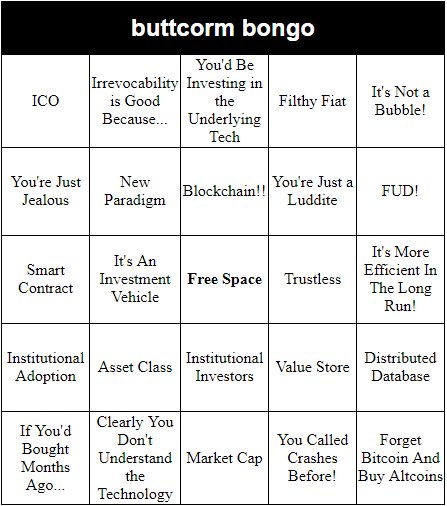
Try something different; show me that you know how a blockchain works and you understand the purpose of the tokens.
The first is the blockchain, which is a technical innovation that allows a client to decide which version of a shared event log to trust, even if it doesn't trust any of the servers attempting to perform the update. The ELI5 version is that the record that took the most total work to generate is correct. Since generating a fraudulent record requires doing more total work than was done to generate the correct one from the point of the fraudulent change forward, creating a fraudulent record quickly becomes computationally infeasable as changes get older.
The second are cryptocurrencies, which are an attempt to mint a currency (a literal, if not physical, coin) independent of any government by, essentially, reintroducing the gold standard. Except instead of gold we're using blockchains, which it turns out can be engineered to behave economically like precious metals do under the right circumstances.
Separating the two concepts, and specifically avoiding putting on your engineer hat when you're thinking about the half that's more political manifesto than anything else, will go a long way in helping you get a toehold on what's going on.
But at the same time, without having that race to have the most mining power, the argument that it is computationally infeasible to change the blockchain becomes incorrect. There is now no guarantee that the amount of 'work' currently keeping the network going is actually enough to be computationally infeasible to change if someone buys enough computers.
Bitcoin technically doesn't guarantee the last detail either, but by paying miners it becomes worth it to them to keep buying the fastest hardware and most hardware they can.
For example, imagine banks wanted to replace their clunky old ACH system with a blockchain. They could design their protocol such that it refuses to process transactions from or to an address that hasn't contributed a block to the chain in, say, the last 24 hours.. That requires each bank to contribute some minimum amount of computing power to maintaining the chain, even though it doesn't directly reward them for it.
(I've spent literally 2 minutes thinking through this example. I'm sure it has some glaring holes in it. Still, I hope it illustrates the point.)
But that is pretty much exactly my point. All that does is encourage people to mine just enough to keep the chain going, which does not ensure the security of the chain. There is no incentive to mine more blocks then anybody else.
With that said, I think the exercise is a bit futile to begin with - if banks have a serious dispute between them, they're going to handle it in the courts, so at the end of the day the existence of the blockchain only serves the purpose of holding the transactions and hopefully allowing then to be done faster and more efficiently. Which, a regular database could do just the same - you could even use Merkle tree to hold the data to ensure you could verify that older data has not been changed (By having banks keep their own synced copy of the database). Basically a blockchain without the mining. It requires a certain amount of centralization, but since the only parties are banks it wouldn't be extremely hard to handle that part. Which, you could technically still call this a blockchain, but without the mining and a decentralized way of deciding which chain is correct I think that's a stretch for what most people think when they're talking about blockchain. Specifically, per your definition, the blockchain requires some type of PoW/proof-of-whatever and a decentralized consensus, which this doesn't have.
And the above isn't actually all that theoretical. Ripple is a blockchain without a coin, but they fix the mining problem by not having any mining at all and instead having a central blockchain that they control. It's basically just an immutable database. So again, per your definition, they aren't really using a blockchain at all. And I'm not saying I disagree with your definition, but currently there are no examples of a decentralized blockchain using PoW that doesn't use a coin, even though there's basically everything else in-between.
I'm honestly not convinced that that there are really any situations that don't involve a coin where the blockchain with mining is a viable option, and where there aren't any better alternatives that would make more sense.
If you are serious about learning cryptoeconomics please feel free to ping me and I'll help in any small way I can.
This quote was in that NYT "Everyone's Getting Rich.." article:
The tone turns somber. “Sometimes I think about what would happen to the future if a bomb went off at one of our meetings,” Mr. Buttram said. Mr. Hummer said, “A bomb would set back civilization for years.”
There's too much of that exaggerated thinking.
The value of the token increases with the number of people who participate in the network (Metcalfe's ...) and due to speculation on the underlying value of having trust and consensus without a centralised authority.
The problem with centralised authority is that, despite the very best intentions of those involved, the centralisation of power reduces the overall ability of a market to operate freely, and the blockchain is the product of Anarcho-Capitalists who believe markets should be free from any central power.
A move from paper copies to a digital format would already be a good enough solution, which I think is your point, but here there is an opportunistic use of a single tool to avoid the costs of a couple of servers with remote backups times the number of locations needed for full coverage.
edit: I was responding to the wrong thread but I'll leave it anyway. This refers to the use of blockchain for land registry in Ghana.
Cryptographically verified distributed log files should have negligible hype value and be hidden part of the infrastructure. I predict that 10 years from now normal relational databases have infrastructure for shared, authenticated and verified rows and columns and we laugh at the ICO era.