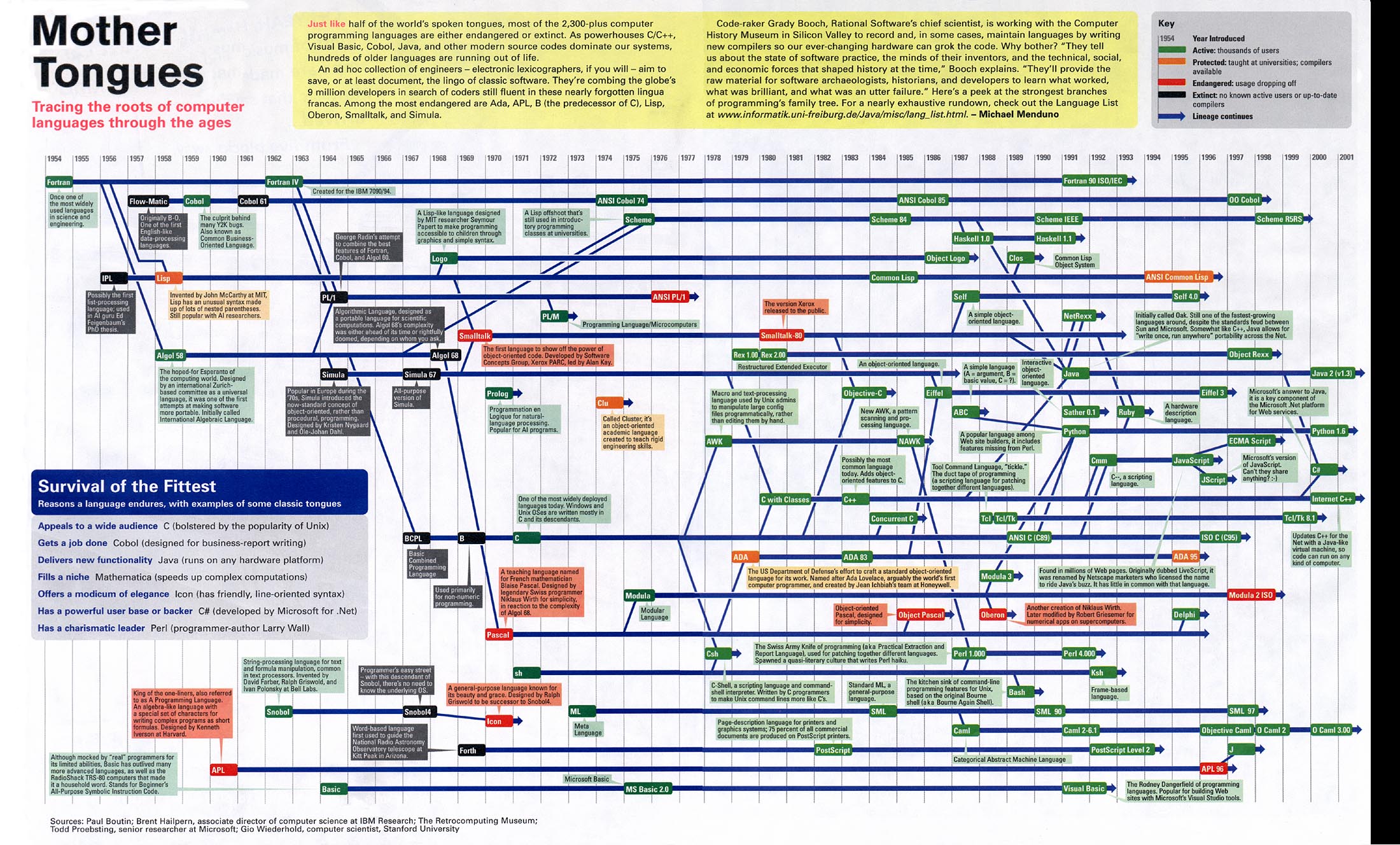
The buck stops somewhere, the history is not that long - if you trace all the ancestors and key influencers of a single language, that's generally 10 at most; and if you trace another language, half of them will overlap.
You can't really skip that step anyway, it's not like you can make an informed decision about a particular syntax feature if you haven't taken a serious look on how that feature works or doesn't work in a dozen languages; and the more obscure languages tend to be very useful in this regard because they explore a larger variety of features and their combinations. Getting a short overview of syntax of at least some 25 languages would be a reasonable prerequisite before designing another one, and that overview would still be the easy and straightforward part.
There's a family tree of languages here: http://www.digibarn.com/collections/posters/tongues/tongues....