Re:What happens after a defendant is found not guilty by rea...
by JumpCrisscross on Wednesday September 27, 2017 @04:55PM
(#15352260)
I believe violent versus non-violent crimes should be treated distinctly in terms of evaluating (a) rehabilitation and (b) future offense odds. For non-violent crime, I think rehabilitation is the answer. For violent crime, I'm more comfortable with a model that involves sequestration, i.e. keeping the offender separate from society until their risk of re-offending falls suitably low.
[ Parent
| on HN ]
Re:What happens after a defendant is found not guilty by rea...
by jrochkind1 on Wednesday September 27, 2017 @05:09PM
(#15352376)
I'm not sure prison is likely to lower anyone's risk of re-offending, alas.
Re:What happens after a defendant is found not guilty by rea...
by elevensies on Wednesday September 27, 2017 @05:23PM
(#15352477)
It may lower everyone's risk of re-offending by making them older when they get out: https://www.statcan.gc.ca/pub/85-002-x/2016001/article/14309... (via https://www.statcan.gc.ca/pub/85-002-x/2016001/article/14309... )
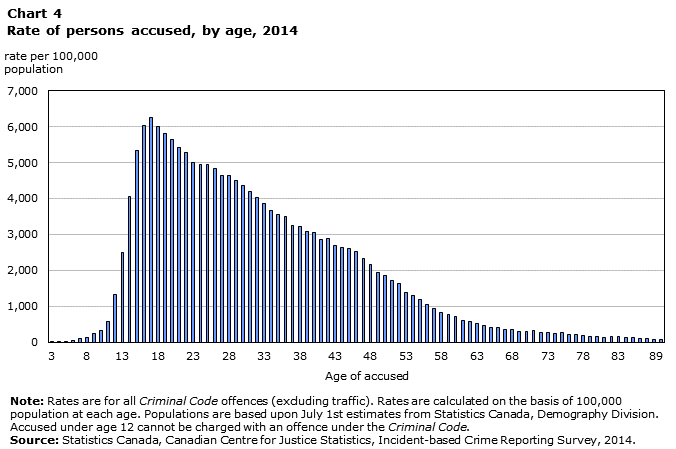
Although I guess it would make more sense to be looking at a chart of 2nd offences.
Re:What happens after a defendant is found not guilty by rea...
by JumpCrisscross on Wednesday September 27, 2017 @05:49PM
(#15352648)
This is what I was getting at. Keep them sequestered until they’re statistically unlikely to cause further harm. This doesn’t work if you’re locking up pot smokers. It does if you limit long-term prison sentences to violent offenders (and maybe corruption).
Re:What happens after a defendant is found not guilty by rea...
by nybblet on Wednesday September 27, 2017 @05:11PM
(#15352388)
The comment is not saying that prison will lower the risk of re-offending, but that it will lower the risk of impacting other people until the risk of re-offending falls suitably low (e.g. due to other means like treatment).