Your use of "teaches" here implies that violence/imprisonment or the threat thereof teaches (if no mandatory charity teaches people that being uncharitable is okay, I assume you mean mandatory charity through taxation teaches people to be charitable?). That certainly isn't a given; how do you know whether people have been taught to be charitable by the threat of violence/imprisonment vs they're only paying taxes to avoid being imprisoned? If you beat a child for swearing, has the child learned that swearing is bad, or or has the child just learned to avoid swearing in front of the parent to avoid beating? I'd argue that one thing it definitely teaches is that violence is an acceptable means of making others do what you want, and to me a person who believes this is far more terrible than a person who's just too cheapskate to give charitably. Millions more people have been killed in the past century by people using violence to compel others and people supporting such ideas (e.g. Stalin, Mao, Hitler and their armies, even the politicians who forced people into the army via the draft) than have been killed from neglect (the 20th century war & genocide death toll far outstrips the death toll from starvation).
>Then, since everybody will be using their own money to pay the "help the disabled" tax, it's a good deed to mandate by law that everybody has to fork out.
Is a good deed a good deed if done unwillingly?
>That would be irrelevant if the desired outcome is to effectively help the disabled, rather than to test honesty of people's charity.
If people are free to donate as they choose and none chose to support the disabled, wouldn't that in fact show that society doesn't really care about helping the disabled anyway? In which case what's the justification for a law forcing something that few in society want? Conversely, given so many people do seem to care about the welfare of the disabled, why wouldn't they express this through charity?
It's not about knowing what each individual motives are though, it's about society setting X (we help the disabled) as a norm, rather as something that one may or may not decide to do.
In the end, some people might not like it, but more people will see it as a default/norm/baseline than in an opt-in society.
>Is a good deed a good deed if done unwillingly?
Yes, since again, the good is not in what it means for the one doing it, but in the good it does to the one receiving it.
>If people are free to donate as they choose and none chose to support the disabled, wouldn't that in fact show that society doesn't really care about helping the disabled anyway?
Yes, but there's nothing fatalistic about how a society "feels" (statistically) and what it cares about. Societies can be changed, and having helping as the default (and someone can always opt-in to help more), helps in establishing that kind of "help is good" change in my opinion.
>In which case what's the justification for a law forcing something that few in society want?
Well, what if few, including the black votes, (say, 10% of the 80% whites + 20% of blacks, so 70 vs 30) wanted the blacks to be free?
I would still justify such a law that goes again what the majority wants. Who gets to decide in general in such cases? That's a tricky question, but if it was up to my to decide, I'd decide in favor of that in that case.
>Conversely, given so many people do seem to care about the welfare of the disabled, why wouldn't they express this through charity?
Well, there's nothing stopping them to do so on top of state and structural assistance.
This is a supposition. I could suppose that (and I've certainly read this somewhere) actively giving to charity encourage people to give more; giving is like a skill, generosity is like a muscle, growing with practice. If giving is abstracted out to the state, if people think "I don't have to give to charity, my taxes give enough", people are deprived of that development. Who's supposition is more correct? I don't know, but it's not something that can be decided based on theory alone.
>Well, what if few, including the black votes, (say, 10% of the 80% whites + 20% of blacks, so 70 vs 30) wanted the blacks to be free?
>I would still justify such a law that goes again what the majority wants. Who gets to decide in general in such cases? That's a tricky question, but if it was up to my to decide, I'd decide in favor of that in that case.
The difference here is, if you have a society/governance structure that rejects the notion of using violence to enforce certain beliefs on others, there'd be no mechanism for keeping people in slavery. A society rejecting violence in the absolute sense would barely even support notions of property, yet alone slavery. The difference stems from the fact that neglect is a passive harm; if the person doing the neglect didn't exist, the neglectee wouldn't be in a better situation. If the man watching the downing man didn't exist, the drowning man isn't more likely to be saved. Violence is an active harm: if the person doing the violence didn't exist, the victim would be better off (at least from the victim's perspective); if the slaver didn't exist, the slave would be better off.
>Conversely, given so many people do seem to care about the welfare of the disabled, why wouldn't they express this through charity?
>Well, there's nothing stopping them to do so on top of state and structural assistance.
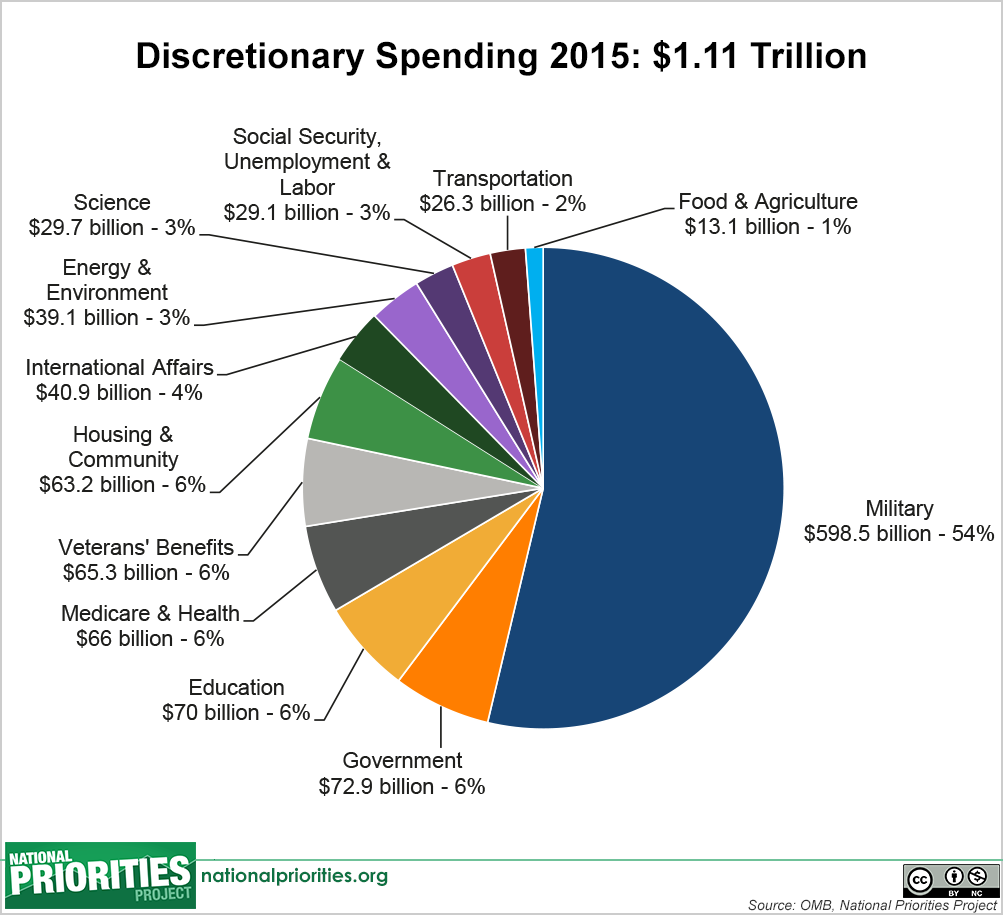
And people do give quite a lot. According to https://givingusa.org/giving-usa-2016/, Americans gave 373 billion in 2015. With a lower tax burden, people would have even more to give. https://media.nationalpriorities.org/uploads/discretionary_s... shows that in 2015, 54% of American government spending was military spending. Do you think if individuals had more choice over precisely how to spend that money, they'd put so much into the military?
Slavery is based on using force to have others do your work, serve your interests -- not in enforcing certain beliefs in others. So it's not enough to have a "a society/governance structure that rejects the notion of using violence to enforce certain beliefs on others", but also to have a society that it or individuals also don't use force to serve their private interests.
While looks unlikely. How would such a society would enforce no slavery if people still profited from having slaves? It should punish those that do to prevent that (and thus it couldn't fully embrace the non-violence thing).
>(A society rejecting violence in the absolute sense would barely even support notions of property, yet alone slavery.*
Is such a society possible? Only if it has everybody's agreement (not to be violent, use violence when it suits them, etc). Else the society would have to use violence itself (that is, some kind of police) to maintain the non-violence in its members.
>The difference stems from the fact that neglect is a passive harm; if the person doing the neglect didn't exist, the neglectee wouldn't be in a better situation. If the man watching the downing man didn't exist, the drowning man isn't more likely to be saved. Violence is an active harm: if the person doing the violence didn't exist, the victim would be better off (at least from the victim's perspective); if the slaver didn't exist, the slave would be better off.
Well, if the "man watching the drowning man" was punished for his non-involvement, then future drowning men would be better off. So it might seem like it's a totally passive harm, but it actually affects the future of what's acceptable.
(Not to mention that the drowning man, assuming he eventually managed to escape, would probably rejoice in seeing the "man watching him" getting punished for not trying to help him).
>While looks unlikely. How would such a society would enforce no slavery if people still profited from having slaves? It should punish those that do to prevent that (and thus it couldn't fully embrace the non-violence thing).
I probably didn't make the best choice of words, but by "a society/governance structure that rejects the notion of using violence to enforce certain beliefs on others", I meant a society where violence is rejected in general; slavery is the slaver enforcing their beliefs on how the slave should behave on the slave, and they have to use violence for this, or else the slave would escape.
You're right though that maybe this would only work if every member in the society agreed not to use violence. There could be alternatives though, e.g. ostracising the violent person - if nobody else in society interacted with them, they'd starve. Or building a literal wall around the community and not letting the violent person in. Allowing people some degree of violence in direct self defence, e.g. restraining the violent person and pushing them out of the community.
>Well, if the "man watching the drowning man" was punished for his non-involvement, then future drowning men would be better off. So it might seem like it's a totally passive harm, but it actually affects the future of what's acceptable.
This only works if there's somebody who sees the person letting the drowning man drown (and if there's somebody else there, why didn't they save the drowning man themselves?). Even then there's no guarantee: maybe if such a law existed against not helping downing people, people who didn't like helping others would just stay away from rivers more, to reduce their chance of ever being in that situation in the first place.
Amen to that.
I was merely taking the original comment to one of its logical conclusion. Seems like there are those who would like to bring back charitable almshouses and asylums to replace state institutions, how quaint but also how despicable.
After all: If you can't keep up (even if you're disabled), that's not other people's fault for being better than you.
Charity implies voluntarily providing support, leaving it to the benevolence (or lack thereof) of each individual. In the end, it teaches people that being uncharitable is OK and an acceptable trait, just like being charitable.
I want a society that mandates that support -- and even more so, one where everybody is OK with that.
In other words, instead of pushing out the disabled, in my society I'd rather push out (as useless scum) those that don't wont want society to help the disabled.
>I'd argue this way is more moral: it's more of a good deed to be generous with one's own money than with other peoples'
Then, since everybody will be using their own money to pay the "help the disabled" tax, it's a good deed to mandate by law that everybody has to fork out.
>it's not much of a good deed to give money if one's only doing so due to threat of imprisonment for failing to comply.
That would be irrelevant if the desired outcome is to effectively help the disabled, rather than to test honesty of people's charity.