News for hackers. Stuff that matters.
Re:The capital sharp S in now part of the official German or... by ainar-g on Monday July 03, 2017 @05:59PM (#14691740)
>"ß" is not a defining feature of the German language.

It is though. As a language-lover and German-learner, AFAIK, no other language uses this letter. "ß", along with less exclusive "ä", "ö", and "ü" are what distinguishes German orthography from other languages.

Re:The capital sharp S in now part of the official German or... by TulliusCicero on Monday July 03, 2017 @06:44PM (#14692015)
English seems to manage okay with no 'special' latin characters.
Re:The capital sharp S in now part of the official German or... by qu4z-2 on Monday July 03, 2017 @06:56PM (#14692066)
What a coincidence that English manages fine with just the letters in ASCII.

Seriously though, what definition of "special Latin characters" are you using? Italian does just fine with fewer...

Re:The capital sharp S in now part of the official German or... by thaumasiotes on Tuesday July 04, 2017 @12:45AM (#14693596)
G, J, K, U, W, Y, and Z are all characters that aren't used in Latin (in the case of G, J, U, and W, because they didn't exist; in the case of Y, it is used in Greek words but doesn't represent a sound that's possible in Latin; I'm not sure if Z was used in Greek words or not. K is just a Greek letter -- since it represents the sound written with C in Latin, it is never used at all).
Re:The capital sharp S in now part of the official German or... by cronjobber on Tuesday July 04, 2017 @03:30AM (#14694195)
Sure about the G?
Re:The capital sharp S in now part of the official German or... by Tepix on Tuesday July 04, 2017 @07:34AM (#14695195)
Re:The capital sharp S in now part of the official German or... by thaumasiotes on Tuesday July 04, 2017 @12:34PM (#14696785)
Latin wikipedia isn't exactly an ancient source. Without bothering to read the article, why do you think it has a subhead of "Fontes_de_vita_C._Iulii_Caesaris_praecipui"?
Re:The capital sharp S in now part of the official German or... by cronjobber on Tuesday July 04, 2017 @06:41PM (#14698786)
I'll take this cum cranulo salis.
Re:The capital sharp S in now part of the official German or... by thaumasiotes on Tuesday July 04, 2017 @07:15PM (#14698924)
You think "cum granulo salis" is evidence for G being an original part of the Latin alphabet, while not being evidence that U was an original part of the Latin alphabet?
Re:The capital sharp S in now part of the official German or... by cronjobber on Tuesday July 04, 2017 @08:12PM (#14699141)
Sure, G wasn't "originally" part of the Latin alphabet—until they invented that letter.
Re:The capital sharp S in now part of the official German or... by thaumasiotes on Tuesday July 04, 2017 @09:13PM (#14699375)
What do you think makes G different from J and U in that regard?
Re:The capital sharp S in now part of the official German or... by cronjobber on Tuesday July 04, 2017 @10:06PM (#14699562)
Timing. Where do you think G slots in the timeline, relative to the Latin classics?
Re:The capital sharp S in now part of the official German or... by thaumasiotes on Tuesday July 04, 2017 @11:48PM (#14699862)
G dates to the classical period. But, as I pointed out above, it's still intrusive enough then that Caesar's praenomen, Gaius, is written C, not G. The name is older than the letter, but younger than Latin writing.
Re:The capital sharp S in now part of the official German or... by codeflo on Monday July 03, 2017 @07:00PM (#14692081)
What do you mean by "special"? If you mean "can be encoded in US-ASCII", then that's a bit circular, because that character set was obviously designed to encode the English language. In a parallel universe where the ancient Romans had designed a character set, it would be the English language that would require all those weird unicode characters like "J" and "U" (which didn't exist in the Roman alphabet).
Re:The capital sharp S in now part of the official German or... by thaumasiotes on Tuesday July 04, 2017 @02:13AM (#14693879)
It actually seems fairly intuitive to view Ä as a cheap knockoff of A whereas U and W are independent forms.

That would be wrong -- as the name suggests, W derives from U, similarly to how G, J, R, and U derive from C, I, P, and V. But it shouldn't be hard to see the intuition behind the idea that s is a "natural" letter and š is an unnatural modification.

Re:The capital sharp S in now part of the official German or... by TulliusCicero on Monday July 03, 2017 @07:48PM (#14692340)
I meant that at least AFAIK all the English characters exist in several languages. No special tics or dots that are unique or very unusual.
Re:The capital sharp S in now part of the official German or... by CrystalLangUser on Monday July 03, 2017 @10:15PM (#14693012)
> tics or dots that are unique or very unusual

It's almost like a lot of languages have a shared ancestry. Differences may be unusual to you. Are ș, î, or ț unusual because they don't exist in English? Those phonemes aren't common in English which is why we don't have distinctions for them, but they're important in Romanian. Not unusual at all if you're Romanian.

By your logic, 대한민국 characters are weird and unusual also, and so on...

Re:The capital sharp S in now part of the official German or... by TulliusCicero on Tuesday July 04, 2017 @05:27AM (#14694656)
Yes, hangul is unusual, because there's only one language that uses it. Duh. Latin characters are less unusual because tons of languages use them. I'm not sure why this is difficult to grasp.
Re:The capital sharp S in now part of the official German or... by Tepix on Tuesday July 04, 2017 @07:37AM (#14695208)
Tons of languages use é, ø, and other accents so they are "normal" by your definition.
Re:The capital sharp S in now part of the official German or... by Tomte on Monday July 03, 2017 @11:22PM (#14693297)
Except "café"
Re:The capital sharp S in now part of the official German or... by Symbiote on Tuesday July 04, 2017 @02:27AM (#14693931)
And naïve, and façade, and mediæval, and coöperate, which are either correct spellings, or a matter of editorial style.
Re:The capital sharp S in now part of the official German or... by pluma on Tuesday July 04, 2017 @04:35AM (#14694437)
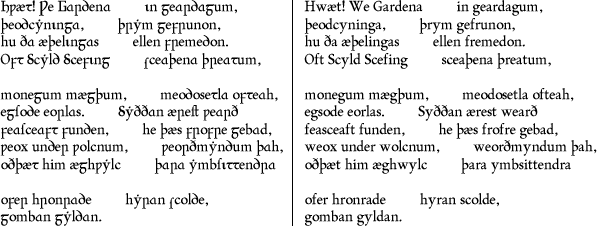
When I think "weird special English letter" I think Œ, as in fœtus. Granted, in American English it has been eliminated almost completely and even in British English it's now often seen as a bit archæic (pardon the pun) but it's still there and to me signifies "English" just as ß signifies "German", ø signifies "Nordic", ı signifies "Turkish" and é signifies "French".
Re:The capital sharp S in now part of the official German or... by petre on Tuesday July 04, 2017 @03:34AM (#14694206)
Re:The capital sharp S in now part of the official German or... by TulliusCicero on Tuesday July 04, 2017 @05:26AM (#14694653)
Yes, but that's not modern English.