Incidentally, the kind of pollution control measures that are used on truck engines, eg cat converters, are unable to cope with the contaminants present in HFO. The catalyst becomes rapidly poisoned and ineffective. So a retrofit to conform with automotive standards is unfortunately not possible.
However, what to do with the impurities? You can take them out, but then disposal becomes a problem (see image below for example). So, if possible, refiners tend to leave them in the product.
http://www.petroleumjournal.kz/imgdb/article_3/article_3_pre...
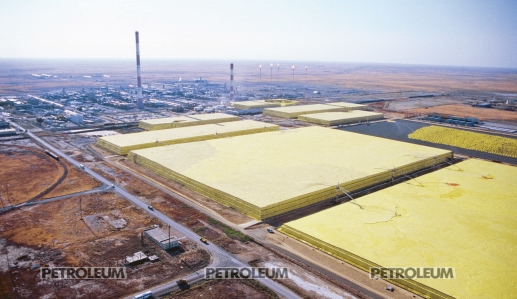
That yellow stuff is elemental sulfur.
And this is not surprising as ships are designed to run for 50 years or more and engine upgrades are very costly.
Not sure what the global impact would be of banning bunker, or (trying to) refine it. Economic or environmental.
A metric ton of bunker is about $300 (http://shipandbunker.com/prices)
The same volume of diesel would be about 315 gallons and would be about (https://www.extension.iastate.edu/agdm/wholefarm/html/c6-87.... / http://www.indexmundi.com/commodities/?commodity=diesel), so about $500.
The energy density of the diesel is about 13% higher than the bunker (https://people.hofstra.edu/geotrans/eng/ch8en/conc8en/energy...).
Assuming identical efficiency (no clue on this point), you would end up paying about 50% more for the same amount of "energy." We would also be dramatically increasing the worldwide demand for diesel and we'd still have the leftover residual product from refining that was previously used to fuel these ships.
50%+ margin increase on containerized shipping seems pretty significant.
And it seems the fix is to urge the companies to update their ships by not allowing them in ports, but considering how long these articles have been coming out, it looks like progress is slow on that front - and if it has changed. Shipping companies have been selling off some of their stock, and it would seem that at least a few of the older ships should have been included.