[1] http://www.factcheck.org/UploadedFiles/2015/02/kff-chart.png [2] http://data.worldbank.org/indicator/SH.XPD.PCAP?end=2014&loc...
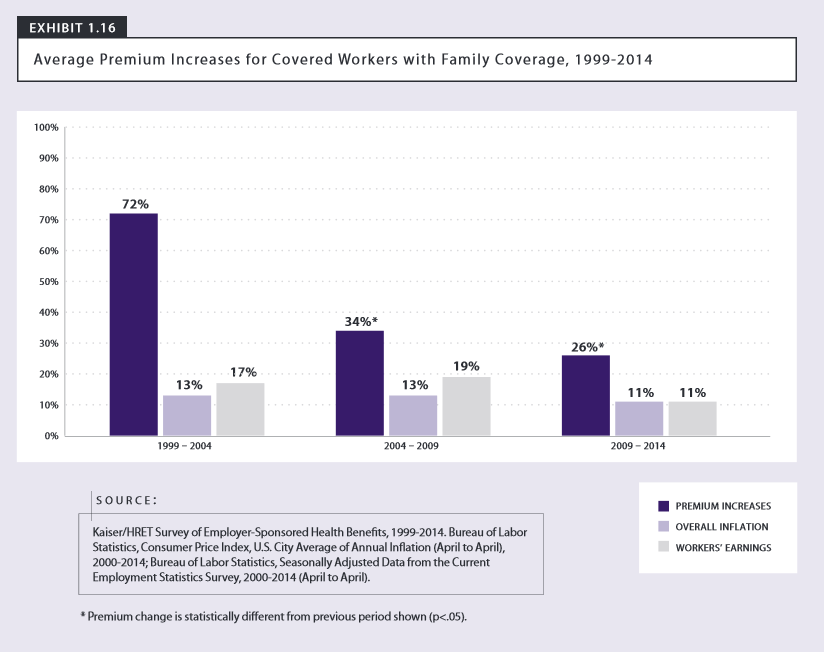
Before ACA, our premiums went up ~5% per year - 8% one year - every year was under 10%. Since ACA, I've seen increases of 25%, 20%, 20%, 25%, then 11% then 13%. This is in NC with Blue Cross - the numbers possibly were different elsewhere (was in Michigan before that but wasn't paying as much attention, unfortunately).
The price increases I was seeing seemed primarily in line with inflationary numbers pre-ACA; post-ACA they seem to have no correlation to inflation, and seem to have more to do with a much larger overall cost for the insurance company covering more people, no lifetime caps, more services covered, etc.
EDIT: On, that factcheck chart - that looks to be showing premium increases for employer-provided health insurance. Employers cutting back their contributions to the premium would account for much/most of those increases. Effectively, it doesn't say anything about the actual insurance premium increases, only what employer-covered workers were having to pay - in my view, that's a big difference.
http://blogs-images.forbes.com/theapothecary/files/2016/04/S...

It was the recession.