I certainly can't think of a time I've ever said "you know what my terminal needs? CSS!" and I have a browser to render webpages.
They also seem to be unclear the difference between a terminal and a shell.
It could, for example let you operate and reuse the text it just displayed:
https://raw.githubusercontent.com/sedwards2009/extraterm/mas...

or even provide a command to let you reuse previous output, such as here:
https://raw.githubusercontent.com/sedwards2009/extraterm/mas...
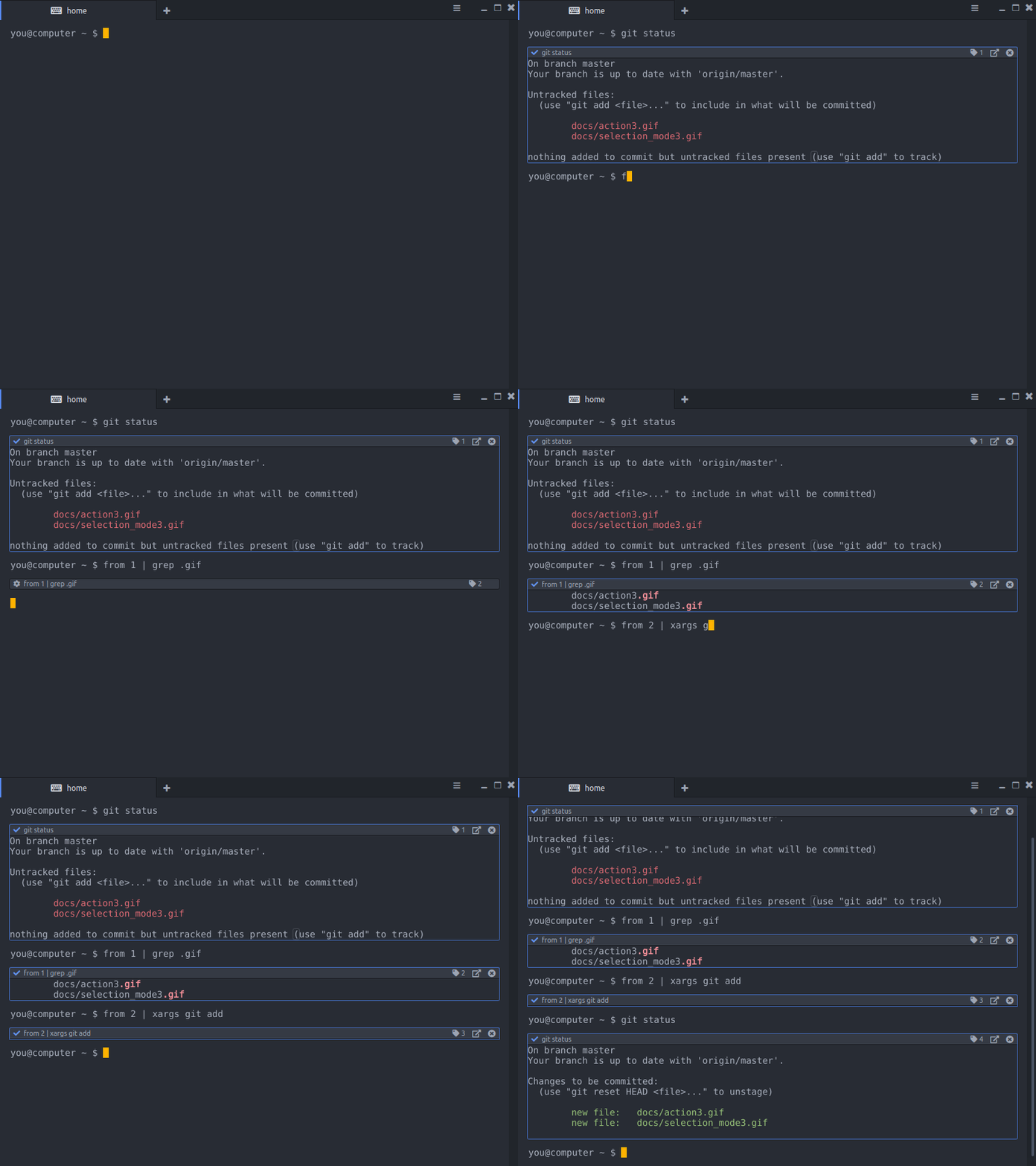
More information and an implementation can be found here:
https://github.com/sedwards2009/extraterm/blob/master/docs/t...
Another difference is that this works across tabs, sessions and machines, but the classic pipe doesn't.
It makes your interactive shell a lot more interactive. Classic pipes etc still work as expected too, so you are feel to mix and match.
It however does make it easier which increases the chances of useful innovation occurring naturally.
* * *
Why shouldn't we be able to one day pipe Unix tools directly into our Web apps?
You can't do what I'm suggesting already. You're thinking of sending data to backend APIs which is completely different from sending data into a visualisation function.
Actually, editing colors in my term... I could use some CSS there.
2. Electron and React allow you to create desktop applications similar to how you create web applications. This make it easier to recruit engineers to work on your project. This also means you can follow modern best practices.
3. There are perceived benefits to tools that are created with web technologies in how easily they interconnect to the web. For example:
I think it also gives a lease of life to the terminal environment. There has not been very much UX innovation there for a long while. Hyper in many ways is already much more interesting.