I went through this with my in-laws who were all set to buy a new one when I noted that I could get the parts for under $100 delivered and tackle it when they came in. Most people just "call a guy" or "buy a new one" rather than tackle disassembly of their washer. (And that part is pretty daunting; when replacing them, I always assume that they start with the bearing and seal at the beginning of the assembly line and build the rest of the washing machine around that. :) )
In addition to saving money on the screws, the manufacturer could save money on the rubber tub gasket that seals the two tub halves together when fastened with screws, and save over a dozen assembly operations, all of which are likely manual (inserting the gasket, and inserting and tightening 12+ screws) That might save the manufacturer $5-7, which appears as $20-30 by the time the machine hits the retail floor.
Consumers will buy a $799 washer before they'll buy an otherwise seemingly identical $819 washer. If consumers want repairable items, they need to be willing to buy (and sometimes/often pay more) based on that preference.
For every consumer that lost money by having a hard to repair in the field tub, a few dozen saved $20+ on the initial purchase. It's unclear whether consumers won or lost overall on the trade, because that seal and then washer failure does seem to be what tends to do in the front loaders. It's pretty clear that the Earth lost, but that there might be more to gain by "training" people to repair their old stuff (or accept slight imperfections in old gear rather than discarding at the first hint of imperfection). That's a form of "nudging" as stated in the article.
Great insight. I wonder how far we (as in general society) have come from the science/technology aspects of our day to day life. Even repairing simple machines like a washing machine is almost beyond the ability of most people even with the availability of all tools needed.
I conjecture that despite the availability of information, the percentage of people with hacker-mindset is declining. Companies are to blame for this (obfuscation etc), no doubt, but societal culture also seems to play a very important role here.
The society doesn't seem to value such knowledge anymore much. Am I missing something?
It appalls me how few people will tackle what seem to me to be utterly basic repair tasks. I may be on the extreme end, but I think some people would pay someone to change a lightbulb in their house (and I'm sure a great many DO pay someone to replace a headlamp or tail light bulbs).
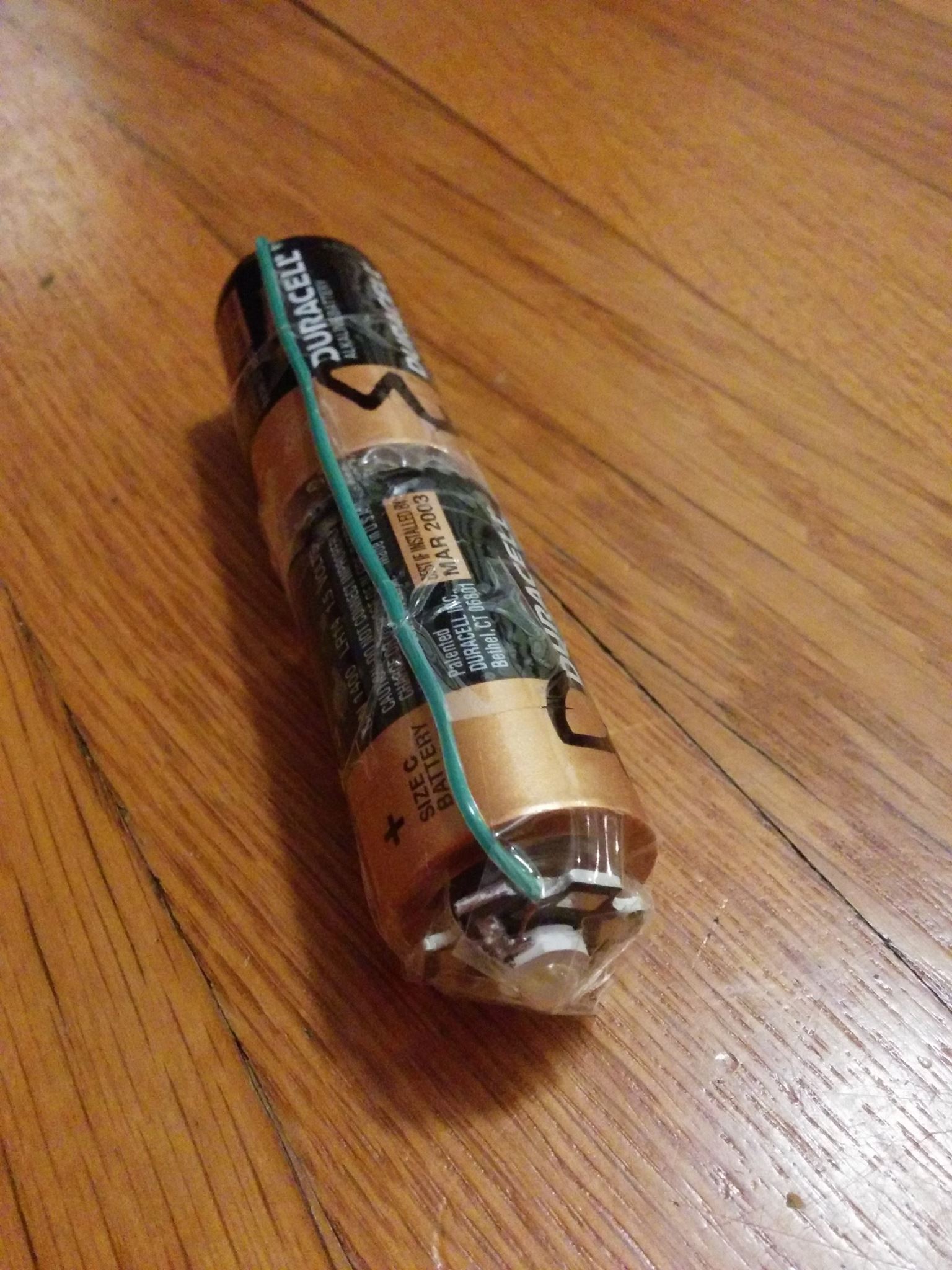
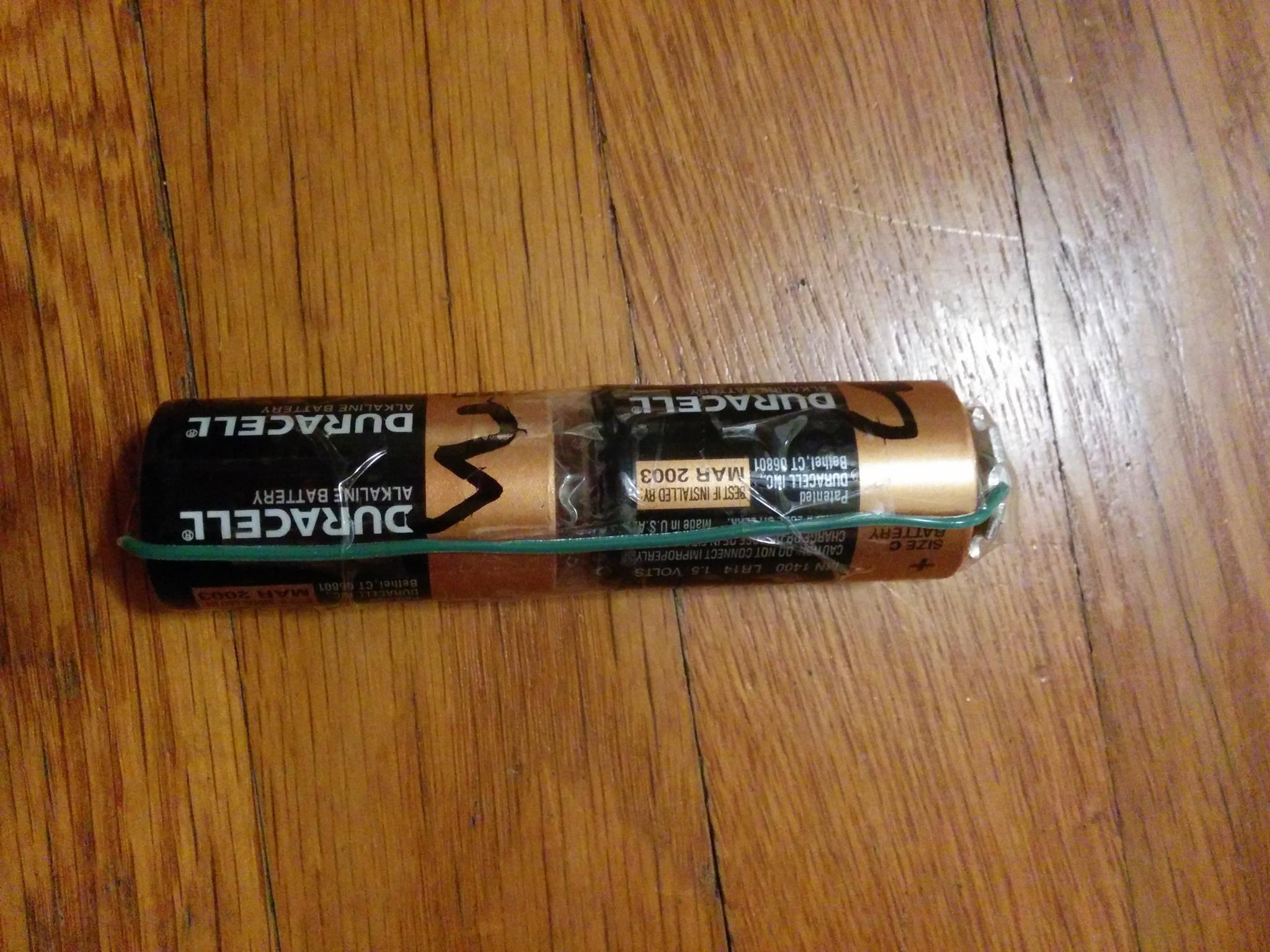
I'm trying to do my part, ensuring that my kids are exposed to the DIY/maker/hacker ethic/experience, and even went into to teach my daughter's kindergarten class the (very) basics of electricity and we "built" flashlights together (mostly, the kids did a life-scale real "electricity" game with banana jack cables to make a complete circuit and a light to light from a 12V battery and then they put stickers with their name on it around the batteries of pre-built flashlights with a bare wire to the negative terminal as the "switch".) That was 2 years ago, and the kids still talk about it sometimes when I see them at pickup. My son (3 at the time, 5 now) can explain from that how a switch works and that electricity "has to make a whole circle" in order to work.
This was the prototype version we made at home. The production version was more robust and looked better, but worked the same basic way.
http://static-s3.sokoloff.com/random/kids/flashlights/flashl... http://static-s3.sokoloff.com/random/kids/flashlights/flashl... http://static-s3.sokoloff.com/random/kids/flashlights/flashl...

On the other hand, you can still find pockets of the DIY ethic in many places. A while ago I remember watching on YouTube an automatic transmission being rebuilt, and two rather young (around 8-10) kids were helping their father with it. That was cute and inspiring.
I have had a great track record with nothing but a pair of vice-grips and a 4-bit combination screwdriver (2x flathead, 2x Phillips).
Add to that a claw hammer, pocketknife, roll of duct tape, can of WD-40, toilet plunger, needle-nosed pliers, and a few cheap plastic-coated wire coat hangers, and you should be able to bodge or jury-rig anything long enough to get a real repair done over the weekend.
For instance, did you know that one arm of the tweezers in a Victorinox pocketknife can tighten eyeglasses screws?
Basically it was like PC repair before laptops. Even if you did not know how to do it working from a good book you would muddle through it.
True, people would use washing machine repair shops. Today you can't do that because the machines have been designed to not be repairable. They come with sealed tubs. People can replace the tubs, but that's a lot more expensive than replacing just the bearings.
For instance, when I was a teenager, I always fixed my bicycle by myself. Nowadays, I guess I could do it if I had too, but I prefer to pay $50 and have somebody else do it for me. Same goes for washing machines or similar appliance, I'm sure many people could manage to fix them by themselves by spending enough time, but is it worth it?
Can you still fix your bicycle? Like if you had no money or were stuck somewhere distant could you still do it?
Is it just because you're older now and have income that you pay someone to do it or is it something society in general does? Do children's parents just get someone to fix their bike or throw it away and get a new one?
What does it cost us as a society when a generation loses those skills?
This. This is a lot to do with today's society. We don't seem to appreciate the problem at all. People just think that they can throw some money at someone and get the things repaired and so they don't need to learn anything.
Society as a whole may have to bear a huge cost, and by the time they realize this they might have already lost their time.
Manufacturers are a lot to blame but today's lifestyle of "it's just a matter of few bucks, so why waster time?" is also to blame.
Recently my ~20 year old fridge stopped working and I spent the better part of the day diagnosing the issue, getting a replacement part and fixing it. Sure, I could have spent that time doing wage labor, call someone to fix it or even get a new fridge and I would have ended up with a net profit. But to me personally, the bigger opportunity cost would have been missing the chance to tinker, learn about fridge circuits, compressors, thermistors, diagnose and fix the issue and enjoy success.
So then it's buy a new fridge for $900 vs fix old one for $100 plus $500 in burned coal over 10 years.
Now if power rates doubled then it would always win to buy the new fridge even if nothing to repair.
First of all, I don't trust a new fridge these days to last 10 years but I can easily see this one purring for another 20 with minor repairs.
Secondly, this is a combo fridge+freezer unit, with 2 compressors. New ones only seem to have one compressor, which makes them somewhat more efficient but if it dies, both my freezer and fridge die with it.
And lastly, it's not my fault we're still burning coal :/ I'm planning to invest in personal solar...
To me this is the really interesting part in all of this. If there was no efficiency gains generation to generation.. say a piece of clothing.. seems pretty obvious to make slightly better if it can last 100% longer for 20% more material/energy/cost.
Things like cars/ fridges / AC units? The math is complex. Think of all the cars on the road right now where 30 year old cars. The air in LA and SF would be like the air in Beijing or Mexico City. It is in fact both good AND bad for the environment at the same time that things are slowly retired and replaced with newer models.
But for example gas furnaces have slowly improved from 50%??? efficient to 99.9% efficient. Clearly they can't get better. But for example, heat pumps can get > 100% efficient.
Those old cars could be made as efficient as new ones by replacing every part in them other than the chassis. That's prohibitively expensive now, but mostly because there's no standard for engine compartment size and mount point locations. If I could order a "Type 2A" replacement engine instead of a "year T brand X model Y" replacement engine--or even get a 5-years-used-and-refurbished "Type 2A" engine from someone upgrading their "2011 Brand M Model N" commuter sedan, and put it in my "2001 Brand X Model Y" commuter sedan--that would solve a lot of the vehicle obsolescence problems. Moving mechanical parts wear out a lot faster than fixed structural parts. Why throw them all out at the same time?
So let's take a 20 year old car, and pretend it was future proofed to take more upgrades. Would you want it today?
* The style wouldn't be right at all. So let's pretend that we are globally willing to accept out of style things for the sake of the environment. Which is a big if, but let's go with it.
* The steering wheel may or may not have airbags. The doors and seats would certainly not have side impact airbags. The doors and seats would not be designed to take these advances. You would need to basically replace the doors and seats to upgrade these new safety features. But what if these new safety features made the door 2 inches thicker? Since you aren't replacing the frame, you now lost 2 inches of internal space. Maybe the driver would still fit, maybe it wouldn't.
* Engines were much much less efficient 20 years ago. New engines have all kinds of things that a mechanic can better explain. Things like carburetors are gone, things like computer controller ignition are in. Would the upgradable car have known about all these future changes? Maybe, maybe not.
* Frames have gotten much stronger / more crash proof in the last 20 years. Think of better crumple zones. So if you wanted to upgrade that 20 year old car to be as safe as a modern car, how would you change the crumple zones within the frame itself?
* Metal itself rusts over time. Things can slow it, but there will always be some rust. What do you do if the frame has rusted in ways that can't be fixed?
* Crashes can permanently damage cars. Say your frame is bent in a crash. Insurance companies write this car off as totaled, and declare it no longer safe to drive. Can you always fix this kind of thing? Perhaps sometimes. Would you want to drive a frame that has been welded back together after a crash? I would not.
This is not an exhaustive list but it partially proves a point. In a field where innovation is happening, it is VERY hard to future proof your hardware. If you disagree and are a programmer, show me an active codebase that has never had a refactor. By going down this path, you are basically saying the contents of a given method can be swapped out, but we can never refactor the codebase. So show me a 20 year old C++ project with no refactor ever done, just methods being swapped out like your replaceable car analogy.
Styling and design still have room to work if your engine compartment standard does little more than define a minimum volume of unobstructed interior space and several fixed mount point locations. You can make an ATX computer case look like practically anything, so long as the screw holes are in the right place, the I/O shield is the right size, and you leave enough internal clearance for the CPU cooler and video card.
The mount point locations became standard on outboard motors in the 80s, when Yamaha decided to use the same pattern as BRP (then OMC), who had in turn copied the pattern used by Evinrude in the 60s. So you could possibly buy a 50-year-old boat and mount a new outboard motor onto it without drilling any new holes or replacing the transom. The outboard motor bolt hole pattern standard does not affect the thickness of the seat cushions, or the size of the docking cleats, or anything else. You can have many different standards that are not mutually incompatible.
The idea is that auto manufacturers would add to a list of standards, rarely obsoleting some. Maybe the 20-year-old car only conforms to the engine compartment standard and the front-wheel-drive automatic transmission standard. The 15-year-old car conforms to those and to the steering wheel (with airbag) standard. The 10-year-old car conforms to those, plus a side-impact standard and a rollover safety standard. So you might not be able to upgrade the 20-year-old car to be as safe as the new car, but you could certainly upgrade it to be as fuel-efficient or as powerful, which might be all you really care about until the frame rusts out. If you are lucky, the old car might have been the basis for a newer standard, and you could upgrade some things as though it were conformant to begin with. A new car would certainly conform to all the existing standards, and if its standards-conforming side-impact air bags were recalled 3 years later, any mechanic would be able to replace them, instead of just the dealers for one maker.
Any given standard would only be replaced by an improved standard, and that might still be backwards compatible to the old standard. So I certainly would take that future-proofed 20-year-old car with a brand-new off-the-shelf powertrain in it, especially if it cost only $8k instead of the $24k I might otherwise have to spend on an entirely new vehicle.
You can't have a standard for a technology that doesn't exist yet. But anything that does have a standard can likely be repaired and upgraded more cheaply in the future. It preserves more of the value in the used cars.
If someone really needs those side-curtain air bags, they would be able to trade in their old vehicle, at a higher price, to someone who doesn't value safety features as highly, and use the proceeds to help pay for a newer vehicle with more of those features.
But yeah, it's definitely an interesting balance to think about.
Wind power takes up land that could be better used for nature or growing food, and kills birds. The turbines are made out of materials that have the same problems as other things. Clearly reducing demand for power is still a good thing, even if we got to 100% renewable power. (And at current low renewable power levels, 1 extra KW of electricity is directly coming from oil or coal or something nasty)
Heck, I can buy a brand new photo printer for cheaper than it takes to buy the ink (after rebates, of course).
I'm also surprised by this: The proposed legislation would cut regular tax on repairs of bikes, clothes, and shoes from 25% to 12%.
I can't imagine paying a 25% tax on someone's labor (I live in the U.S)
Once you can admit there's some level you'd rather be able to do yourself, all you need to do is keep stretching that envelope little by little.
>... even with the availability of all the tools needed.
This is often a first problem, actually. I've had a few times in my life where I've been completely without handtools. Upon first moving out, for example, upon moving out again: After splitting with my ex, and moving to to a new country.
So if I would sit here and start looking at a washing machine that is broken, I have to buy parts, hope it is user-serviceable, plus make sure I have the handtools or buy them. Afterwards, I know there is a bit of risk that I've repaired this badly or that the source for the instructions were wrong. In addition, if I had to replace a large part, I also have to deal with disposal (not all places will take large items often).
If I'm limited on money, there are generally other choices. A used washer from a dealer or a new, bottom-of-the-line washer on clearance or something sometimes runs the same money - plus I get some sort of promise it'll work or be replaced. It might be possible to repair it if there is a repairman in the area, but I'm gonna balance that out with the cost of the other options.
In addition, with something like a washing machine, I have to figure out if I can wait 2-3 weeks on a part. Do I have time to go to the laundry place? Can I afford both the part and to pay to do laundry? Can I do it over at a friends house for a few weeks? If this doesn't fix the machine, can I afford to try again with a another part? (this last statement is often a sore point when folks are fixing their own vehicles).
And this is assuming someone is mechanically inclined enough to do it or try it, if they think it is a reasonable risk (don't want the washer catching fire) and other things I'm sure I'm missing.
Spot on! I can't even remember how many times I had to bike or bum a ride to a parts store midway through a repair.
Whilst the first consumer saves €20, or whatever, the item can't be repaired by an onward buyer either making its second-hand cost approach zero. They save €20 off the purchase and lose €100 of the sale at the end of their ownership.
Moreover the societal cost is vastly increased as the machine gets dumped (or possibly stripped for reusable parts but less likely as there are fewer machines that are repairable; maybe parts will be recycled for the metal).
Also as there's no second-hand market pressure to reduce prices is removed. Good news for launderettes! Meaning the original saving probably just gets shifted in to profits for the company owners.
Probably if the seal and washer are a common failure mode then the company need to spend a few more pence on the washer or accurately torquing the screws -- there's a good chance this fault mode has been designed in. IME of trawling for second-hand machines bearings are a more common failure (machine overloading?). The most common appear to be "computers" and other control modules; then it seems to be pumps and motors (eg brushes).
It's the seal here: https://www.amazon.com/Front-Washing-Machine-Bearing-Repair/...
Not the tub seal, nor any other place where accurate tightening of screws can influence.
PS: I agree with you to a point on the second hand market value keeping some amount of tabs on the pricing pressure in the brand-new market, but I also don't think that very many people actually cross-shop brand-new and second-hand to really keep those markets' prices linked.
From there, the rumble and looseness quickly follows.
The bearings themselves I believe would run for fifty of years in the typical washer duty cycle (~8 hours a week, 400 hours a year, 20,000 hours in a half-decade), if they were running in a typical (non-washing) machine setting.
Alternatively, it's telling you to cut it open and screw it back together. If they really didn't want you to repair it, they'd omit the mounting tabs entirely. This sort of arrangement is not uncommon in the automotive world, where the factory will glue/weld something shut but still leave provisions for you to reassemble with different fasteners. The fact that official service manuals will show the procedures for doing this mean it's not that they want you to replace the whole part.
Also, if you're tackling this repair, it's wise to make sure you can get the old bearings off the "spider" and that the spider isn't cracked from vibration. On our washer, I couldn't get the large bearing off the spider without trashing the spider and back half of the tub, and that made the repair overall uneconomical.
If you can get yours off, then order the parts. This also suggests replacing the bearings when they first start to make noise (a bit of a growl) or when the inner tub has some axial play relative to the outer tub (not to the door seal or frame of the washer, as that's from the suspension system). It would suck to order $50-75 worth of parts and not be able to do the repair anyway. You "have" to replace the seal and large bearing. I don't think it makes any sense not to replace the small bearing as well while you're in there. I also buy the tub seal gasket, though I've never felt the old one wouldn't have been fine to re-use (if present).
Pro tip: if you decide to DIY, order half a dozen of these [1] couplings in advance.
[1] https://www.amazon.com/3364003-3364002-REPLACEMENT-KITCHENAI...
That's about 20€ in spare parts every 10 years. The savings in electricity and water with a new machine are tiny compared to savings by not having to buy a new machine in the first place and then replace it every 5 years...
I'm just not sure I believe the newer models ratings. mine is much more efficient in water use on paper than what the water meter clearly states.
Funny story about new "more efficient" machines... a neighbor bought a new BEKO machine (before that she had a CANDY I think). She says the new machine uses so little water you cannot even see the actual water inside. All you see is soaked clothes.
She says that the results are worse compared to the old CANDY and that the clothes get damaged more easily.
Due to EU regulations there is no more "add extra water" feature like in older machines.
So what she does is she waits for the machine to pump water inside then she pours 6L of water through the detergent dispenser. Now that's progress :)
Not sure I buy this, I just bought a new Miele (to replace the broken Bosch) that has a dedicated "Water Plus" button.
To think that someone in charge at Bosch has actively decided to 1. Screw over the customer 2. Impose a massive external cost on society and the ecosystem. I honestly wonder how they sleep at night.
The market clearly can't fix this issue, so regulation must be the only option.
Alternatively, they know that very few people did repair the old versions (barely anyone know how to do it themselves, and labour costs in the developed world make it uneconomical to call someone) and they decided to reduce waste (and costs, win-win) by cutting down on the number of screws.
I don't know what actually happened, but it's unproductive to assume malice. The reality is that for the most part, markets optimize for what's valued for the consumers, and "easily repairable" is not a feature people value that much.
For the "taxing recycling cost" we have an example in the case of bottles. Norway for example has a reducing bottle tax that starts at a certain rate for non-recyclable drinks containers or containers that are recyclable but aren't. The tax rate then drops proportional to your proven recycling rates, and falls away completely if your rate is high enough. Having distributors take back failed products is great, but it's insufficient in that they have no reason to encourage consumers to return broken products, and often have a strong disincentive to (they end up having to pay or the transport and recycling).
Basically, we should expect companies to either make society good for environmental externalities related to their products, or pay what it costs society to make other arrangements, so that these costs end up getting priced into the products so we can make our buying decisions accordingly.
> 1. Screw over the customer 2. Impose a massive external cost on society and the ecosystem.
Those are both tremendously effective ways of making money in a capitalist system. That's why so much is spent on lobbying against regulation.
Anecdote: my washing machine recently broke the main bearing, and I was going to fix it. Even found a nice teardown/reassembly vid on Youtube of the exact same model (a bit older than mine). After 2 hours of work, I discover Bosch has gone from using screws on the outer drum to plastic welding it shut. So fixing it means replacing the entire assembly, costing 2/3 of a new machine and with a four week delivery time for the part. I learned this is only done to screw consumers over, and that all manufacturers do it now. The drum still has all the mounting tabs for being screwed together, so they're literally just saving $0.30 on screws.