In Europe anyone can go to a top school. In my case, my mother is a cleaner and my family is low-middle class: I was able to go to the best university of my country anyway. Most of people in my university were like me. In most of countries of Europe the money just doesn't matter for education purposes: if you are good enough for that university, you go there.
And for a Spaniard is quite possible to rise higher than the European upper middle class. I know many, many cases.
And what results has that supposed premise produced? It's obviously not accurate to begin with: Romanians aren't all going to the best European schools and they do not have access to such.
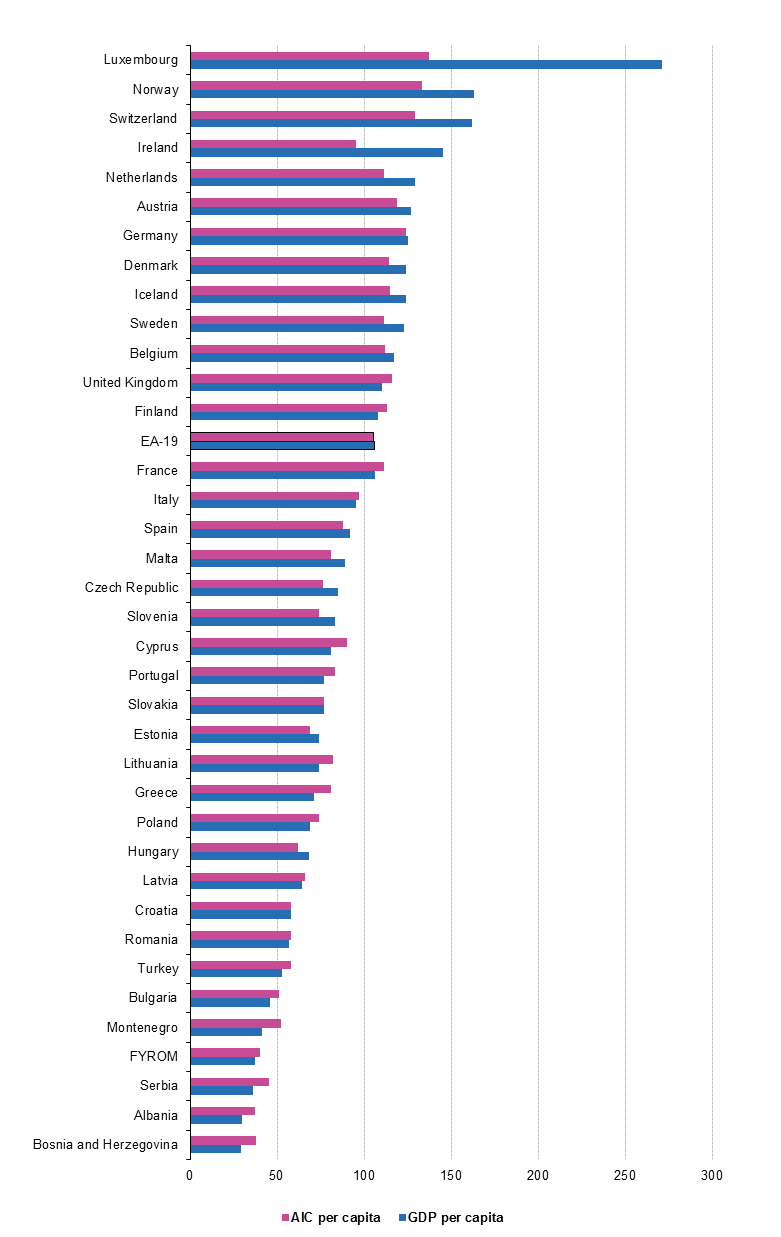
Let's see the results: half of Europe is so impoverished, the median incomes in those nations wouldn't come close to reaching the poverty level in the US in terms of standard of living. The poverty levels in countries like Moldova, Russia, Bulgaria, Romania, Belarus, Ukraine, Hungary etc. are nearly third world they're so bad.
Spain is still struggling to pull itself out of a nearly decade long depression. What results has the supposed free amazing education produced? None that can't be easily bested or matched by the worst economic zones in the US.
Italy has had three (or four depending on how you count it) recessions in the last ten years. Now their entire nation is about to go bust and threatens to take down half the banks in Europe. What results are we seeing from the supposed amazing free education there?
When you actually calculate the end results of what you're proclaiming, the net outcome is horrendous. So what benefit has any of it produced? Absolutely nothing worthwhile.
Your "obviously" is certainly not obvious. I live in Denmark, and my experience is exactly the opposite: there are MANY Eastern European students in the top Danish universities. Ironically, a degree in Denmark (0 cost) is cheaper than a degree in Eastern Europe: and yes, education in Denmark -and other European countries- is for free for EU citizens. Damn, my own girlfriend is from Lithuania and got her Master from Aalborg University.
I will try to give you an example with data: the best university in Scandinavia for Engineering is DTU (http://www.topuniversities.com/university-rankings/faculty-r...). In 2014, it admitted 1403 MsC students; of those, 538 (38%) were "international" (http://www.dtu.dk/english/About/FACTS-AND-FIGURES/Education). DTU doesn't offer data about the particular region of origin of the international students, but I do suspect that most of them are Europeans, particularly Eastern Europeans. It's like this for Aalborg University (3rd best in Eng. in Scandinavia): 79% of its international students are Europeans, with 40% of the total being from Eastern Europe (http://www.en.aau.dk/about-aau/figures-facts/students/intern...). Going back to my personal anecdote: when my girlfriend finished her Master degree in Denmark, we went to celebrate with her colleagues: a Pole and two Latvians. No, Eastern Europeans studying in good universities in Scandinavia are not uncommon, by any means.
> Let's see the results: half of Europe is so impoverished, the median incomes in those nations wouldn't come close to reaching the poverty level in the US in terms of standard of living. The poverty levels in countries like Moldova, Russia, Bulgaria, Romania, Belarus, Ukraine, Hungary etc. are nearly third world they're so bad.
If you are going to define "Europe" as the continent, I shall be able to define "America" as the continent too. How is the poverty level in Paraguay? Criminality in Ciudad Juárez? Life expectancy in Bolivia? Violence in Caracas?
I thought we were being serious and comparing US with EU; it's already a very favourable comparison for you.
> What results has the supposed free amazing education produced? None that can't be easily bested or matched by the worst economic zones in the US.
The results are multiple. I think I can group many of them under one word: social peace. Spain's homicide rate is 0.7; Italy's is 0.8. US is 3.3. The most peaceful state in the US, New Hampshire, is still more dangerous than Spain or Italy: 0.9. The highest homicide rate in the whole EU is for Lithuania, with 5.5. In the States it would be slightly worse than average in between Michigan and Alaska, very far from the 10.3 of Louisiana.
https://en.wikipedia.org/wiki/List_of_countries_by_intention... https://en.wikipedia.org/wiki/List_of_U.S._states_by_homicid...
IMO, the States is an amazing place if you are a highly-skilled professional or an entrepreneur. If you are poor, not so much: no free healthcare, much higher crime, very high imprisonment rate.
As someone who grew up in EU but now I live in the US, this is something that seriously bugs me. What lesson should I teach my kids when they go to college? "Son, no matter how hard you study, or you don't study, all that matters is daddy's money to get you into college."
You see a large number of transfers from community colleges in the U.S. to top tier schools as well. CCSF feeds into Berkeley, Georgia Perimeter College feeds into Georgia Tech, etc., etc.
The truth is, unless you're hyper-wealthy, your money gets your kid into college through the things that you purchase to further that goal, and the attitudes of children in the same social class.
Undergraduate Cost And Financial Aid
Families with students on scholarship pay an average of $11,500 annually toward the cost of a Harvard education. More than 65 percent of Harvard College students receive scholarship aid, and the average grant this year is $46,000.
> Obviously, that's not a pragmatic statement, as poor kids from the ghetto often have no appreciation of this and simply don't work towards great outcomes - but this is the reality.
Ah, it's their fault.
> impossible for poor Spaniards/Greeks/Sicilians to rise to higher than the European upper middle class.
I'm sure you'd argue they don't work towards 'great outcomes'.
But you know what. I really don't see anything super good (or super bad) about living in the US versus Europe. Governments are roughly equally ineffective at solving real problems, people are on average nice. All in all, it's a toss-up.
>Ah, it's their fault.
That's not what he said. There are many reasons for this, mostly parenting and culture.
As can anyone in Europe, no?
EDIT: must have read too fast, above point stands.
FYI I'm not blaming them, rather indicating that for whatever reason, opportunity is not grasped.
Multi-nationality is not unique to the US.
About half of GDP of Belgium, Denmark, Sweden, Finland, France, Austria is taxes. It's easy to talk about redistribution after you've pillaged the entire world.
The Nordic countries had no (or negligible) colonies. The Nordic countries are Denmark, Sweden, Finland, Iceland and Norway.
Finland is another Nordic country, though not a Scandinavian country. Finland has never had an empire. It was too busy being controlled by Sweden and Russia. This means the Finns are Nordic people. Hence getgoingnow's statement cannot be true for all Nordic countries.
That said, cplanas is correct. Finland had no colonies, and for the other Nordic countries the colonies provided only a small revenue source. They surely did not "owe large part of their success to colonization in the past" as getgoingnow claims. Eg, Sweden's wealth historically comes from copper and iron, and Sweden was a poor country. Norway's w
I see you switched from "Nordic countries" to "Nordic people" and then to "Normans", to then imply that successful Norman conquests and colonization lead to a significant economic gain to the Nordic countries. I do not think that's a meaningful connection for the current discussion.
First, I do not like how you imply there is only one type of colonization. There's settler colonialism, like how the Bantu migrations displaced the Pygmy populations in early Congo history, or how the Norse/Danes controlled the region known as the Danelaw, or how the Norse settled in France, and assimilated (switched to Catholicism and to the French language), or how the Norse colonized Iceland.
There's also exploitation colonialism, which England and Spain are two of the best known examples. But the Norse conquest of England, which might have enriched some of the Norse in France, never went back to "the Nordic countries". Where then is the source of the revenue stream that getgoingnow implied was a basis for the success of the modern Nordic countries?
Second, the connection from "Normans" to "Nordic countries" doesn't work that way. The term "Nordic" is a relatively recent term that refers to a list of modern countries and territories; see https://en.wikipedia.org/wiki/Nordic_countries . It does not refer to Brittany, where the Normans lived, nor to Britain or southern Italy, which the Normans conquered.
Third, "Nordic people" has a variety of meanings (see https://en.wikipedia.org/wiki/Nordic_people ). It can refer to the Germanic people as a whole, or the people who live in the specific Nordic countries, or a term from scientific racism from the late 1800s, or the Norse, or more specifically the Vikings. I think your introduction of that term confuses the topic more than it helps. Which definition do you mean to use, and why not stay with "Nordic countries"?
Fourth, the Normans are only one link in history. Why stop with them? The Normans come from the Norse. The Norse are Germans. Why not simply say it's all due to German colonization?
Then again, you wrote "The countries that made all the colonies are Nordic colonies". I must have missed that part of history where they covered how the Normans colonized the Islamic Iberian Peninsula and lead to the Portuguese colonies.
You could well say that... but I'm not sure how it makes the assertion true that nordic countries/people didn't have colonies. It's actually something that I've picked up on from my studies of history that many colonizers derive from Germanic roots. (My hunch which I can't prove / haven't investigate much is that the germans picked up on it from the romans)
I didn't mean to suggest that there's only one kind of colonization, I'm actually a huge fan of the idea that there are many types, and that some of them were beneficial.
Also, I don't really buy into the idea that colonization was responsible for the success of the nations that did the colonizing. I think that the exploitative type of colonization was harmful to development of the economy just as slavery in the Southern US lead to widespread poverty when compared to the North.
Yes, that was an absolute statement which you disproved handily, not all colonies were created by nordic / germanic peoples.
The very language we are communicating in is a testament to the colonization of England (or whatever the fuck it was called before it was colonized) by Nordic/Germanic people/countries. It's a colonization similar to America by Britain, where the colonists decided to give the middle finger to the motherland, similar to the way the English just gave the finger to their original colonizers in Denmark.
And there was no need for you to introduce a absolute statement as the previous nuanced statement was correct.
> the colonization of England
There have been many waves of colonization of England: Celts, Romans, Angles and Saxons, Norse, and the Norman French come quickly to mind. The colonization of England is far different from the combination of English, French, and Spanish colonization of the Americas.
I think you overemphasize bloodlines when you focus on immigration and "people". The Romans were a diverse set of peoples from across the Roman Empire, with people as far away as Africa living in England. The Christianization of England, or the spread of the concept of the divine right of kings, or of democracy, was not due to immigration of bodies but to an immigration of ideas. The rise of Sweden as an invading superpower in the 1600s was due in part to the Reformation, which let the Swedish king confiscate money from church land, and not simply from some intrinsic nature of the people.
"England" comes from the Angels. In modern use it refers to the area in the southern part of Great Britian, and corresponds mostly to where the Anglo-Saxon kingdoms were, ie, not Wales and not Scotland. There was no name before the Angles as there was no reason to highlight that specific area.
England as a short-hand for Great Britain was called Britannia by the Romans, and Albion, from a Celtic language through the Roman.
> "I think that the exploitative type of colonization was harmful to development of the economy..."
Which brings the topic back to the original discussion. getgoingnow wrote "Nordic countries and other rich European countries owe large part of their success to colonization in the past".
Do you think it's true that the Nordic countries (modern Sweden, Denmark, Norway, Finland, Iceland) owe their success to colonization? If so, which colonization, and what was the return which lead to modern success?
You could say the same thing about America though, there are still many wealthy families that can trace wealth back to slave ownership. In addition we massacred the Native Americans and took control of a massive wealth of natural resources. None of us came into life on a level playing field. We aren't necessarily responsible for the actions of our ancestors but I think we have to acknowledge the cumulative effect that they had on our world.
We will just go in blame circles forever as long as we cling to the notion that we are particularly responsible for our good or bad fortune (beyond on average minor changes based on personal choices - and I say minor once you average it out over the entire population, some people might experience drastic changes by making a fortuitous decision but many other people made significant efforts that do not result in large gains).
If we can get over this notion and agree that everyone should have equal access to food, water, housing, security, and education no matter what, then we can put all this who did what to who bullshit behind us. Even if there are cumulative cultural issues related to past discrimination they would be so much easier to deal with once the brunt of inequality has been dealt with.
I am not particularly optimistic for this though because people who either by ability or a lucky roll of the dice become wealthy (or already were already) have such a massive psychological hurdle to overcome to accept that what happened to them simply cannot happen to anyone, regardless of ability or work ethic.
Leopold II's ineffective and bloody adventures in a part of Africa everyone else had already ignored hardly rate.
'Social Mobility' cannot be compared between USA and small Euro nations.
'Social Mobility' within Denmark, a country smaller than Los Angeles, is pretty good.
What if you compared 'Social Mobility' across the EU.
Do you think that poor people in Croatia, Sicily and Greece are 'mobilizing' up past the Swedish middle class?
No.
Also - America has large ethnic groups. America is really 5 nations: Europeans, Asians, Latinos, Blacks, and 'everyone else'. By almost every measure, America is different for these people, it's tough to compare. I'm not saying it's right, rather alluding to what it is.
Finally - I would say having lived in the US and Europe - that there is without a doubt more opportunity in America than in Europe overall. No question about that.
The elite in most European nations come from pretty good families. They go to the top schools and have their careers guaranteed.
Anyone in America can be successful.
Obviously, that's not a pragmatic statement, as poor kids from the ghetto often have no appreciation of this and simply don't work towards great outcomes - but this is the reality.
Anyhow - the gini coefficient for 'all of Europe' I suggest is definitely lower than the US, and this is because it's nary impossible for poor Spaniards/Greeks/Sicilians to rise to higher than the European upper middle class.