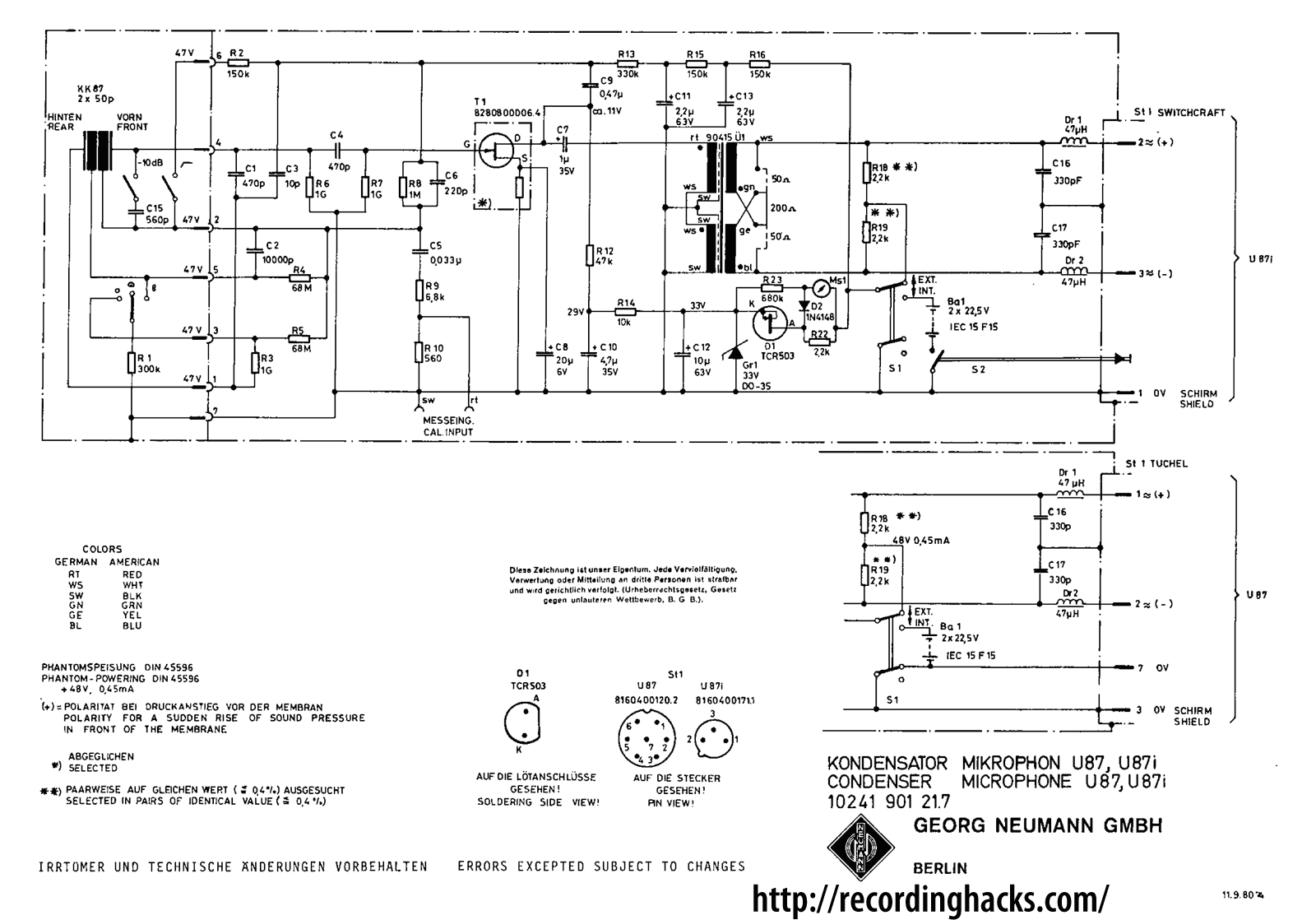
The low-frequency/subsonic content that this switch will remove often consists of wind noise, pops from talking too close, vibrations from the floor/mic stand, etc. Even if these low frequency noises may be more or less inaudible, they'll contribute to a large signal swing that will decrease the headroom in the following amplifiers. In other words, you won't be able to turn up the gain in the microphone amplifier/mixer as much as you'd want, because the low-frequency but high-amplitude content will make the amplifier clip and distort the sound. Filtering the signal after the mic preamp won't solve the problem, because the preamp (which can provide in the order of 60 dB gain) will be the component that clips. By including a low-cut filter in the head amplifier circuit inside the microphone (the amplifier serves only as a buffer, and usually with unity gain), the disturbing low-frequency noises can be removed before entering the high-gain microphone preamp. You can find the low-cut switch next to the capsule in the U87 schematic [0]. It seems to me that they increase the capsule bias voltage, thus changing the low frequency response by electrostatically tensioning the membrane.
[0] http://recordinghacks.com/images/mic_extras/neumann/U87-sche...
edit: tweaked some things. meta: i'm not very good at commit messages.
Here's a Neumann mic from 1952 that could be set remotely. http://recordinghacks.com/microphones/Neumann/M-49
Today it is increasingly common to put the analog stuff as close to the source as possible and remote control it.
This is the 1992 document that finally standardized "pin 2 hot" among other minutiae: http://www.aes.org/publications/standards/search.cfm?docID=1...
The things you mention (vibrations, LF rumble) are typically handled by the highpass on the mic preamp and are in the 75 or 80Hz range. In musical terms, that's 4+ octaves below the 1k proximity rolloff on the mic itself.
This is the one of the areas a recording engineer's problems are different than a software engineer's intuition.
In software, we have a lot of problems that can ultimately be traced back to not having good "visibility" into the software or its state. This has various far-reaching consequences, from specialized tools to examine software (such as debuggers) to cultural values ("one job per component") that help us reason about complex systems we cannot see.
But in the case of audio, we have a multiple sensory organs to directly perceive sound. A bad audio engineer would be able to push a few buttons to move his headphones around in the signal chain and know in seconds where the EQ is occurring. A good one would simply know the U87 rolloff "by sound" and would not have to conduct any investigation at all.
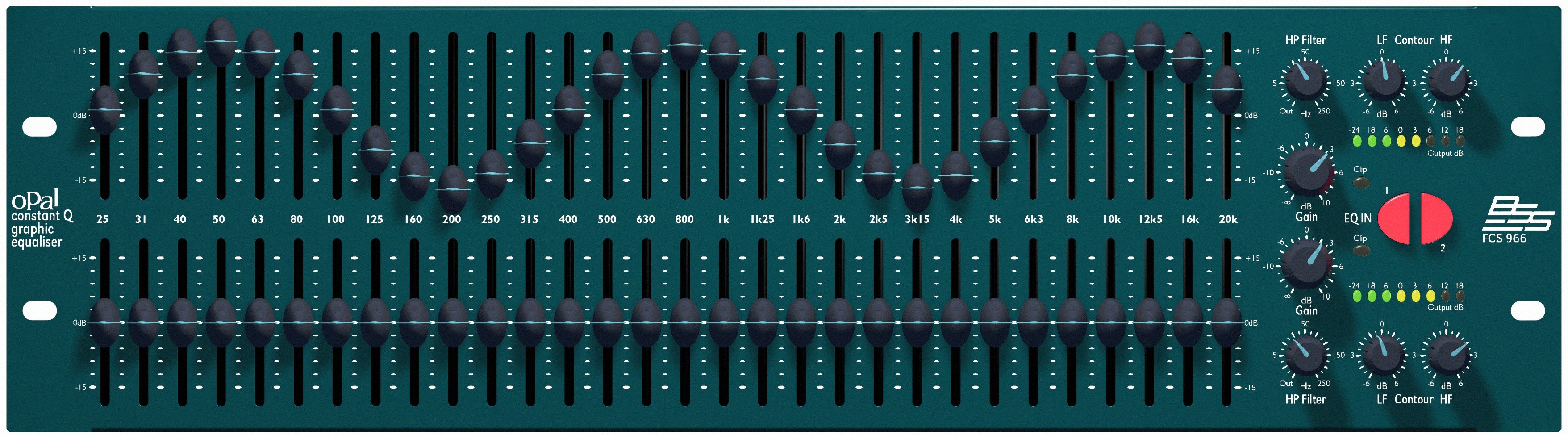
There are some cases where more detailed analysis is done with fancy tools–mastering song recordings, for example. But in live sound, an audio engineer's primary concern is UX, because good UX is the difference between solving a problem quickly and annoying pops or worse. One button that engages a good EQ is much, much better than something like this: http://adn.harmanpro.com/product_attachments/product_attachm.... And epoxying the single button to the correct position is even better still!
You raise a good point about (even in the bad case) moving headphones around the signal chain---and damn as an (especially functional) programmer I'd like that to be able to tap arbitrary locations in data flow like that. Enough all these control-flow-based debugging tools!
> One button that engages a good EQ is much, much better than something like this
Well there's always overkill, but would one of those be worse than one of those and then, next in the signal chain, a 1-button EQ whose functionality is completely subsumed?
You should look into dtrace and it's new Linux counterpart who's name currently alludes me. It's almost like being able to do just that.
I was thinking more of a development aid that would render a dataflow graph like max/msp---in the general case the graph itself is changes but thats's OK.
No, you want to apply cuts as early as possible in the signal chain if you're trying to prevent overloads later in the chain. The "EQs" that you see on mics are almost always bass cuts designed to reduce proximity effects. This gives you much better dynamic range at the preamp because bass frequencies are energy-intensive, so cutting them early allows the amplifier to not have to do all the work amplifying (and distorting) them, just to cut them later.
Beyond that, with a few exceptions, most of the signal rolled off by the switch is stuff you don't want to hear anyways - "plosive" pops, rumble from low-frequency buildup in rooms, vibration, etc. Much of it can't even be reproduced by most speakers (speakers don't do low bass because, as said before, it's a hard problem and not actually audible in most cases).
As an aside, when mixing records, I'll often roll off guitars at 200 or 300hz, losing a couple of octaves of low-frequency information. In theory, this is awful. And if you listen to the solo guitar tracks, it's awful. But in an actual mix, it's great! It gets the low end of the guitars out of the way of real low-frequency instruments like bass and kick drums, making the bass sound tighter and cleaner. The guitars sound clearer too, because they aren't getting muddied by competing bass instruments.
The great challenge of recording is to capture the authority of a roaring guitar amp, the brashness of drums, the purity of a voice, and then squeeze it down into something that fits in an iPhone earbud and still has realistic proportions. That's why the idea of "accuracy" in recording is so ludicrous. A record is to a live performance as a HO train set is to a real train. It's a miniature, a model. To make it look "right", you have to exaggerate some details and lose others.
The goal is to get good sound out of your recording equipment, not to get ISO approval. :-)
Every recording studio or both for a live venue I've seen always seems to have 'round 1/4 equipment always in use, 1/4 rarely but sometimes used, 1/2 equipment never used :P. I really do respect the science and art that goes into audio engineering, but damn that's a lot of clutter.
Now the flip side is it's a lot easier to trim the fat administering a bunch of a computers (and the clutter isn't a huge sunk cost like some once highly valuable piece of equipment one might be loath to chuck), and yet this ideal is also far from realized most the time. Boxes in closet are just a lot more obvious than files in a directory.
Arguably compression wars and other such things are also a layer violation: sound engineers can guess at but not be sure of listeners' equipment. With computer and audio (or anywhere engineering, business, and less educated users meet), optimizing against presumptions is a common source of layer violations.
As has been noted, the particular quirks of the U87 ( or the like ) mean a filter to lessen proximity effect are Useful.
The "EQ settings" on the mic are actually to compensate for proximity effect. On the U87 it starts cutting at 1k -- way above what the interview states.
http://www.coutant.org/u87ai/u87.pdf
Another mic commonly seen in broadcast (and top podcasts) is the Shure SM7. Has similar switches, and even comes with a plate you can screw over the top of them so people don't futz with the settings.
Also, rooms, talent, and equipment are often much more influential than mic selection in making a 'signature' sound. But mics are to audio engineers as languages are to programmers... Everyone has a favorite, and opinions border on the religious.
Source: worked in radio engineering for 4 years before starting programming, live audio engineering 4 years after that, and have worked with dozens of mics and varying degrees of on air talent in many environments.
Likewise I'm sure you could swap a U87 on person X with a RE20 on person Y and it might even sound "more like NPR" depending on the natural sounds of their voices.
I agree. The number one rule of good journalism is not to put yourself in the story.
Step back, way, back, and let your subject tell their story.
> Current: Yes, but if you’re at a station and kind of frustrated with the bassy, boomy sound you get on your studio mic, and you can’t get the engineering staff to do anything about it for you, one thing that you could do yourself is to look on the mic and see if there is a bass roll-off switch, and turn it on.
Is the interviewer just tossing out "life pro tips" in the middle of an interview? Why does it start "Yes, but" when it's not a counterpoint to _anything_?
On a different note, why is that (as far as non-expert me knows) that nice mics often have eq settings? Is this not a blatant layer violation?