I don't think that's true at all. While 80 columns becoming initially common for displays was no doubt a product of the H-card, the fact is that there was reasonably widespread support even fairly early in the pre-GUI PC era for alternatives -- both more and less, but probably most notably in use 132 columns -- for display, printing, etc., and they were used where they offered superior utility. But, outside of a few niches, 80 columns stuck even in the face of alternatives, and the reason it did so was ergonomics.
Once you have the number of rows, you want the number of columns to have a good balance. 80 columns gives you well proportioned characters, where other alternatives e.g. 132 do not. Add that to the historic precedence and you have the makings of a standard.
Teletypes were in common use on the first time-sharing systems, and those were only 72 columns wide. Consider yourself lucky to have those extra 8 characters.
http://www.seasip.info/VintagePC/Images/cga.png
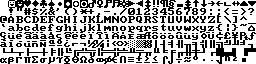
So then you need one more row to separate lines (or live with the occasional joined characters, as CGA did with its 640x200 resolution).
> When the Type 80 sorter was introduced, standard AC power hadn't fully taken over and parts of the United States used DC or 25 Hertz AC.[9] Thus, the sorter needed to handle fifteen different line inputs including unusual ones such as 115V DC or 230V 25 Hertz AC.
[1] http://www.righto.com/2016/05/inside-card-sorters-1920s-data...