tverlinden
I can't watch the video at the moment but I imagine the paper goes much farther in-depth with the internals of this AI.
It can also still be reached here: http://news.ycombinator.com/item?id=5160680
As to why it's so low on the list, I'm not sure.
But seriously, now. Reverse Polish notation is plenty intuitive as long as you don't get too crazy with what you put on the stack.
For example,
(7**3 + 9*7) / 2
7 3 ** 9 7 * + 2 /
(((7 3 **) (9 7 *) +) 2 /)
P.S. You'll notice that with parentheses RPN looked remarkably Lisp-like. This isn't a coincidence. The core difference between prefix notation as used by Lisp and RPN is that operators in RPN may only take two arguments (it's more complicated in languages like Forth, but since we're talking about arithmetic here we can safely make this assertion). This is the tradeoff RPN makes: losing the ability to have n number of arguments per operator, for the ability to ditch those parentheses for good.
It should also be clear that one could easily have a Lisp-like syntax similar in appearance to the RPN with parentheses above (though with Lisp's ability to have more than two arguments), but just happening to put operators at the end. Conversely, one could have an RPN where operators are at the front, which is actually the concept behind Polish notation, where RPN stems from: http://en.wikipedia.org/wiki/Polish_notation
On a final note, since RPN is read from left-to-right exclusively, a speaker of an RTL language would actually be worse off. The perceived unintuitiveness is more because English is a subject-verb-object language, whereas RPN is subject-object-verb.
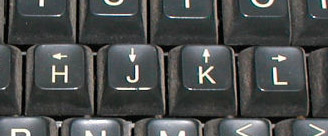
http://www.catonmat.net/images/why-vim-uses-hjkl/lsi-adm-3a....
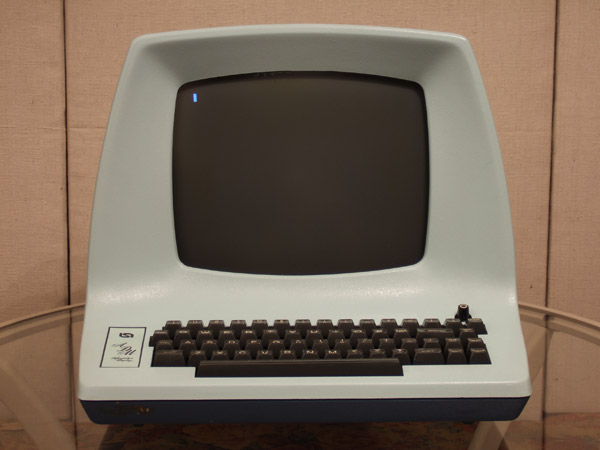
http://www.catonmat.net/images/why-vim-uses-hjkl/adm-3a-hjkl...