throaway-1931
Re:What should I expect from moving tech jobs from USA to Europe?
on Friday February 21, 2025 @03:40AM (#43125418)
The 30% ruling (now 27% ruling) used to be 10 years, it was lowered down to 8 years, and then it was lowered even further to 5 years, affecting retroactively people that arrived at the time it was 8 years (like myself).
The ruling, in its current implementation, gives foreigners 27% of their salary tax free, which for highest tax interval is close to 50. There is a maximum you can apply to though.
When you own a house you get a tax deduction from the interests you pay for the mortgage. For what I understand, that tax deduction is limited by your taxable salary, so I don't understand how the 27% ruling can be abused, since that reduces your taxable salary. I wouldn't be surprised though, the Netherlands have a ton of "optional" laws and tricks that allow people to "legally" evade taxes.
There is a common misconception that populist politicians exploit where they claim that the ruling is a subsidies for employees. This is not true, it helps the IT sector to hire people from abroad on the cheap side. eg. the only reason I'm here and not in Ireland is because of the ruling: The base salary in Ireland was way higher, but in NL with the ruling it was basically the same. After I arrived I noticed that I was lowballed hard compared to my native colleagues, and that continued on other job offers after I shared with them I was still in the ruling.
Finally, I would really think twice coming to the Netherlands today considering the ruling, with the current government it's definitively not guaranteed [1]
[1] https://www.dutchnews.nl/2025/02/omtzigt-takes-aim-at-expat-...
Re:What should I expect from moving tech jobs from USA to Europe?
on Wednesday February 19, 2025 @11:32PM (#43111175)
Where can you find large detached houses for 500k in the Netherlands?
Also, 30% ruling doesn't mean paying 0 tax (https://thetax.nl) and it's not guaranteed. The government decided that 8 years was too much and decided to lower it for people already in the country. I know it well, it happened to me.
Re:Visualized: Presidential Executive Orders
on Wednesday February 19, 2025 @02:17AM (#43099495)
Even if anybody cared, the fact that he ran out of his "normal amount" of executive orders for the year in A MONTH should raise an eyebrow or two
Re:CFPB's 1,700 employees told to "not perform any work"
on Tuesday February 11, 2025 @04:22AM (#43010696)
From the article:
"Supporters highlight its work to penalize large companies, including banks, for allegedly mistreating clients — with the bureau claiming in 2023 that it had restored $17.5 billion to Americans over the previous 12 years “in the form of monetary compensation, principal reductions, canceled debts, and other consumer relief.”
Last year, the CFPB finalized a rule capping credit card late payment fees at $8 — down from an average of $32 — which it estimated would save consumers $14 billion per year."
Considering the US citizens their shareholders, I would like to see how many private organisations of that size have such an impact in just 12 years.
Re:Tax, healthcare, immigration: why Dutch people voted for Geert Wilders
on Wednesday November 29, 2023 @02:48AM (#38456675)
Actually is the EU (well, all the member states together) with the Common Agricultural Policy who decides, as without subsidies there would be no industry. Why do you think that the BBB (Farmer's party) doesn't want out of the EU?
> Around 20 million people are feed by their agriculture
This is a nice political slogan, however I don't think it's true. Just go to your local supermarket and try to find anything of Dutch origin besides tomatoes, meat, eggs and milk.
By the way, I support the idea of each country having their own strategies resources guaranteed, and this includes food.
The issue here in my opinion is the way they grow the produce. They could grow less, export less and pollute less. As an example: From all the EU exports, eggs of NL origin represented 42%, while poultry meat represented 23% [1] (2013 data) This makes absolutely no sense in a country of the size of the Netherlands and it makes even less sense considering they are selling them very cheap, as you can see by the low GDP impact of the whole industry.
[1] https://zootecnicainternational.com/focus-on/netherlands-lea...
Re:Tax, healthcare, immigration: why Dutch people voted for Geert Wilders
on Wednesday November 29, 2023 @02:33AM (#38456605)
> Since the regulation comes from the EU, this is not an option
You are right in that they cannot drop it, but they can amend it. The issue is that if they want to drop the nitrogen requirement they would have to come with scientific arguments on how the nitrogen limits doesn't hurt the protected areas, or alternative means to protect those areas from the nitrogen.
> The reason it is on the Dutch agenda at all, is that Dutch environmental organisations realized that nitrogen was a threat and even took the Dutch government to court to act on it
I fully agree with your point
> 18000 building projects had to be halted. That's no tiny part
I'm sorry I wasn't clear in my comment, it's definitively not a tiny part of the total building projects (for context, currently in NL there are like 75k ongoing), but of the housing crisis as a whole.
In my opinion there are many issues with housing in this country. ie. Empty houses due to investors not wanting to rent, cultural tendency for low population density projects, lack of labor, massive (badly implemented) intervention from the government, etc.
Re:Tax, healthcare, immigration: why Dutch people voted for Geert Wilders
on Tuesday November 28, 2023 @11:13AM (#38447309)
> The housing crisis [...] Again this regulation comes from the EU so NL can't just change it.
As a foreigner living in the Netherlands for many years it baffles me how successful are the Dutch politicians on using the EU as a scapegoat for their own wrongdoings. In my opinion the main issue is the complexity and the lack of understanding of the general population of the European legislative process.
The "regulation that comes from the EU" was redacted and implemented by the Dutch government including the nitrogen limits that you talk about [1]. the areas where nitrogen is a problem where proposed and designated by the Dutch government [2] (which, by the way, together with the farmers have been receiving EU subsidies for their conservation for many years).
How the housing crisis relates (in a tiny part), with this specific environmental regulation is not that there is no free space to build on, but that the Dutch government botched the regulation that allowed for construction of housing near to the designated areas, leading to the Dutch judiciary to annul it [3].
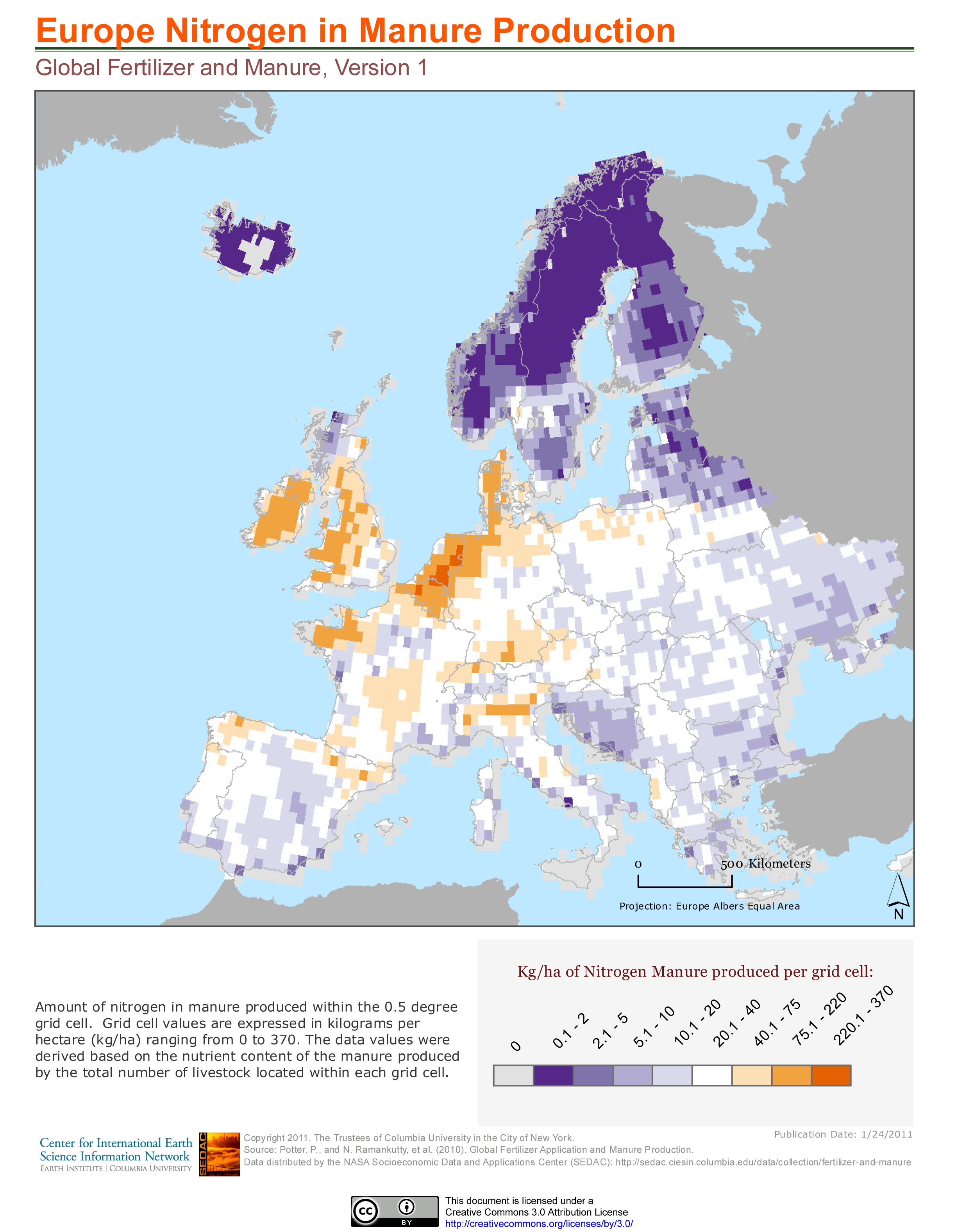
In the meantime, the agricultural sector that represents 1.6% of the GDP and employs 2% of the population causes 46% of the nitrogen emissions in the country. This is not normal[4], and it's the reason why the nitrogen limitation was introduced in the Dutch implementation of the directive and it's not present in the regulation of most of the other countries.
Who knows, maybe if instead of the farmers party, it was a housing party who got the support of 20% of the population in the last provincial elections we would be talking differently about this topic and people would have better informed opinions.
[1] https://business.gov.nl/regulation/code-conduct-nature-conse...
[2] https://www.government.nl/topics/nature-and-biodiversity/nat...
[3] https://www.nautadutilh.com/en/information-centre/news/the-c...
[4] https://upload.wikimedia.org/wikipedia/commons/f/fb/Europe_G...