scotje
Re:Self-driving cars turned out to be harder than expected
on Friday February 14, 2020 @03:34PM (#22330123)
It's not impervious to bad weather, but pretty resilient. I'd say in the 2 years we've had ours the system has shut off maybe 3-4 times due to one of: a) very low and direct sun angle, b) very heavy rain, c) dense fog. Which, to be fair, are all difficult conditions for a human to drive in as well.
But I agree with the parent, the suite of driver assistance features is very good, but a long way from "self driving".
Re:A family converts a decommissioned school into a home and bed-and-b...
on Friday January 29, 2016 @06:43PM (#10999471)
They also recently did a similar project in Bothell, WA:
http://www.mcmenamins.com/AndersonSchool
Re:Dollar a Day
on Wednesday October 01, 2014 @08:58PM (#8398853)
It appears that Network For Good largely operates this way as a "donor-advised fund":
Re:Dollar a Day
on Wednesday October 01, 2014 @05:26PM (#8397851)
Do you know if there a legal/tax impediment to getting the pass-through classified as a not-for-profit? Or did you just mean it makes it harder to implement as a traditional startup?
Re:Ingredient delivery for restaurant recipes
on Thursday July 31, 2014 @10:08PM (#8118088)
I'm curious as to what your turnaround time from order to delivery is?
We actually tried something pretty similar last year here in Portland (the site is still alive at www.localplate.com although we have ceased operations), we found it pretty challenging just to get people to plan ahead far enough for our offering to be viable. (We came across some consumer research that something like 70% of households don't have a plan for dinner until sometime the same day.)
We eventually tried distribution through existing retail channels which definitely helped with the traction side but made the economics pretty challenging. :)
Best of luck though, it's an interesting space with a lot of people attacking it from different directions right now.
(E-mail is in my profile if you want to know any more about our experience.)
Re:Six tanks at Hanford nuclear site in Washington are leaking
on Monday February 25, 2013 @06:38PM (#5282674)
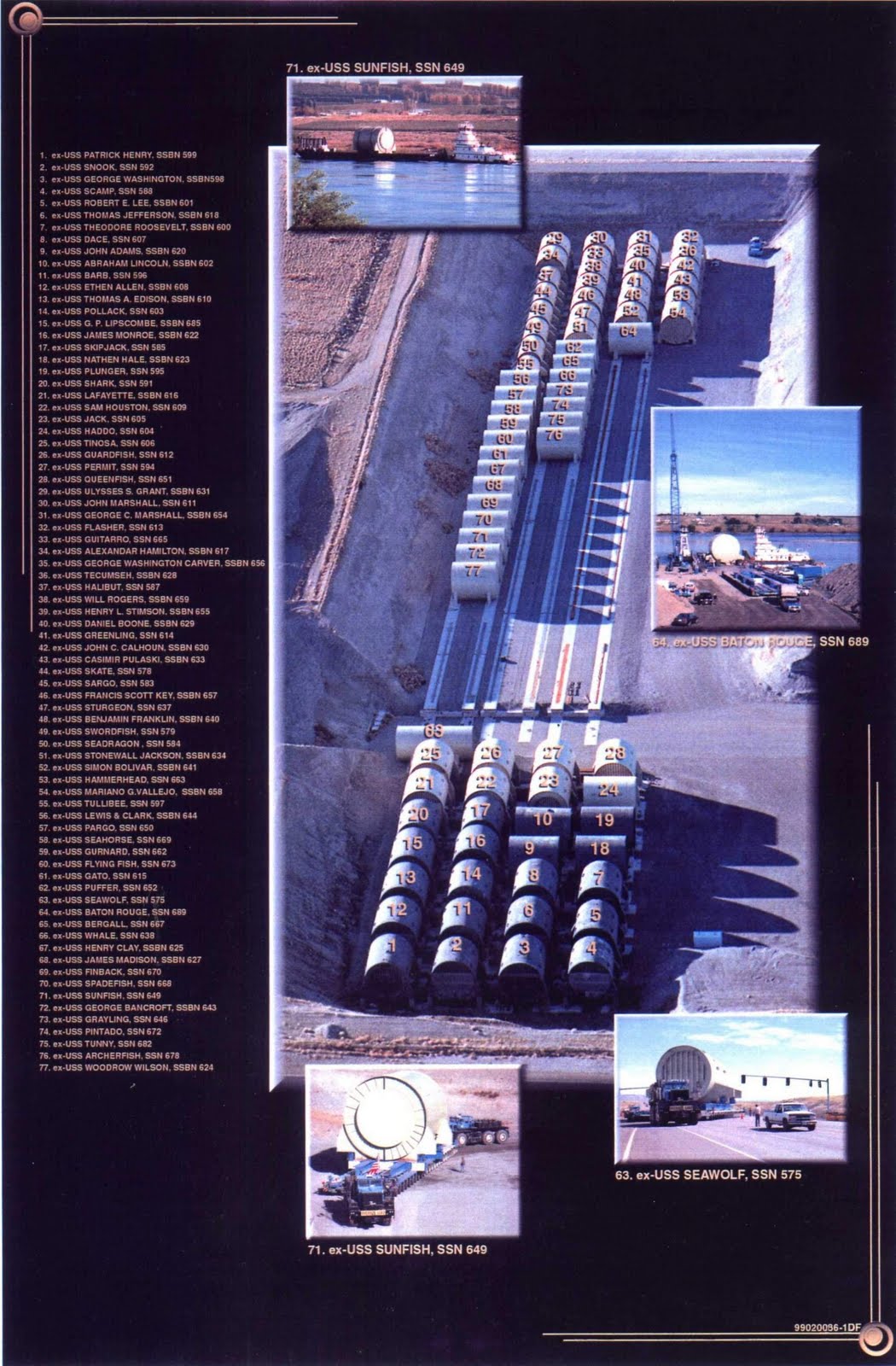
Well, I haven't found a specific treaty or agreement covering the Naval reactors. It may be a less formal arrangement, I don't know.
But a did find a nice picture of the reactor pit: http://3.bp.blogspot.com/-jYVl__lRp5s/Tfpf4Cyi6rI/AAAAAAAAA6...
Re:Six tanks at Hanford nuclear site in Washington are leaking
on Monday February 25, 2013 @06:24PM (#5282590)
I had to do some Googling, but the PPRA treaty would appear to explain the valve cover inspections: http://dtirp.dtra.mil/tic/synopses/ppra.aspx
Still looking for what would apply to the Navy reactors.
Re:Six tanks at Hanford nuclear site in Washington are leaking
on Saturday February 23, 2013 @02:47PM (#5271157)
There are also a limited number of public site tours each year, focusing on the B Reactor. (The first full scale fission reactor in the world.)
http://manhattanprojectbreactor.hanford.gov/
I've gone twice and it is really fascinating. You get to stand about twenty feet from the face of the reactor core, walk around the control room, etc. I have some pictures and video I can share if anyone is interested, although I'm sure some Googling can turn up lots of them as well.
One of my favorite anecdotes is that the valve covers for all the cooling pipes are open and have to remain that way so that the Russian inspectors can verify each year that there is no evidence that the reactor has been in operation. (Not sure if these inspections are actually still happening.)
Also for arms control purposes, there is an open pit elsewhere on the site where decommissioned US Navy reactors are stored. (Russia can monitor the number and position of them via satellite.)
Re:Use Rails? Check yourself for the YAML exploit
on Friday February 01, 2013 @05:39PM (#5153987)
See, in a very circular way I was just reporting the typo. :)
(Looks good now that I have the right release deployed, by the way.)
Re:Use Rails? Check yourself for the YAML exploit
on Friday February 01, 2013 @05:14PM (#5153858)
Aha, well apparently I never merged that commit into my deploy branch, so it was still actually on 3.2.1. That combined with the fact that your page had said 3.2.1 was safe caused my brain to short circuit and not realize that 3.2.11 is what it needed to be on. :) I'll redeploy and check it again, thanks guys!
Re:Use Rails? Check yourself for the YAML exploit
on Friday February 01, 2013 @05:03PM (#5153791)
I just tried this on one of my side project sites and it's reporting it as being vulnerable. However I upgraded the site to Rails 3.2.1 last week (and just confirmed that's the version in the bundle). Is there something that would cause a false positive or is my app really still vulnerable?
Re:How to not rely on Rubygems.org for deployment
on Thursday January 31, 2013 @04:38PM (#5147647)
Thanks, those are all fair points.
The reason I went with "vendor everything" several years ago was that I had to make some changes to a legacy codebase and discovered that one of the gems it depended on was no longer available. It wasn't the end of the world to refactor around it, but it motivated me to find a way to ensure I would always have a local copy of all the dependencies for each app.
Someone in the comments of the rubygems.org story yesterday mentioned using a submodule for vendor/cache which seems like an interesting idea to me. That could at least partially address #3.
Re:How to not rely on Rubygems.org for deployment
on Thursday January 31, 2013 @04:06PM (#5147465)
Steve, could you maybe expand a little bit on your reasons for not wanting to have the gems cached in your repo? Have you run into practical issues (deployment speed, etc.) or is it more of a philosophical thing?
Re:Ruby deploys temporarily disabled
on Wednesday January 30, 2013 @02:52PM (#5141379)
If you use bundler, "bundle package" can help reduce or eliminate your dependency on external gem repositories. At least for deployments.
I generally try to follow the "vendor everything" philosophy: http://ryan.mcgeary.org/2011/02/09/vendor-everything-still-a...
Re:AT&T Throttling Unlimited Plans after 2GB Data Use
on Saturday February 04, 2012 @05:01PM (#3552328)
Unless you have a 4S.
Help me research my idea by taking a 5 minute survey about making dinner.
Decided to make some "Cofounder Wanted" shirts to bootstrap my first startup.
Re:Steam loses user database
on Thursday November 10, 2011 @07:47PM (#3222764)
I would say your customers can sue you regardless of what you say in an email or blog post. Using lawyers to hide from your customers seems less than optimal.
Re:Vidyard (YC S11) Is A YouTube For Businesses
on Monday August 22, 2011 @02:47PM (#2913569)
Personally, I find the "Pricing" line of the comparison chart to be misleading. For $199 (a year) you get 50GB of space and 250k views with Vimeo Pro. Under the Free Viyard plan you get 1 video and 101GB of bandwidth. Also, the "Unbranded Player" line of the comparison is checked for Vidyard even though the pricing page says the Free plan uses a branded player.
Maybe just get rid of that pricing line in the comparison?
Should Yelp and Kudzu intervene when their reviewers are being harassed?
Re:Interesti.ng. The first .ng domain name has been registered.
on Thursday December 30, 2010 @02:19PM (#2053289)
Other than having to mail them a paper check(!), registering js.co.tt with the Trinidad and Tabago NIC was fairly painless. As others have mentioned though, you are pretty much always at the whim of the local government. If you wouldn't trust the local judicial system to fairly adjudicate any disputes, you might want to think twice before basing your business on their TLD.
Re:Hipmunk demos at Travel Innovation Summit (video)
on Wednesday December 22, 2010 @04:29PM (#2032527)
Different people place importance on different things. The "people who buy airline tickets" market is probably large enough to withstand some segmentation.
Re:Reversal on Carbs: Scientists now blame carbohydrates for America's...
on Tuesday December 21, 2010 @05:05PM (#2029577)
I was trying to think of a good analogy before but just came up with this: imagine if the Minerals Management Service (theoretical regulator of the oil industry) was in charge of setting the fuel economy standards for cars and trucks.
Re:Reversal on Carbs: Scientists now blame carbohydrates for America's...
on Tuesday December 21, 2010 @03:24PM (#2029215)
Especially the USDA who's mission is to promote our agricultural industries. For some reason, we have the agency charged with supporting the producers of food setting the official recommendations for what and how much you should be eating.
Re:BankSimple Launches Preview Site
on Tuesday November 30, 2010 @08:27PM (#1956394)
Unless it has changed recently, Gmail ignores the dots anyway. So if you find a form that wont validate your [email protected], you can use [email protected] and still receive it.
Re:Finnish EV Team Learns a $400,000 Lesson in Humility at Automotive ...
on Tuesday October 19, 2010 @02:04PM (#1808047)
So, if they had signed the agreement and won, would they have learned an $800,000 lesson in the evils of socialism or something?
They placed a bet on their car and it didn't pay off. Doesn't mean it was a bad bet. (In fact, since it sounds like they were the consensus favorites going into the competition, it was probably a good bet.)
Re:My short history of Engine Yard and my Resignation
on Friday August 13, 2010 @11:23AM (#1601145)
Are you thinking of Yehuda Katz who works at EngineYard?
Re:The Startup Diet: How I Lost 35 Pounds While Working Overtime
on Monday August 09, 2010 @10:20PM (#1590236)
Good Calories, Bad Calories has a pretty robust bibliography, and the author, Gary Taubes, is a well respected science reporter. It would be a mistake to characterize his book in the way you have. Check it out from the library and read some of it yourself. :)
Re:How we buy plane tickets and why it's ruining air travel
on Tuesday July 27, 2010 @03:23AM (#1550526)
The in-flight WiFi on Virgin America (and most domestic carriers as far as I know) is a cellular based system, not satellite.