petespeed
Re:Kolibri OS: fits on a floppy disk, programmed using interrupts
on Thursday November 30, 2023 @08:02AM (#38472948)
Previous discussion: https://news.ycombinator.com/item?id=27249075
Re:Ask HN: How do I code offline for a week?
on Monday October 02, 2023 @08:34AM (#37737282)
Cloud-cutting is an interesting journey, even if temporarily done.
Some offline alts:
1. Penpot for ui design 2. Llama for stackoverflow (from this thread, yet to try myself) 3. Python had devpi to cache packages. You might find something similar for npm.
I also found vscode plugins are mostly offline. A nuc-style box with docker + glinet router may help if you are not alone on this journey.
It might not align with current trend, but I would like to make cloud-cutting a norm, instead of exception.
Re:Ask HN: Lessons learned from implementing user-facing analytics / d...
on Thursday September 28, 2023 @08:53AM (#37688958)
Similar to supervised and unsupervised learning, one can see dual paths on this journey. One path answers the questions which have been in user's mind. The other explores unasked ones to finds new insights.
Re:Why are websites requesting access to motion sensors on my desktop?
on Thursday September 28, 2023 @08:37AM (#37688757)
From the text, feels like user agent should be capable, it should let site request sensor data and randomly reject certain requests after X (random) seconds, while providing fake data in other cases.
Re:Why are websites requesting access to motion sensors on my desktop?
on Thursday September 28, 2023 @08:23AM (#37688587)
How difficult would it be for a bot developer to write avoidance to such detection?
Re:Happy Birthday OpenStreetMap
on Wednesday August 09, 2023 @09:40AM (#37062486)
Any solution to provide live traffic overlay on OSM?, that Google does via crowdsourcing (I think).
Re:Show HN: Continue (YC S23) – Open-source coding autopilot
on Friday July 28, 2023 @12:27AM (#36903105)
I tried to change config.py to use ggml setting, but I did not see any request going to local llama-cpp.server. It keeps on asking for openai key. The local llama-cpp.server is up and I was able to make swagger calls for completion.
Assuming that may be I missed something, I deleted ~/.continue and trying to start from scratch (vs code message: Starting Continue Server ...). I do see FastAPI is up on http://localhost:65432/ still vscode dialog shows same message. Where I can see the logs what its trying to do? What am I missing?
Anyone else able to use local ggml?
Re:Circuit.js – electronic circuit simulator on the web
on Tuesday April 04, 2023 @08:20PM (#35447604)
Thank you.
For person trying to learn circuit theory and logic design, would you recommend a resource that can be followed along?
Also, any recommendation for kids? I think this area can be explored by kids in the same way programming.
Re:Jacob Ziv has died (the Z in LZ compression)
on Tuesday March 28, 2023 @07:43AM (#35339154)
Thanks for sharing.
I followed this teaching path: scratch > python > sqlite > javascript (web). I am missing algorithms and OOP, and will look for gradual learning resources in these area.
One recent area I tried was observability. With prometheus and grafana, they got into collecting more data points and creating visualizations for them. Bangle.js is another one.
Re:Jacob Ziv has died (the Z in LZ compression)
on Sunday March 26, 2023 @11:35PM (#35322576)
Would you mind sharing:
1) sequence in which you gave her tutorials e.g. first tetris, then snake game, etc.
2) sources that you used to guide her through these tasks? e.g. youtube videos or other links.
Thanks.
Re:In-Flight Entertainment Challenge
on Monday March 20, 2023 @09:28PM (#35241395)
Compete with fellow travelers.
Game players and observers.
Travel socially+locally connected.
Re:Nokia launches DIY repairable budget Android phone
on Sunday February 26, 2023 @02:18AM (#34943748)
Making parallels with phone software, imagine that edge AI inference becomes a necessity in few years which makes a lot of current hardware obsolete.
Re:Google Python Style Guide
on Saturday February 11, 2023 @09:07AM (#34752379)
SRP violation?
Re:Tech Journalism Doesn’t Know What to Do with Mastodon
on Sunday December 25, 2022 @12:12PM (#34128875)
I made the same mistake. Judging by the first few sentences.
Re:Ask HN: How do I thrive as part of an unambitious team?
on Sunday November 06, 2022 @12:28AM (#33488992)
It all depends on the culture that your organizational leaders support.
If they support your team's culture, then you are in a wrong org. Options: 1) Exit, 2) Invest your time to change them, 3) Challenge yourself to fit with them without losing your motivation, 4) Become like them.
Life is short, and this team is not a good benchmark/reference point for your career in job market, so easy route is #1.
If your leaders do not like such culture, then you have an opportunity to become a change leader. Assuming you are an IC, this path will likely require you to transition into a people leader. Make sure your leaders in sync with your change plans. (see HBR paper: power failure in management circuits).
Re:Backlash after 500 drones light up New York City sky to celebrate C...
on Saturday November 05, 2022 @01:04AM (#33478144)
I have the same question.
What is the software architecture to make that possible?
Does any open-source solution exist?
Re:Show HN: The Unix Pipe Card Game – teach kids basic Unix commands
on Sunday October 16, 2022 @08:43AM (#33223157)
More from the author: https://github.com/jackdoe/programming-for-kids
Re:A Real World React – Htmx Port
on Sunday October 16, 2022 @08:06AM (#33222962)
Can anyone explain how htmx (or similar) for work for an electron app?
Re:Penpot, Open Source Figma alternative, raises $8M in funding
on Wednesday September 28, 2022 @06:16PM (#33013958)
I see what you are saying regarding artboard view.
But is it necessary? Can't the artboard be visualized in a better way? If such high-level view is desired, won't rasterized details be sufficient till one zooms in?
Re:.NET Myths Dispelled
on Saturday March 12, 2022 @07:06PM (#30656433)
smartdisk anyone?
Re:Comparing SQLite, DuckDB and Arrow with UN trade data
on Wednesday October 27, 2021 @03:14AM (#29010407)
Re:Ask HN: Vetted homeschooling resources for kids (5-10) to learn cod...
on Friday September 17, 2021 @08:21PM (#28572359)
Start with blockly: https://blockly.games/
Don't push to get all stages done. Engagement/interest is the key.
Next take them into scratch: https://scratch.mit.edu/ Scratch will be sufficient to get their foundations strong in areas like conditions, loops, events, input, and many more. One important thing I recommend is to create the lessons yourself based on their interests e.g. take their favorite characters into scratch and build a lesson, game or comic.
Once graduated from scratch, I have experienced that they can easily jump into python or javascript based on their interest. If by that age, they get into minecraft, introduce them to modding (i think lua) or libraries like pygame. You will also be teaching them how to read API documentation and how to "google" for errors.
Overall, focus on practical applications that keep them engaged, instead of exhaustive topic learning. Once connected with their own interest, they will learn the rest as needed or in other educational setups.
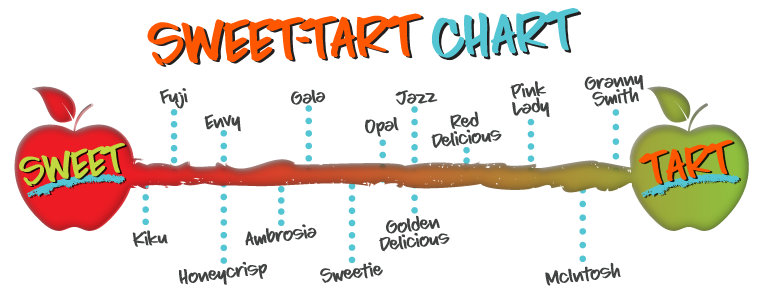
Re:Red delicious apples weren’t always horrible
on Sunday August 01, 2021 @11:27PM (#28032570)
Re:Tesseract OCR
on Monday July 19, 2021 @02:27AM (#27879816)
You can also compare total time between two options:
1. Do it on phone
2. Upload image to a powerful server and get results faster (more accuracy controls available too)
Re:Tesseract OCR
on Monday July 19, 2021 @02:23AM (#27879794)
I built a simple pipeline with bash and python. Did it for free for learning, but it has been deployed and used in a professional setting on daily basis for almost a year now. (Use case: fax with headers and tabular data).
Most of time was spent in field parsing and validating ocr output (is it valid date). At one point I realized that playing with tess config was giving marginal improvement, and investment in post-ocr parsing/wrangling was more valuable e.g. in date column, if ocr says b, consider it 6 and flag low confidence record.
One new nice-to-have use case customer asked was varying orientation of pages, that I couldn't hack together quickly.
Re:Podswap: Keep airpods alive and out of the landfill
on Sunday July 11, 2021 @07:22PM (#27805350)
Some thoughts:
1. Every new product designed should have a cost associated to it for proper disposal. Thus total cost of ownership is a "green cost" which is not just acquisition but also proper disposal.
2. Another option is to put burden of mandatory proper recycling back on the original manufacturer of the product using the same supply-chain that is used for sales. Thus consumers should be able to drop electronics at retail store -> supplier -> manufacturer, eventually leading to proper disposal.
3. Incentives from government and/or from culture for manufacturers whose products support R2R (Right to Repair). Thus encouraging reuse and refurb market.
4. Certify for and incentivize towards extending Total life of equipment. e.g. low-durability electronics carry a low-durability tax.
Re:The Programmer's Brain
on Monday July 05, 2021 @10:37PM (#27743742)
We can abstract your statement slightly by saying that it is "scheming to meet a desired objective". Then, in a way you also played "politics" by crafting path in your career to the way you like; in a different way; likely without impacting life of others.
Overall, not all politics are bad.
Re:Organicmaps: Android and iOS offline maps app for travelers, touris...
on Friday June 18, 2021 @12:24AM (#27547348)
As much I prefer to you such offline solutions, does anyone know any non-invasive way to overlay live traffic conditions to calculate best route to destination?
Re:Show HN: Rustpad, a self-hosted online collaborative text editor
on Saturday June 05, 2021 @08:37PM (#27409635)
Really nice and lightweight!
Some feedback:
1. I was not able to change color when setting user name. (Was it some browser extension blocking it?)
2. I was not able to run your docker image on pi (arm). The error is: standard_init_linux.go:219: exec user process caused: exec format error
Works fine otherwise on other platforms.