iplaw
I have added all of my family to a family group. I'll see if I can post to friends/publically and exclude an entire group of contacts.
A8: https://cdn.vox-cdn.com/thumbor/1--FKfJ3y71OTTYIz91rno4mYNs=...

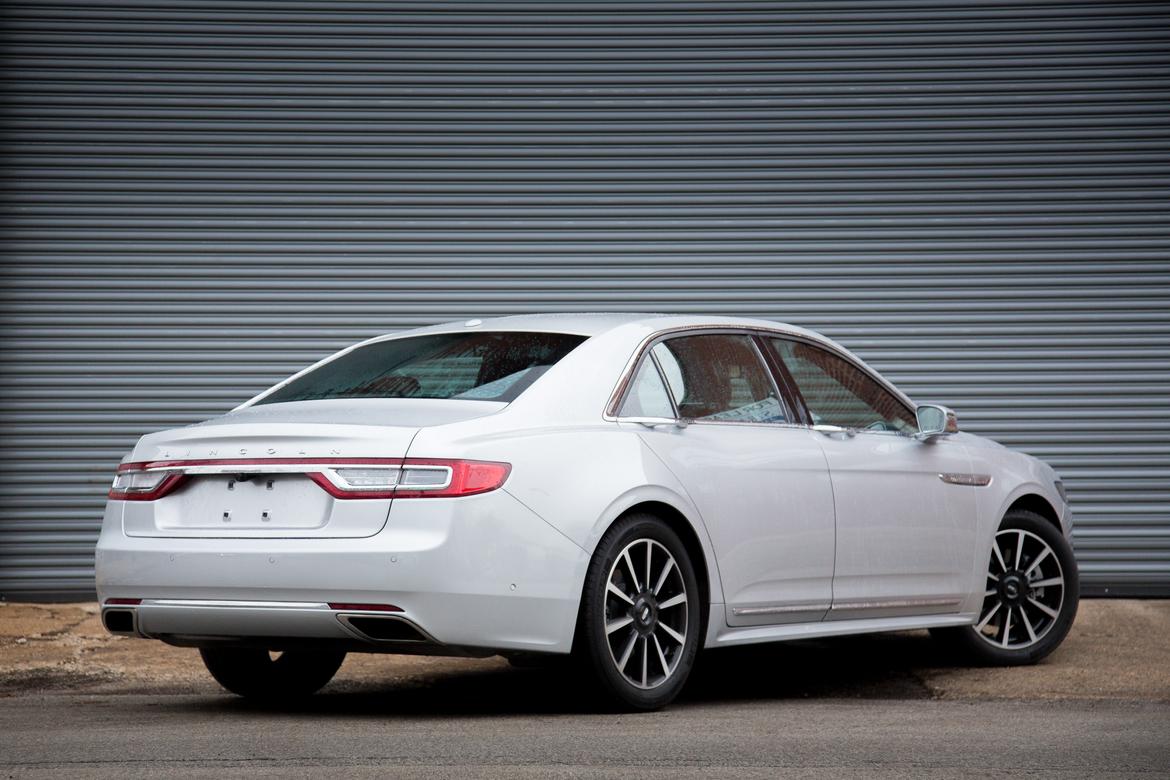
Continental: https://www.cstatic-images.com/stock/1170x1170/99/img-122263...
Dust will need to be cleaned off of the panels daily, which adds further expense associated with dedicated external missions to the array of panels.
Most of the ancillary considerations weigh in favor of the nuclear option.
Instead, in usual Uber fashion, the legal and HR team worked their magic and created a lose-lose-lose situation for themselves:
1. They established precedent for liability;
2. They obstructed justice, which could be used as fodder in subsequent lawsuits; and
3. They did nothing to prevent this story from being broadcasted far and wide.
Thus, depletion of your glycogen stores results in the loss of 2.0 - 2.5 kilograms (4.4 - 5.5 pounds) of "water (and glycogen) weight" within the first week of a low-carb diet. Larger individuals often retain even more glycogen and water, which can result in immediate losses of 6 kilograms (13.2 pounds) or more.
His point is that some studies, particularly short term studies, do not account for this non-fat weight loss.
Bolt: http://article.images.consumerreports.org/prod/content/dam/c...
Leaf: https://media.ed.edmunds-media.com/nissan/leaf/2017/ot/2017_...

1) I highly recommend Intentio, http://www.intentioipi.com, if you decide to pursue creation of patent drawings for fictional devices.
2) Be careful you don't tread on copyrights and/or trademarks.
On the Model S, this includes two high-priced options:
1. Enhanced Autopilot ($5000) quadruples the number of cameras from 1 to 4 and adds 12 ultrasonic sonar sensors and additional computing power to crunch the data.
2. Full Self-Driving Capability ($3000) doubles the number of cameras from 4 to 8.
You're going 80-93 mph in the center lane, and the unsafe driver impeding you is going 80 mph. In order to overtake this erratic driver, you need to move to the left lane and accelerate to 93-110 mph. The trouble is, on the Autobahn, drivers in the left lane are usually traveling at speeds of 110-137 mph, and often times even higher, up to 200 mph.
With those numbers in mind, I can entirely see your point. Early morning traffic in Dallas flows at 80-85 mph in the left lane. People don't always treat the left lane as a "fast lane" or a "passing lane." Some people cruise at 50 mph without a care for the speed of traffic around them. In order to merged into traffic in the middle lane while rapidly approaching the dangerously slow car in front of me, I sometimes have to accelerate to 90-100 mph.
I was reading a traffic study that showed that the single factor that contributes the most to traffic accidents is delta-speed. That is, the |relative speed| of the vehicle in comparison to the average speed of traffic. If traffic is flowing at 75 mph, a car traveling at 85 mph (10 delta) is less dangerous that a car traveling at 50 mph (25 delta). My anecdotal evidence confirms this. Slow drivers are often scared, timid, inexperienced, oblivious, and unpredictable. They'll change lanes without regard for the speed of anyone around them. They cause faster drivers to rapidly change lanes around them. They cause road rage incidents and reckless driving.
Anyway, I went off on a tangent, but I agree with what you're saying.
Removing this display from the Model 3 seems like a design choice intended to artificially distinguish and demote the Model 3 from the Model S.
As Musk said via Twitter, the Model S is on Gen. 4, and continues to offer the most advanced technologies.
That said, most people are waiting for the Model 3 because they can't (or do want to) afford a $100,000-$165,000 (with the self-driving packages) vehicle.
Optimizations will go a long way to swaying adoption. Clients like easy-to-use editing capabilities, and it doesn't get much easier than this.
One open workspace was intentionally planned so that the micro-managing CEO could readily see if the employees -- mostly attorneys, mind you -- were hard at work or hardly working. Nothing was private, especially not the condescending beratement from said CEO. I quit and started my own law firm, requiring work from home for my subsequent hires and leasing shared office space.
That firm was acquired by a client, and I was again forced to commute to work since I would be directing a large on-site team of attorneys and paralegals. It was another open workspace but, thankfully, the C-suite enjoyed perimeter offices. I don't understanding why they realized that we needed offices to avoid distractions and to keep confidential conversations in confidence, but failed to consider the effect of the open space on other employees -- also mostly attorneys and licensing guys.
I've since had a successful exit and again get to enjoy "working" from home.
As the article stated, Amazon has become well known as being customer-centric almost to a fault. I am confident when ordering anything from Amazon because I know that returns are quick and painless.
Prime example: I ordered an expensive Toto toilet for my master bath remodel, and it arrived next-day for free. Even if the shipping cost was rolled into the price, I still paid $500 less than local suppliers. The contractor got the toilet fully installed the day of delivery and, during leak testing, we discovered a hairline crack in the one-piece ceramic tank. I contacted Amazon immediately and, the very next day, had a replacement Toto toilet on my doorstep and a UPS driver hauling the cracked toilet to his truck.
I can't see Walmart ever providing this type of customer support.
I see this as one of the primary motivating factors.
> To test waters before buying Lyft?
I don't foresee this happening, at least not the current iteration of Lyft. With the rise of autonomy, I can see Lyft pivoting in one of two directions: autonomous fleet ownership and management, or management of the use of individuals' personal autonomous vehicles while they would otherwise sit unused.
Google has the capital to purchase a fleet on its own, so I don't see Google buying Lyft if that becomes their primary business strategy. If it's the latter option, Google may see value in the Lyft brand. People are already working with Lyft to grind out supplemental income with their personal vehicles, so it may be an easier sell to potential vehicle-owners to go with Lyft.
> To evaluate if it is better to enter the market providing rides to people or providing technology to companies providing rides to people?
Definitely part of the story.
What's funny is that Hancom is essentially arguing that shrink-wrap licenses (contracts) are unenforceable. Ghostscript was open sourced under the GNU GPL which states, in shrink-wrap fashion, that use of the software without an explicit commercial license binds the user to the GNU GPL. Integrated the software into their own closed-source software and distributing said closed-source software is unquestionable use.
At the same time, you can guarantee that Hancom would fully enforce their own shrink-wrap licenses - Terms of Use, Terms of Service, etc. - on others.
It's fairly clear that they will win the case in one fashion or another. I am predicting that the case will quickly be settled out of court for a lump sum plus a running licensing fee. You have a public admission from the defendant that they integrated the plaintiff's Ghostscript software into their own without either: 1) making the resulting Hancom office suite open source, or 2) paying Artifex a licensing fee for the software.
The case against Hancom was solid under copyright infringement, and now has the added sting of breach of contract.
Because it was binding arbitration and not traditional court proceedings, this judgment is not appealable. This compressed what would have been a 10-year drawn out and extremely costly process into five days. That's it!
There are more arguments against binding arbitration when it's an individual against a conglomerate - you get a biased arbitrator and you're sunk with no means of redress.
This appears to be more than a strategic move for this particular case on the part of Cloudflare. Cloudflare is hoping to build a reputation as 1) aggressive, 2) vindictive, and 3) successful. Believe me, other NPEs will take note and will think twice (or thrice) about suing Cloudflare out of fear of multiple defensive IPRs aimed at not only the patents in suit, but all patents utilized by the NPE in past and current litigation and licensing efforts.
The NPEs, generally, have very low risk tolerance when it comes to actions which may invalidate their money-makers. Thus, Cloudflare is hoping to get blacklisted. Just look at how successful Newegg and Rackspace have been with this strategy.