gabroo
Re:Harvard President Resigns After Mounting Plagiarism Accusations
on Tuesday January 02, 2024 @08:55PM (#38849752)
Claudine Gay faced backlash over the university’s response to antisemitism on campus, which led to increased scrutiny of her academic record.
Hiker killed by falling tree at Rancho San Antonio, in hills above Cupertino
The 100 or so Books that shaped a Century of Science
Re:Wearable device senses blood glucose and administers insulin accord...
on Sunday November 21, 2021 @09:11PM (#29301953)
I'm a type 1 diabetic. None of the examples mentioned truly replace the endocrine functions of the pancreas lost in the disease progression.
They do, however, use a sensor that measures blood glucose (fairly accurately) and a controller that estimates how much insulin to give (very crudely).
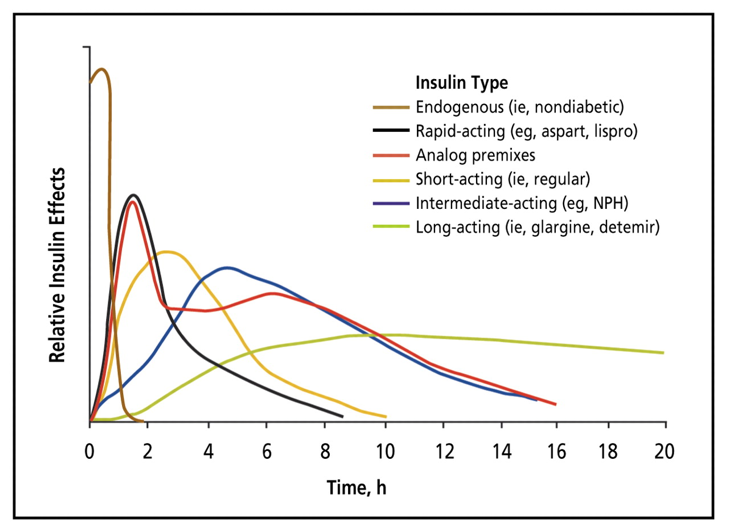
Maybe this seems unintuitive, but the bottleneck of these systems is not the hardware or the control algorithm, but rather the time it takes for the insulin to start "working" once injected.
In a normal situation, the pancreas secretes insulin directly into the hepatic portal vein and reaches peak concentration within minutes. When you inject insulin, depending on how good ($$$) it is, it can take anywhere from 2-4 hours to peak [1]. In technical terms, you have a closed loop controller with a very slow actuator, which severely limits how tight the control can be.
There is ongoing work to make faster insulins. But personally, I think the "cure" for type 1 diabetes will come from restoring the insulin-producing capabilities of pancreatic islets, or synthetically adding such capabilities to other highly vascularized tissues.
Also worth checking out is Tidepool, an organization trying to take an open source closed loop controller through FDA submission. https://www.tidepool.org/automated-insulin-dosing
[1] https://images.squarespace-cdn.com/content/v1/5b7c64af620b85...