distcs
Re:Sustain Open Source, sustain the planet: A new conversation
on Friday June 14, 2024 @06:08AM (#40679326)
For those like me confused how opensource.net is related to opensource.org from their about link:
> OpenSource.net launched in response to the halt of Opensource.com operations by supervising entity Red Hat, which supports the move. This includes facilitating the republishing of selected, previously published material from Opensource.com for the archives of OpenSource.net with the project’s community manager Seth Kenlon continuing to play an advisory and supporting role.
Re:Sustain Open Source, sustain the planet: A new conversation
on Friday June 14, 2024 @06:06AM (#40679319)
From the HN guidelines:
> Comments should get more thoughtful and substantive, not less, as a topic gets more divisive.
> Please don't post shallow dismissals, especially of other people's work. A good critical comment teaches us something.
Re:Things to commit just before leaving your job
on Tuesday January 16, 2024 @06:10AM (#39011978)
It isn't mysterious. It just doesn't match the vibes of HN. I don't come on HN to see silly jokes. And as you can see by the number of flags this post has received to kill it, it looks like most HN readers agree with me.
Re:Things to commit just before leaving your job
on Tuesday January 16, 2024 @06:08AM (#39011956)
Still it is not clear why a silly joke needs to be on the front page of HN!
Re:Everything will be alright in Iceland
on Friday January 05, 2024 @10:13AM (#38879881)
> Iceland was a very poor country for most people other than a few well off in the fishing industry.
Very insightful. I had no clue this was the case.
Is there any published list somewhere that measures the relative richness between the countries? I am just curious to see which countries come out at the top and which ones at the bottom. Anyone knows any such list?
Re:An app can be a home-cooked meal
on Friday January 05, 2024 @08:08AM (#38878665)
Tell us more about your project! Did you start it from scratch? Or did you use another opensource app as starting point and developed it further for yourself? What language is your app written in? Where do you run it? In CLI? or desktop GUI? The more you can share about it the merrier. I am sure others want to learn more about this too.
Re:An app can be a home-cooked meal
on Friday January 05, 2024 @07:52AM (#38878565)
Thanks for clearing up my confusion! That comment makes total sense now and not as baffling as it first looked.
Re:An app can be a home-cooked meal
on Friday January 05, 2024 @06:36AM (#38878047)
> What if you have never cooked at home but all the time in a commercial kitchen? That's the reality for most of us here so it is a bit difficult to relate to this article.
Really? I'd hazard a guess that the majority here (> 50%) have never worked at a commercial kitchen!
I'm honestly curious to understand why you think most people here must have worked at commercial kitchen and never cooked at home?
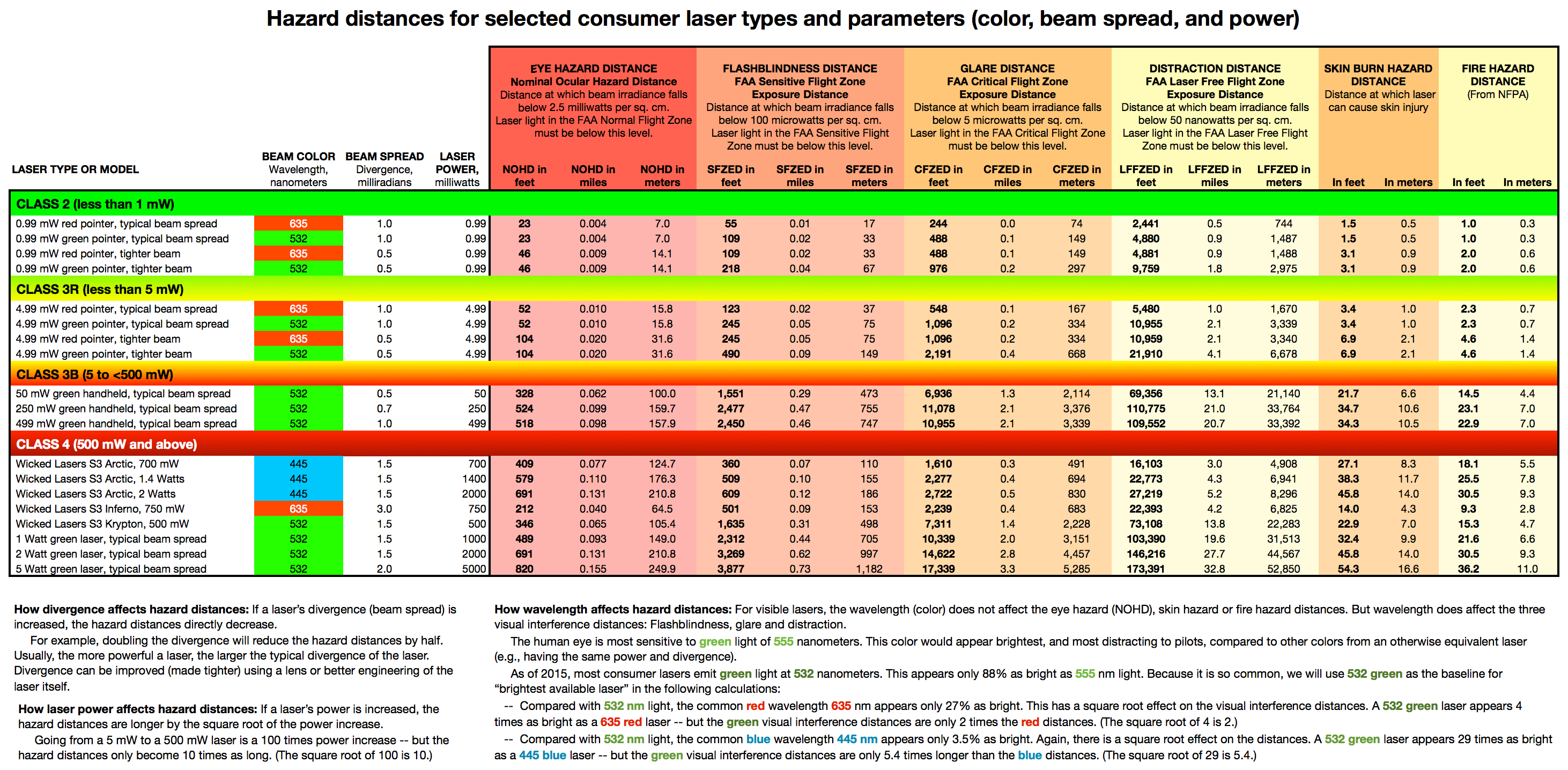
Hazard distances for selected consumer laser types
FXYT pattern drawing language with 36 commands
Re:A New Blog for 2024
on Tuesday January 02, 2024 @10:44AM (#38842756)
But the OP is talking about creating a new blog (a website that has a collection of blog posts).
Re:UK becomes first G20 country to halve its carbon emissions
on Tuesday December 26, 2023 @07:09AM (#38771106)
> As noted in another comment, some of this can be attributed to manufacturing being done elsewhere
This is an excellent point. Are there reports similar to TFA that accounts for this? I mean a report that calculates the total demand a country is putting on carbon emissions (directly or indirectly) will be more insightful.
Re:Serendipity is too important to be left to chance (1996)
on Tuesday December 19, 2023 @11:24AM (#38697595)
> The current Remembrance Agent uses the Savant information retrieval system developed in-house by the Jan Nelson and Bradley Rhodes. The Remembrance Agent runs through emacs, a popular text editor. The user interface is programmed in elisp, and the results are presented as a three line buffer at the bottom of the window.
There is a nice retro screenshot of Emacs after this. Looks like a really old version of Emacs. A nice window into the history of computer stuff!
Ask HN: How do HN posters find interesting links?
The post about The Borsuk-Ulam Explorer made me ask this question. If someone had not posted that link I'd have never discovered that cool link. But thanks to HN now I know it exists.How do HN posters find these cool links? How do you stumble upon these things?It never ceases to amaze me how much cool stuff people post here, stuff I could have never found myself if HN did not exist.
Re:The Borsuk-Ulam Explorer
on Friday December 15, 2023 @05:43AM (#38652867)
> Who made this?
> Colin Cotter (Imperial College, London) and Julius Ross (University of Illinois at Chicago, supported by NSF-DMS 1749447). You can provide feedback, or access the source code here.
I'd really like to know how these two people from different parts of the globe came to collaborate with each other. I know we live in the age of Internet and all but I'd really like to know how such people find each other and collaborate.
I missed out on this kind of collaboration when I was in college. But learning the answer to this question might be helpful to others who might want to do such collaboration but do not know how to get started.
Re:Deleting 50k Lines of Code in 3 Days
on Thursday December 14, 2023 @07:53AM (#38640783)
Is it a common practice to commit dependencies into the project repo? If so what type of projects do that?
Re:You Don't Batch Cook When You're Suicidal
on Wednesday December 13, 2023 @12:20PM (#38630607)
> still don’t have contents insurance (a hangover from poverty, I just wasn’t in the habit of insuring things and now keep putting it off, because paperwork terrifies me)
The author seems to be from UK. Is contents insurance a thing in UK? How many renters really do buy contents insurance? Genuinely interested to know how many think that contents insurance is worth it?
Re:Ask HN: Examples of nice open source software that are written as s...
on Tuesday November 28, 2023 @11:50AM (#38447798)
Anyone has got a similar list for single file software tools that are not libs? Something end users can use directly?
Ask HN: Examples of nice open source software that are written as single file?
Are there examples nice open source software or tools that are written as single file?These could be big or small projects but it needs to fit in a single file of source code.Like if it is a C project, then it should be a single .c file. Or if it is Rust project then only single .rs file.Why do I care about this? Just pure curiosity. I hope to discover some interesting projects in the answers.
Ask HN: Name names and thank open source maintainers of small projects!
Are there some small open source projects you really love? Take some time to thank the maintainers today. If they have a discussion forum where they welcome feedback, go thank them there. If there's nothing like that you can find, do it here. Post a comment. That's all it takes!Mention the project(s) you love, why you love them, name the authors/maintainers you want to thank and thank them!Try...
Re:Spotify Will End Service in Uruguay Due to Bill Requiring Fair Pay ...
on Thursday November 23, 2023 @08:35AM (#38392578)
Is there a service that actually gives MP3 downloads? Call me old fashioned but I'll happily pay for a service that actually gives me MP3 files that I can download and keep offline.
Meow5 Concatenative Assembly: The Conclusion
Re:I think C++ is still a desirable coding platform compared to Rust
on Wednesday November 22, 2023 @09:05AM (#38379272)
> In many years of coding C++, very rarely I experienced a stack overflow or segmentation fault. It is literally not an issue in every codebase I have worked with.
Is this true for most people though? What do you think about this quote?
Frankly I've seen a lot of segmentation fault issues with C++ projects. Granted much of it can be detected pre-emptively with good tools and when a segfault happens, I can debug it quickly too using a good debugger.
But I've to say that they still do happen and I still see them happening enough while developing and testing that I cannot simply dismiss segfaults as something unimportant.
Re:I think C++ is still a desirable coding platform compared to Rust
on Wednesday November 22, 2023 @08:54AM (#38379144)
A few things I've found notoriously difficult to do in C++:
1. Add two signed 64-bit integers without overflowing on either side (negative or positive) and without using 128-bit integers. If the sum is going to overflow, generate an error. If the sum is not going to overflow, evaluate the sum.
2. Multiply two signed 64-bit integers without overflowing on either side (negative or positive) and without using 128-bit integers. If the product is going to overflow, generate an error. If the product is not going to overflow, evaluate the product.
Essentially under no circumstance evaluate something that might overflow. Detect the overflow and generate error. Evaluate only if the detection algorithm says there is not going to be overflow.
We can't use 128-bit integers ecause some hardware may not have a 128-bit registers. It's probably possible to solve these but it gets complex pretty soon once you begin handling all the failure modes.
Does Rust make this kind of problems easy to be solved?
Re:I think C++ is still a desirable coding platform compared to Rust
on Wednesday November 22, 2023 @08:45AM (#38379016)
I've done some C++ but no Rust. I'd like to learn a few things from people who have done both.
1. How many years of C++ programming do you have under your belt? How many years of Rust?
2. For new work projects, do you choose C++ or Rust? Why?
3. For new hobby projects, do you choose C++ or Rust? Why?
4. Is there something about C++ that you wish Rust had?
5. Is there something nice about Rust (apart from the borrow checker) that you wish C++ had?
Re:Ten Lessons I Wish I Had Learned Before Teaching Differential Equat...
on Monday November 13, 2023 @11:52AM (#38252279)
> it seems self-evident to me that books and videos are complementary
Can't speak for others but for me it is more about efficient utilization of time rather than complementing multiple learning methods.
I've found that time spent in learning math from videos have poor return of investment. That time is better spent re-reading a chapter or that thing that I couldn't fully understand the first time and doing more exercises.
Re:Bangladesh removed lead from turmeric spice
on Monday November 13, 2023 @08:05AM (#38249668)
> if those are bad or clickbaity titles, they probably could just not be upvoted much
I am an active /new page lurker. You'd be surprised by the number of times I've seen clickbaity titles getting upvoted and making it to the front page.
Sure the clickbaity titles had good content too, otherwise they wouldn't get upvoted again and again. But when there are two posts with equally good content, the one with clickbaity title gets the needed votes soon enough to get into the front page and the other one keeps languishing at /new. It's sad but that's what I see happening again and again at /new.
I try to offset the unfairness by voting for the non-clickbaity interesting posts but adding one vote to a post that nobody else is voting for does not make any meaningful difference.
Re:Ten Lessons I Wish I Had Learned Before Teaching Differential Equat...
on Monday November 13, 2023 @07:15AM (#38249349)
> Have you looked at for instance Khan Academy's Grant Sanderson (aka 3Blue1Brown) Math videos?
I have. I went through Khan Academy, Brilliant and 3Blue1Brown. After spending more than 100s of hours I started getting the feeling that these are all good for elementary level math.
But for any serious math (think real analysis, complex analysis, group theory and beyond), all these platforms did was leave me with a warm fuzzy feeling of having learnt something cool but in reality that warm fuzzy feeling was not good enough for solving actual exercises that come in textbooks or really deeply understand the material.
I've given up on these online learning media. Back to textbooks. The difference is like night and day.
Re:FreeBSD 14.0 has reached – RELEASE
on Friday November 10, 2023 @12:19PM (#38221542)
Since FreeBSD is on the front page today, I thought this is a good time to learn from the collective wisdom of this community. 5 simple questions to those who use FreeBSD to stir up a conversation.
1. Where do you use FreeBSD? On your laptop? Remote servers? Routers?
2. Why do you use FreeBSD instead of Linux?
3. Why do you use FreeBSD instead of OpenBSD or another *BSD?
4. Do you find something lacking in FreeBSD? Is there something that is good in another OS that you'd like to see in FreeBSD?
5. What is that one thing about FreeBSD that you would hate to lose if you were forced to use another OS?