cgb_
Corrosion
Re:A love letter to the CSV format
on Thursday March 27, 2025 @02:42AM (#43490960)
vartabstop can help with per-column width. I found
https://sharats.me/posts/automating-the-vim-workplace-3/#usi...
which greatly improved my TSV editing experience in vim. Couple that with autocmd TextChangedI and you get realtime recalculation and alignment.
Re:Microsoft says 8.5M Windows devices were affected by CrowdStrike ou...
on Saturday July 20, 2024 @09:53PM (#41021773)
N-1 didn't save you, nor did N-2:
https://news.ycombinator.com/item?id=41015038
> "b) Since n, n-1 and n-2 versions of the sensor all died equally spectacularly, that bug as been around for at least three versions of csagent.sys."
There's so much misinformation around this Crowdstrike issue. The change deployed was in what is referred to as a "channel file" which isn't part of the software update mechancism (what you call N-X) but part of the intra-day frequent signature/channel updates it gets (that we all have no control over).
Crowdstrike are calling it an unfortunate "logic error" but they and few others are talking about the how a binary payload could get released to the public without seemingly any pre-release testing of the payload. If the content that was made available to the public had ran on a test endpoint, they would have discovered this "logic error" before taking down a high number of the world's systems simultaneously.
Re:Documentation as Code for Cloud Using PlantUML
on Monday July 31, 2023 @02:58AM (#36939556)
Hey, what style of diagram are you using for this? Deployment diagram? Do you have link to an example?
Re:Mosh: An Interactive Remote Shell for Mobile Clients (2012) [pdf]
on Thursday November 24, 2022 @06:05PM (#33737225)
I tend to agree with you, but we don't always have control over the networks we access, and fitting in with other org's policies is often required. ProxyJump is very handy for that.
Re:Mosh: An Interactive Remote Shell for Mobile Clients (2012) [pdf]
on Thursday November 24, 2022 @06:02PM (#33737199)
Try looking at options ServerAliveInterval and TCPKeepAlive, they should prevent SSH from detecting when there's temporary transport issues and persist when wireguard roams between IPs.
Re:Identity management for WireGuard networks
on Wednesday October 19, 2022 @08:47PM (#33269626)
I see this when my equipment roams back into my private network and the wireguard server is inside that LAN. It can be solved by NAT'ing packets arriving on your edge router's inside interface, destinated to your outside IP, back to the inside wireguard server IP.
Alternatively if your client is Linux, there is:
https://github.com/WireGuard/wireguard-tools/tree/master/con...
Re:I tracked everything I read on the internet for a year
on Wednesday September 07, 2022 @11:57PM (#32761004)
The author doesn't appear to have documented the bookmarklet itself. If they are here or another person, can you suggest what it might look like to have a bookmarklet collect the url, page title, meta description and image, and then set window.location.href ?
Re:Open Source Alternative To
on Thursday June 02, 2022 @04:06AM (#31592570)
I love the idea of these crowd-sourced systems, but is there any appetite to open source the data behind them?
In theory the collective knowledge of all of these platforms could converge on a single data-source that's freely available to analyse in any way we see fit, but more often the knowledge is behind the platform and ends up gated behind a Pro or commercial edition and the crowd is left to rebuild it again on some other platform...
Re:Ask HN: Which open source versions of SaaS products would you like ...
on Friday February 11, 2022 @08:14AM (#30301039)
MeshCentral
https://github.com/Ylianst/MeshCentral “This is a full computer management web site. With MeshCentral, you can run your own web server and it to remotely manage and control computers on a local network or anywhere on the internet. Once you get the server started, will create a mesh (a group of computers) and then download and install a mesh agent on each computer you want to manage. A…”
Re:WebRTC 1.0 telephony app using “hifi” Opus codec with up to 500kbs ...
on Wednesday March 24, 2021 @08:34PM (#26575042)
Hey there! What would be required to host my own version of this style of call access? adapter-latest.js and caller.js from the HTML source? Is there any more information to do something similar?
Re:Pimutils: The coreutils of personal information management
on Thursday November 26, 2020 @05:23AM (#25218643)
Yup - https://github.com/lefcha/imapfilter
"IMAPFilter is a mail filtering utility. It connects to remote mail servers using the Internet Message Access Protocol (IMAP), sends searching queries to the server and processes mailboxes based on the results. It can be used to delete, copy, move, flag, etc. messages residing in mailboxes at the same or different mail servers. The 4rev1 and 4 versions of the IMAP protocol are supported."
Re:iOS 13 app tracking alert has dramatically cut location data flow t...
on Tuesday January 14, 2020 @08:12AM (#22044426)
An app called PhotoSync is fantastic - can backup to cloud services, WebDAV, SMB and others. They recently introduced auto backup when charging.
The app has really positive reviews...
Re:Dropbox is DOWN
on Friday March 17, 2017 @08:24AM (#13893399)
Website randomly working for me, multiple agents failing to connect or partially connecting but then timing out.
Interesting that Dropbox help center [0] links to [1], which redirects to [2] and reports 'Private Status Page'. Did the status page ever work? Is it now hidden due to the outage? Is statuspage.io affected by the same problem?
[0] https://www.dropbox.com/en/help/30
[1] https://status.dropbox.com/
[2] https://dropboxpublic.statuspage.io/private-only?page=t34hty...
Re:Android permissions and hypocrisy
on Monday January 23, 2017 @07:53AM (#13461834)
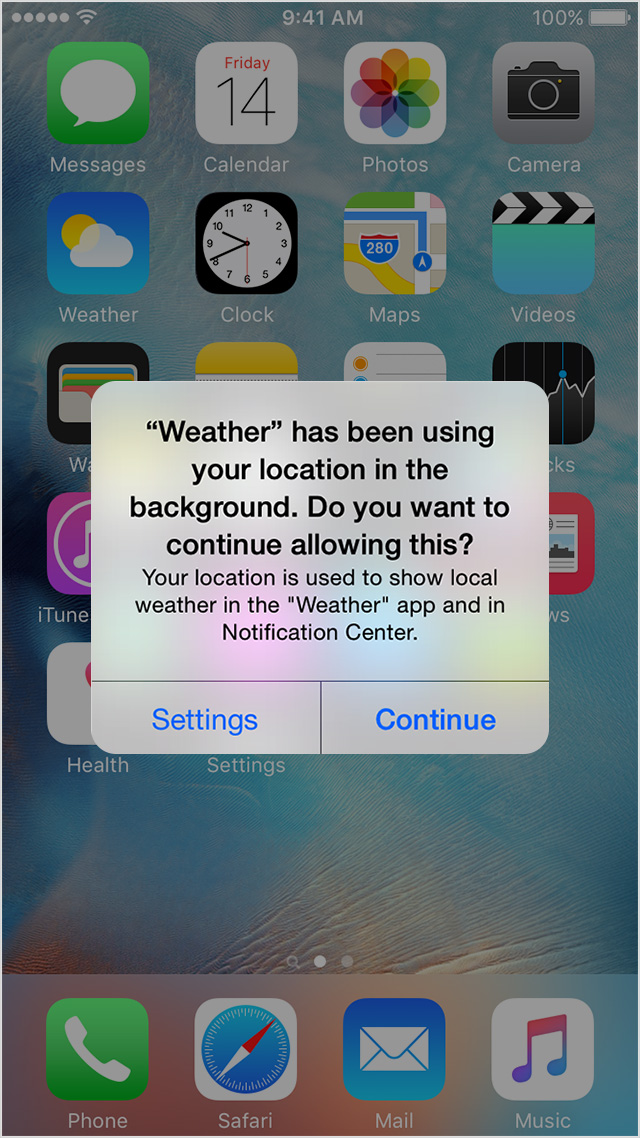
To be fair, those are app choices to require 'Always' for location tracking. You can most definitely restrict an app to use location only while using - you can't fault Apple or IOS for apps that (unnecessarily [1]) demand more.
One thing I really like about IOS is the reminder that an app has been using your location in the background for a while [2]
[1] http://www.theverge.com/2016/11/30/13763714/uber-location-da... [2] https://support.apple.com/library/content/dam/edam/applecare...
Re:Google Calendar now uses machine learning to help you accomplish yo...
on Wednesday April 13, 2016 @07:16AM (#11487217)
Hey, I do many things similarly (track connections with people, record movies watch etc. Nowhere near to the level of detail you've experimented with, but I've dreamt of using calendar as a database of life too, or at least some kind of timeline-based experience that sewed the various facts about my life (phonecall with x, meet with y) and presented it in useful ways. Nice to see someone else thinking along the same lines.
Re:WebTorrent Desktop – Open source streaming torrent client
on Wednesday April 06, 2016 @11:03PM (#11444391)
I've implemented the same thing in a Usenet/NZB streaming project a few years ago - it's actually trivial since the multi-part rars are uncompressed, so the raw bytes of inner-content are there ready to be read. Just have to handle RAR headers/trailers. Seeking worked too since Usenet posts were commonly made up of 700kb posts, so if a seek occurred, you prioritize retrieving the required posts where the user seeked to, to fill the media player buffer. Code has never been released for obvious reasons :)
Re:Show HN: Wallabag, a self-hostable application for saving web pages
on Friday January 22, 2016 @04:51PM (#10955823)
Registering at http://v2.wallabag.org/login, I just got exactly the same symptoms. See:
Re:Docker for Beginners
on Tuesday January 12, 2016 @09:12PM (#10891898)
I've found pipework (https://github.com/jpetazzo/pipework) still to be the easiest way to manage networking in containers when you know what you want. Start up your container with --net=none and then something like:
pipework mybr01 mycontainername 1.1.1.3/[email protected]
Weave is supposed to make this easy to (and offers some simplicity over docker 1.9's requirement for a clustered key-value store), but I got frustrated at their implicit iptables nat rule for networks created by default and haven't worked out how to stop that.
Re:Ledger, a command-line accounting system
on Thursday November 05, 2015 @03:38AM (#10512281)
All the time (many times per hour when doing bookkeeping).
But I use git & remote bare repos as a backup & multi-device sync method for nearly everything I do on my systems, so I'm pushing very frequently.
Re:Ledger, a command-line accounting system
on Thursday November 05, 2015 @03:35AM (#10512273)
I use https://github.com/nuex/t, which generates ledger timelog entries as documented here http://www.ledger-cli.org/2.6/ledger.html#Using-timeclock-to.... I've tracked approx 2000 billable hours using this method over the last couple of years. When I invoice, timelog entries are archived into a separate file, so my active timelog ledger file records unbilled time.
Re:Ledger, a command-line accounting system
on Thursday November 05, 2015 @03:29AM (#10512249)
I do something similar, although I name my receipts/documents with yyyymmdd-friendlyname.pdf for ease of lookup.
For my IT consulting business, I also wrote a wrapper that rejects entries that don't have a receipt tag which allows me to catch any entries that I haven't complied 100% with my practices (and tax office won't get upset in an audit).
I also autogenerate the ledger entries from the receipt name (and prompt for description/expense account/$$ with logic for handling common items like fuel etc).
I've played with PDF metadata so my entire receipt scanning => ledger is automated from just the PDF document but haven't reached a satisfactory setup there.
Re:How Walking in Nature Changes the Brain
on Wednesday July 22, 2015 @11:26PM (#9933809)
Don't know about the OP, but I visited Bad Kreuznach a few years ago which has a reputation for health/spas. They have public Saline Graduation Towers which offer a place to sit and breath in the mineral rich water droplets. Very soothing.
Re:The sad state of sysadmin in the age of containers
on Wednesday April 22, 2015 @10:32AM (#9420662)
I corrected myself for the other person to mean '[..] upgrade your docker containers'. I heavily use LXC containers (and had used openvz and vserver before that) and treat them as individual servers.
All your points about bad sysadmin practices are OS & container agnostic - they can happen on any platform, don't drag Docker into it. Sure there is a culture of 'docker run somebinaryimage [..]' but those people are the ones that do "curl | sudo bash" as well.
Your claim about non-reproducibility of Dockerfiles is bogus. The result of a Dockerfile build gives you precisely the reproducibility you desire. Every time you run a container from that image built from a Dockerfile, you'll get the same filesystem & environment.
Docker 1.6's "Content Addressable Image Identifiers" addresses your build in a year concern by allowing dockerfiles to refer to a digest to ensure you are building against exactly the image you expect (rather than the result of some build process that yum -y upgrades etc, which I think is what you were getting at).
Re:The sad state of sysadmin in the age of containers
on Wednesday April 22, 2015 @07:43AM (#9419694)
Well I should have qualified it with 'docker containers'. But yeah, those that have been around long enough in Linux container land have all dealt with vserver, openvz, lxc, etc, and all of those carried around this 'entire copy' of an OS, per container (ignoring vserver's vhashify). Docker helps you to spin up N containers running all sorts of applications based on the single master image.
Docker, whether your view is good or bad, brings something more than just another container implementation to the table...
Re:The sad state of sysadmin in the age of containers
on Wednesday April 22, 2015 @07:25AM (#9419616)
This rant is about containers, prebuilt VMs, and the incredible mess they cause because their concept lacks notions of "trust" and "upgrades".
But docker containers at least usually provide a dockerfile that describes exactly how a binary image is built. You just clone the source repo, audit the few lines of build commands and then build your own private registry. It's nearly no more trust than following the instructions of README or INSTALL. Just because fools are pulling down pre-build images and running in their datacentre, doesn't mean that's what way you should do it. And the problem with 'old-school' sysadmins is they are often far too quick to reject new practices, citing tired excuses based on misunderstandings of the technologies.
Ever tried to security update a container?
If you are trying to be an old-school sysadmin that expects to console or SSH in and run 'yum upgrade' or 'apt-get upgrade' your containers then you are doing containers wrong...
Re:Building a high performance SSD SAN, part 1
on Tuesday April 07, 2015 @08:28AM (#9333434)
You are right in that LACP bonding methods cannot increase the throughput of a single flow to gt any single link in the group (the balancing method can utilise src/dst MAC, IP and sometime L4 ports).
MPTCP establishes multiple subflows across individual IP paths and can load balance or failover across all subflows. Applications do not need to be rewritten to take advantage of it. I'm not sure if that includes kernel modules like DRBD though. I suppose someone needs to find out :)
Re:Building a high performance SSD SAN, part 1
on Monday April 06, 2015 @10:52PM (#9331783)
Might be a case where MPTCP (http://www.multipath-tcp.org/) would help with aggregating multiple links.
Re:Let's review Docker
on Saturday February 07, 2015 @06:25PM (#9015727)
"If you expect anything positive from Docker, or its maintainers, then you're shit outta luck.[..]If your development workflow is sane, then you will already understand that Docker is unnecessary[..]Docker would have been a cute idea 8 years ago, but it's pretty much useless today"
Umm ok? Judgement, jumping to conclusions. Take out some of that kind of tone and you have some legitimate criticisms of docker that might be taken more seriously.
There are some real warts in the docker core & community, and a high barrier of entry for multi-node deployments and isolated networks, but on the flipside, deterministic image build & deployment is a big win compared to many other ways of doing this stuff (at scale).
IMO, one of the biggest positives that Docker-like provisioning encourages is clustered-by-default architectures. When you build around failure by assuming nodes come and go (as easily as Docker makes it) your platform availability is likely to be more resilient to some types of failure.