5thaccount
I have no idea how well that would work, but it seems like the only variable you can control.
If you look at the article, it matches this idea:
> ... Mr. Smith referred to an “individual” in Equifax’s technology department who had failed to heed security warnings and did not ensure the implementation of software fixes that would have prevented the breach.
I doubt one individual is responsible for every patch in the organisation, and I reckon that Equifax likely has many individuals each responsible for different systems, all of whom have to deal with a central security department before they can, well, patch their system. I further bet the internal politics are off the chart, and the security team is a "no, you can't do that" department who makes things worse.
I put money on there being plenty of "individuals" who are each responsible for patching different systems at Equifax, and while this particular breach was in system X, A-W might, at another time, have been the epicentre of a breach for similar reasons related to internal processes that make moving fast nigh on impossible.
Now, while that's no excuse, I think the fault is likely not the individual who missed the patch, but the interaction between departments with different goals (political and practical) combined with an internal structure that makes changes glacially slow, and this sort of breach inevitable.
> – The numbers of hours worked by low-wage workers fell by 3.5 million hours per quarter. This was reflected both in thousands of job losses and reductions in hours worked by those who retained their jobs. > > – The losses were so dramatic that this increase “reduced income paid to low-wage employees of single-location Seattle businesses by roughly $120 million on an annual basis.” On average, low-wage workers lost $125 per month. The minimum wage has always been a lousy income transfer program, but at this level you’d come out ahead just setting a hundred million dollars a year on fire. And that’s before we get into who kept vs lost their jobs.
When laws with one goal achieve the exact opposite, we need to rethink the laws. Unfortunately, pyrrhic victories are rather common in politics.
> I wish the new tech entrepreneurs would find a better way to fix the low skill problem rather than find a way to reduce services/costs to the bone.
I doubt these low skill workers are the gig economy workers. Many people on AirBnB are doing fairly well, as no one wants to stay in the Ghetto, and the places with high take up are relatively well off places (London, NYC, SF). Ditto Uber, which requires a car under a certain age - is it 5 years? - not the sort of bombs truly poor people have.
The Minimum wage is a good comparison point here: http://www.pewresearch.org/fact-tank/2014/09/08/who-makes-mi...
> Just who are minimum-wage workers, anyway? ... people at or below the federal minimum are:
> Disproportionately young: 50.4% are ages 16 to 24; 24% are teenagers (ages 16 to 19). > Mostly (77%) white; nearly half are white women. > Largely part-time workers (64% of the total).
The problem isn't that minimum wage is unlivable - it is that some people can't get a job. Increasing minimum wage doesn't help people who can't get a job at all.
Similarly, the gig economy isn't reducing the cost of services for people who currently do it. Rather, it is an extra source for people who already make OK money. There aren't a lot of poor people living in the Haidt, or NYC, two places where I have taken AirBnB places, and there aren't a lot of people looking to rent a room in Gary, Indiana. Or Nairobi. Or Soweto.
That's the real issue - not the cost reductions in rich areas, but finding a way to engage people who don't have a way in to the economy at all. I'd say this is not even a low skilled issue, I'd almost say it os a no skilled, combined with a no history (as in no work history) workers' problem. The gig economy isn't really affecting these people, as it seems more likely to me to be a way to prop up middle class people and make their lives slightly better, rather than a way-in for these almost-no-skilled workers.
Just as an increase in minimum wage isn't the panacea to poverty alleviation, if it does much of anything at all, so addressing the gig economy, when so many of the means of making money have rather high barriers to entry, isn't going to fix much.
I have no answers BTW, I just think the suppliers to the gig economy aren't the group - poor, low skilled people - that is the common perception, and this mis-alignment of who we need to help and HOW we help them is sending people in the wrong direction.
The massive-growth-model of startups dictates "YOY, double revenue on a 50% cost increase. Rinse and repeat until profitable". As long as the funding holds out, this model is mathematically sound.
Uber is well on track for this from the (admitted dodgy) numbers I have seen - those being summarized here http://money.cnn.com/2017/04/14/technology/uber-financials/i.... Uber is (again, rumoured) to have doubled revenue in 2016, with a reported $6.5B net revenue, and a loss of $2.8B for ~$9.3B in costs. Double and 50% those numbers, and you get $13B, and about $12.2B, or ~$1B in profit.
And what about in reverse? What if, rather than finding the "best", we merely have a metric/s that weed out the worst? If I remove the bottom 15% effectively, and replace them with average performers, then the net gain is massive, especially as each extra bug introduced is a massive time sink for any team, and poor developers are a massive cause of that.
HOWEVER, I will say that, rather than a great team, strategic / tactical innovation can cover for flaws. The Sydney Swans pioneered "flooding" and made a grand final with a sub-standard team. Next season though, the league caught up and the Swans did poorly. It wasn't the team or the players that got there, rather it was a tactical innovation, and that is usually short lived.
In similar ways, a coding change - new library, microservices etc can all be short term gains. Ultimately, though, when everyone starts using those tactics, what you want is the best people, fullstop.
So not ridiculous, not held by a random internet nobody, but thanks for your input ;)
Scenario with a female founder: "Listen, I want to meet you but as we have an at least one woman present policy for any meetings with female founders, adn all the female partners are booked for the next week, I'm afraid I can't meet you".
Vs with a male: "Hells yes I'd love to catch up for coffee, I love your idea. Unfortunately, it will just be me as everyone else is busy".
When you add a price to a subset of players but not others, that subset suffers worse results see: http://freakonomics.com/2009/03/10/the-price-of-disability-l...
> One example was the Americans With Disabilities Act, and we told the story of a Los Angeles orthopedic surgeon named Andrew Brooks. When a deaf patient came to him for a consultation, he realized that the A.D.A. required him to hire a sign-language interpreter for each visit if that’s what the patient wanted. The interpreter would cost $120 an hour, with a two-hour minimum, and Brooks wouldn’t be reimbursed by the insurance company:
> That would mean laying out $240 to conduct an exam for which the woman’s insurance company would pay him $58 — a loss of more than $180 even before accounting for taxes and overhead.
My prediction isn't what SHOULD happen, but what I think WILL happen. My personal opinion on what is morally right? As I'm not a VC, utterly unimportant and redundant.
We are all obsessed with what policy makes us feel, rather than its impact. Example: Seattle minimum wage laws https://www.facebook.com/jonathan.meer/posts/101031868860665... let me quote here:
> This is the official study that was commissioned several years ago by the city of Seattle to study the impacts of raising the minimum wage, in a move that I applauded at the time as an honest and transparent attempt towards self-examination of a bold policy. > The losses were so dramatic that this increase "reduced income paid to low-wage employees of single-location Seattle businesses by roughly $120 million on an annual basis." On average, low-wage workers lost $125 per month.
So the official government study found this to be an horrific law for the poor. So we'll accept this, roll it back and move on yeh? Of course not!
> This paper not only makes numerous valuable contributions to the economics literature, but should give serious pause to minimum wage advocates. Of course, that's not what's happening, to the extent that the mayor of Seattle commissioned another study, by an advocacy group at Berkeley whose previous work on the minimum wage is so consistently one-sided that you can set your watch by it, that unsurprisingly finds no effect. They deliberately timed its release for several days before this paper came out, and I find that whole affair abhorrent. Seattle politicians are so unwilling to accept reality that they'll undermine their own researchers and waste taxpayer dollars on what is barely a cut above propoganda (sic).
Now, here's a policy aimed directly at the poor, that we are researching well, and the findings are being thrown out because, well why if not because "my feelings". Maybe it is because the political climate won;t accept the decision, but how is that better than climate deniers on the right? It seems to me both sides of politics are deniers of inconvenient truths.
So I am done with articles that aim to explain, raise awareness, shine a light on etc. I want tangible, actionable policy with a measurement framework in place that we as a society both believe and accept. If society tries a UBI, and it proves bad for society for what ever pre-decided reason, we should ditch it. Policy -> measurement -> keep or drop -> repeat. That's what I want.
Sadly, that is a bridge way too far these days.
> I expect smart VCs that are interested in making money ... will continue to take lots of meetings with women.
OK, so ON NET what do you expect to happen? Lets say I agree and the smart ones take the meetings, what about the dumb ones? Or the average ones? What is the net result of all those different levels of VCs? Less or more meetings for women?
Again, "You don't have to agree with a course of action to accept the reality that certain things will happen".
That's going to be the rather depressing and sad reality of the shakeout of this.
But why should it be? Why is creating low cost housing in the bay area better than spending that money in, say, Sacramento? What are the individual, societal and area benefits of doing it on the bay area vs anywhere else in the state of California?
I am being contrarian to be sure, Full disclosure: Australian with no dog in this fight.
So I ask because Tyler Cowan (https://medium.com/conversations-with-tyler/patrick-collison...) made the point that the Bay Area makes a lot of great global goods, and loosening housing regulation is effectively a tax on the current, extremely productive people that live in the Bay Area.
Given that these people pay taxes in California, why not find somewhere else to house less well to-do people? Somewhere less expensive, less productive and less likely to be problematic for the residents, would seem ideal.
$1,000,000 in SF buys sweet FA, but that would 3 median priced houses in Sacramento, and it is less than 100 miles away.
So I just wonder what the correct level is to do these things at: country, State, City, Suburb or street? I just think there are only so many dollars, why is the argument about where they are spent, rather than how effectively?
From the transcript, and yes, this is a long quote, but I really love Tyler, and what he says always is considered and interesting, and the full quote is deserved:
COLLISON: Restrictive urban construction and land use regulations.
COWEN: They’re terrible. We should allow much more building. Much more of this country should be like Houston and parts of Texas. But that said, I’ve become a slight contrarian on this lately. I wonder if the Bay Area isn’t the one place in the world where building restrictions might make some sense because most of you want the restrictions. Even if not you in the room, you out there in this area. So removing the restrictions would be a tax. It would be great for the people who moved in.
But if you’re all producing these amazing global public goods, and the federal government is going to raise taxes on you anyway, I promise this. I don’t care who wins the next five elections, your taxes are going up. State, city, local, whatever. And then we put this new tax on you and you all are the Atlases out there. I don’t know if loosening building here would tax your productivity or increase it. But I’d at least consider the notion. This is the one place in the world where we shouldn’t loosen building restrictions.
COLLISON: Can you apply that argument in reverse? Do you think Silicon Valley would be better off if it had half the population?
COWEN: I don’t live here. I don’t know how bad the traffic is, and I suspect the people who are the most productive have workarounds. They can afford to live where they want, for instance.
COLLISON: I think a lot of us spend a lot of time in traffic.
COWEN: But it seems to me, it’s a pretty finely honed structure. It’s evolved the way it has and to cut it in half or shrink it, it’s probably a big mistake.
COLLISON: Just to make sure I understand, you’re saying the tax would be the other people around us? Our personal experiences of the area would somehow be diminished?
COWEN: The general culture would change; it would be less intense. It would be like taking Florentine Renaissance and injecting into it 50,000 people from Naples. Nothing against Naples. I love Naples, in fact, more than Florence. But I suspect that would have been a mistake back then. So I worry, if you have too many people move into this uniquely weird, diverse monoculture, you could wreck it. Just a cautionary note, I’m agnostic, but I’ve started having this worry lately.
"Culture that creates wealth needs to change because one CEO resigned".
Because the finance industry is now perfect after the 2009 meltdown, so we can all look elsewhere, and the massive task of creating billions from nothing more than an idea and a culture of supplying capital to ideas that are not currently profitable is incredibly easy to do and replicate, and can be done by anyone anywhere /s (if that is needed).
I'm sorry what? I keep reading these sorts of sentiments, but they sound, and I know this is insulting, they sound like people who don't understand business in even the 101 sense.
As long as the margin per sale is greater than the cost of that sale, it is possible for a business to be profitable one day. Given Uber charge a percent per ride, they definitely have a workable margin (which not all startups do BTW, e.g. many of the food startups like Bento https://gimletmedia.com/episode/kitchen-confidential-season-...).
The question, for a growing business with money in the bank, is are we growing revenue FASTER than we are growing costs. As long as you are, then inevitably, the two lines will intersect at some point. http://4.bp.blogspot.com/-Yv7OoVt_q0I/UHcx99N5I5I/AAAAAAAAAZ... is the sort of graph Uber needs.
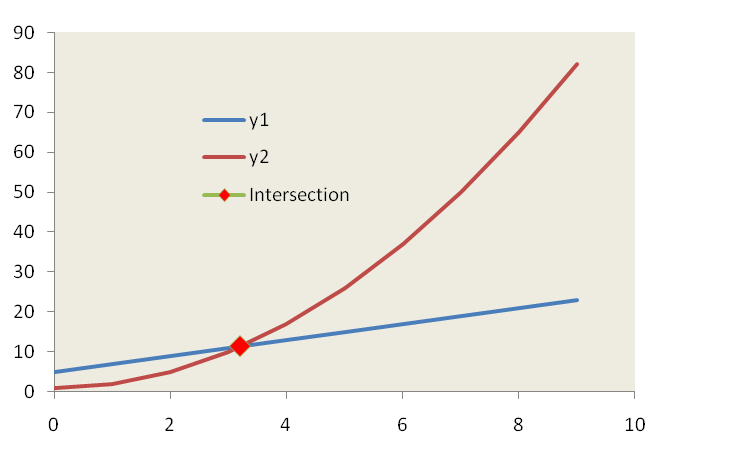
So the questions right now for Uber are: at what scale (aka total revenue) does Uber BECOME profitable with its current cost structure? How soon can Uber reach that date? And is Uber's runway long enough to get there?
I have no idea of any of these numbers, but http://uk.businessinsider.com/uber-leaked-finances-accounts-... has some "leaked" numbers. Seems in Q3 2016 they spent $2.5B and made $1.7B, so they would need to either grow by about 50% with zero cost growth, or cut about 32% of the costs to be profitable. Is that doable? How the F would I know? But I doubt that $2.5B includes many must have costs, like servers, developers and offices, and includes a F-ton of advertising and other incentives all of which are easy-ish to cut.
Lets use these numbers as examples:
* Costs: $2.5B * Margin: $1.7B * Monthly Costs Growth: 2% * Monthly Revenue Growth: 5%
If that is the case, Uber are 15 months from profitable.
That's the insane maths of startups: Revenue growth % > Costs Growth % = success.
And what about costs? If I were a betting man, I'd wager most of Uber's costs are things they could cut - advertising, non-essential staff, Given their revenue seems to growing rather well, I see no reason why there isn't a time horizon where Uber is inevitably profitable. Whether Uber has enough runway, and whether they can raise more cash, I have no idea.
Lastly, I find the idea that is floating about that Uber are subsidizing fares a really odd one. I think Uber are subsidizing things. Uber subsidize. development. Uber are also subsidizing the legal battle in certain markets, by paying for cases that will inevitably help competitors. Heck, Uber is even be subsidizing some drivers in some markets (my NYC driver told me they have some finance scheme in place to help new drivers purchase/lease cars). But subsidizing fares? They take a 20% cut, that is no subsidy!
Whether 20% is enough of a cut, and visa versa whether the fees are high enough that a 20% cut is enough raw revenue I don't know. Ditto I don't know whether Uber's runway is long enough, or if they can extend it with more funding. What I do know is all this writing Uber off doesn't seem to track with what seems to me a very sensible "build a moat by being the biggest while growing revenue faster than costs" strategy.
Understanding political outcomes is very different to listening to political debate/punditry/noise, and learning, for example, that certain subsidies are ending is not the same as reading political arguments on the environment, and they shouldn't be confused.
Knowing that Trump is president means one can predict certain things - the Paris accord ending - but not others, for example budgets are far less fungible than people think, and a lot of the budget of any nation is kinda locked in, so a lot of the noise on funding cuts and changes is unlikely to come to fruition. If you read a lot online/watch a lot, how do you know which of the multitude of BS will come to fruition?
I reckon if more news focussed on "this is the debate, these are the likely outcomes, these industries would be affected in these ways", then reading more would be invaluable. OTOH, Covfefe coverage? I'll Pass.
It's a weird concept money, and I wonder what the right level is. I doubt it is optimised at the country level, but then a "better" notion like demographic similarity may be impractical, even if better, e.g. one currency for Northern Italy and one for Southern may be difficult to sell even if preferable, and ditto a unified Basque/southern French currency, or an eastern seaboard Yuan and a country China currency.
I feel the opposite way. This sort of thing rarely happens in the west, but quite openly happens in other places, and that fact makes me want to help fix the inequities in OTHER countries that cause this, not tear down my own country.
Specifically (and proselytizing to a degree) it makes me more determined to give a significant portion of my income to https://www.givedirectly.org/basic-income so that at least some of the poorest people on the planet can be empowered to make their own choices.
This idea is definitely more acceptable than it is in the west in all the world. Africa. Asia. Middle East. Maybe not South America, but even there it would be more acceptable than it is in say Norway.
As for the absolute level of acceptability in each area or country, that is hard to work out, especially in Asia where saving face means something can be unacceptable in theory, but practiced quasi-openly, as in the example of the article, where Lola was an open secret in the guys family.
Hacker News? I mean, you posted this right here!
Fun (semi-related) story, I once had someone steal my mac power cable on a bus ride from Quito to Banos, Tungurahua in Ecuador http://bit.ly/2olVpLT and had to install putty on an internet computer from 2003 to get into a server to reboot a process. That was when I realized that Internet access was no longer a luxury for me.
JIC you missed it: http://www.pewinternet.org/2016/11/17/gig-work-online-sellin...
http://www.pewinternet.org/2016/11/17/gig-work-online-sellin... shows that 18-29 year olds are most likely to be a part of the gig economy, as a percentage of an age range, and VERY few over 50 year olds participate (4%), so I'm not sure the data supports that specific view at all.
On the data, IMHO (and it is just an opinion) where there is data, it is going to be incomplete because as a new phenomenon, there is nothing to compare it to historically, and the current situation will not be indicative of future performance. As an example, the demographics of internet usage have changed dramatically from 1995 to today, as now the vast majority of people on the web are not white, but instead live in Asia (the top 10 here http://www.internetlivestats.com/internet-users-by-country/ includes only the US, UK and Germany, which are dwarfed by China and India).
BTW: that NY Times article is a great example of using data really selectively, if not downright misleadingly. Examples:
* "In New York City, an Uber drivers group affiliated with the machinists union said that more than one-fifth of its members earn less than $30,000 before expenses." OK, but is that BECAUSE of Uber, or the reason they drive for Uber? i.e. without Uber would they have more or less income? How many hours do they drive for Uber? Are they full or part time? And really, how is employing poor people anything but a positive thing? The mind boggles!
* I absolutely LOVE how having a large number of minorities was presented as a negative. "Company employs 47% blacks and minorities" would seem to mean it is a really progressive company, however the NYTimes article takes this as evidence of how bad a company it is. I can only assume that is because them there my-norities are too stupid to see how they are being ripped off by these evil corporations, unlike the oh so clevery smart Whitey White-White-McWhite-Whites. I could have the tone wrong there, but man, it comes off to me as really patronising to these minorities.
Last point and I'm done, from the Pew Data I love how it is a shock that people earning < $30K are more likely to take part in the gig economy than those making $75K. It is almost like people rationally choose to engage only when the marginal return from their time is best spent on the gig economy vs some other task ...
We all have quirks that other people might find distasteful. As an easy jump off point, the pr0n habits of people vary wildly, and I'd wager if everyone knew what someone was into... The more you know about many people, the more chance there is that a part you uniquely find distasteful will emerge.
On top of that, the modern world in general, and SM specifically, has melded the public world, the private world and, most annoying of all, the inner world into a single, undifferentiated miasma. All these posts I see of people who can't work with Trump voters, or the religious right, or gay people or whatever shows how this melding causes real problems, even if it alleviates others.
We now know too much about people, and that isn't a universal positive.
Is there a CEO that can continue to raise money, OR that can turn a $X Billion loss into a mild loss, whilst still raising the money required to keep the enterprise alive?
That's a pretty damned niche request!