I expect that, after the first wave of clumsy LIDARing self-driving cars, all the car companies (Google especially) will be collecting exactly training data from the cars' sensors to build exactly this kind of model. In fact, I wouldn't be surprised if that was what the Google car was really about, in the same way Google Voice is really about collecting speech training data.
The best part of this kind of training data is that it all comes pre-annotated with appropriate reinforcements: even if the image-recognition sensors aren't hooked up to anything, they're coupled to the input stream from the other car sensors and the driver's actions. So you would get training data like
- "saw [image of stopsign], other heuristically-programmed system decided car should stop, driver confirmed stop."
- "saw [image of kitten standing in the road], other heuristically-programmed system decided car should continue, driver overrode and stopped car."
Etc. Aggregating all these reports from many self-driving cars, you could build an excellent image-to-appropriate-reaction classifier.
In a driving situation, the worst-case scenario is everybody dies.
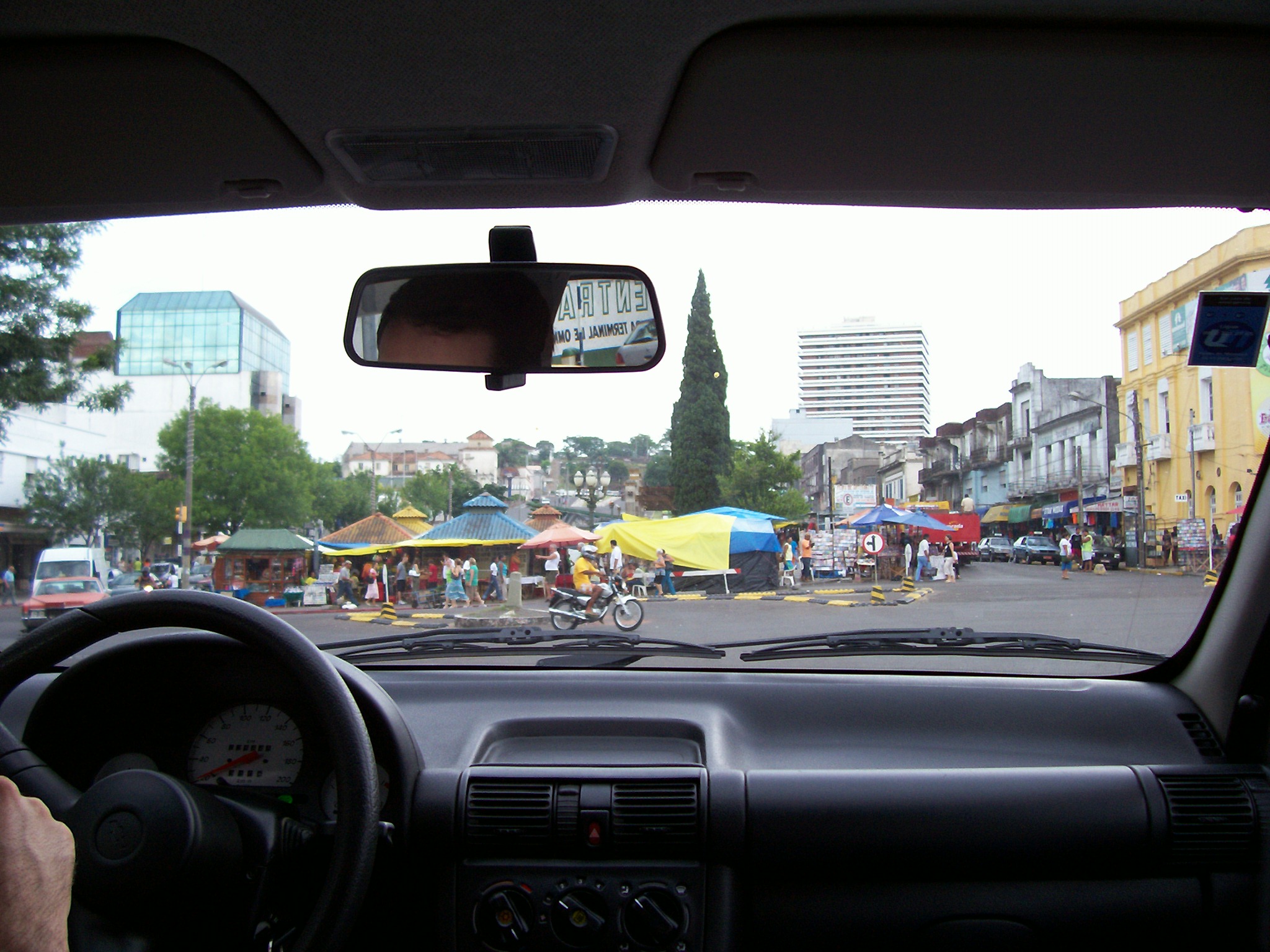
The human eye can instantly recognize the available driving paths, the motorcyclist ahead, and project where people will walk. Software would have to parse out where the open roads are, how far that motorcyclist is and whether he can clear the intersection before the car reaches it, and what that sign on the right-hand side is—using the same information, but it has to parse it first whereas we do that almost instantly. It's a totally different game.
You get to use worse hardware, but you need several order magnitude better software.