I know what I'm getting when I buy an iPhone. Navigating Android smartphones is a minefield.
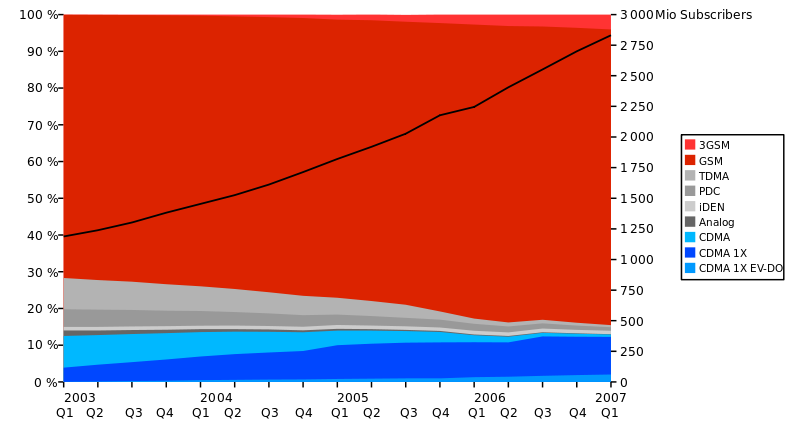
Don't overstate the rarity of CDMA or the ubiquity of GSM. Yes, GSM is effectively the global standard, but CDMA is way more popular than you say.
Examples of other CDMA networks include China Telecom (40+ million subscribers) and au by KDDI in Japan (20 million subscribers).
A full(ish?) list is available on Wikipedia:
http://en.wikipedia.org/wiki/List_of_CDMA2000_networks
Many of those are specialty providers, legacy networks, etc., but a fair number are regular old cell phone providers.
http://upload.wikimedia.org/wikipedia/commons/thumb/9/99/Cel...
The Nexus and Motorola phones work fine on GSM. If anything, it's more of a reason to buy them than avoid them like you said.
Edit: And I quote:
>"Maybe not Google Nexus, but then you're locked into the inferior network coverage of AT&T or T-Mobile."
If you'd like to say that your point remains valid, I completely agree. But if you're going to insist that your factually incorrect statement is not wrong, we're going to have a problem.
Also, I did not say anything about reasons for buying different kinds of phones. I only talked about the number of different kinds of networks available throughout the world.
Samsung (w/ Verizon) install so much bloatware on their new Android phones it is bordering ridiculous. Why would new Galaxy S4 users want an uninstallable NFL app?
The Motorola and LG Nexus android phones are comparable to iOS in terms of actually working.