If Ireland had followed more of the Iceland model post-crisis (dissolve the entities, prosecute the execs, reneg on debt) then I think the results for Ireland would probably be different.
http://www.leftbusinessobserver.com/Freedom1996.gif
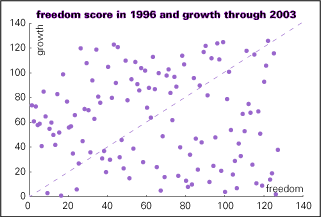
It's comically bad. Random things like penis size correlate better with economic growth http://static1.businessinsider.com/image/5008876deab8ea62620...

(that's from a real paper from the Helsinki Center of Economic Research, btw, though it's obviously tongue in cheek)
Even its correlation with GDP is pretty shaky: http://www.heritage.org/index/book/images/in-2014-chapter-1-...

This is nothing but a list to write press releases around. There is no science to it, and we shouldn't take it any more seriously than articles about the mathematical formula for the perfect sandwich.
Taxation is 10% of the index, government spending another 10%.
The purported benefits: "Countries achieving higher levels of economic freedom consistently and measurably outperform others in economic growth, long-term prosperity..." really? From 2000-2008, Ireland held 3rd or 4th spot in the list[1], and is now 11th. Worked out great for them, what with the recession, the bailout, and the 2nd highest level of household debt in the world[2].
To those who would reply 'but that's outside forces, economics is complicated,', well, exactly. Reducing it to a list like this is wishful thinking.
[1] https://en.wikipedia.org/wiki/Index_of_Economic_Freedom [2] https://en.wikipedia.org/wiki/2008%E2%80%932013_Irish_financ...