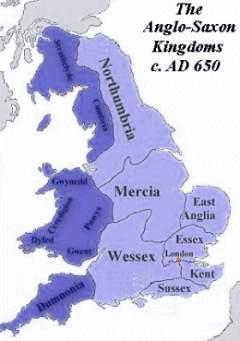
Before that nationalism, people were not global citizens, quite opposite: their circle of life was even smaller (in a geographic sense). Cities, city-states and small kingdoms. England alone was a patchwork of small quarreling kingdoms ( http://www.thehistoryofenglish.com/pics/heptarchy.gif ).
So the rise of nationalism widened people's perspective, it was a step towards larger geographical areas being united and living in peace within themselves.
So the nationalism was progress. Maybe Germans started to fight wars against the French. But at least now you have countries and larger scale organization, not just a patchwork cities and city-states and local warlords fighting their local neighbours.
See this map from 1713, for example: http://victoriavane.files.wordpress.com/2011/08/western_euro...

Even of the smaller states, many were parts of larger empires for most of their existence, though the control might shift back and forth between empires.
E.g. Germany did not exist as a united country, sure, but the Holy Roman Empire (not to be confused with the Roman Empire) encompassed most of the smaller countries on the territories of present day Germany and at various times part of Italy, Belgium, Netherlands, Austria, France, Switzerland, Poland, Croatia, Slovenia, Czech Republic. Even within the Holy Roman Empire, many of the constituent states were at various times larger than their succeeding present day European states (though there were also many smaller states).
Nationalism in many instances erected substantial new borders in Europe in places where borders meant little to ordinary people before.
This varied by area. Some nation states developed early (England, France, Spain, Portugal, Denmark, Sweden, Switzerland), while other areas was dominated by city states much longer, like Italy and Germany that did not become a nation states before around 1870.
For the most part these countries were monarchies whose territories waxed and waned with the power of their ruling houses, where the idea of a nation with a specific government did not develop much earlier than elsewhere. Their development into nation states in fact largely happened as they contracted into core territories with common cultures and languages and the power of their monarchs was put under increasing challenge.
As for Germany and Italy, while they did not become nation states until late in the game, a large part of that was that they were part of empires and other kingdoms long before.
The Holy Roman Empire (not to be confused with the Roman Empire), the West Roman Empire, the Ostrogothic Kingdom ("heir" to the West Roman Empire, including Italy), the Frankish (Carolingian) Empire, the Bysantine Empire (East Roman Empire); Habsburg Spain; Habsburg Austria; the original Roman Empire.
The period of scattered small autonomous city states was a historical "blip" of not much more than two hundred years due to a temporary political and military vacuum caused by the constant tug of war of various of these larger empires.
The core areas of Germany and Italy had been dominated by organized larger scale governments for the most part of the preceding two millenias (depending on region) before nationalism existed.