That's why the open borders/free trade talk is often deeply troubling. It's one thing to argue that these policies will ultimately maximize American prosperity. You can argue that stealing away the brightest people from other countries will ultimately benefit the U.S. in the long run, etc. The problem arises when the arguments loose that utilitarian mooring and end up arguing that American policy should be concerned with lifting up Indians and Chinese in a way that doesn't necessarily maximize the prosperity of those Americans who are already here. The American government has no business caring about the "huddled masses" elsewhere. At one time it was in our interest to accept anyone and everyone, by virtue of the fact that we had a huge relatively unpopulated country, but that incentive changed as we became a mature, populous society.
I'm sorry, but I consider myself first and foremost a human being, with 'American' down the list a few notches.
Granted, there are practical limits, but realistically, there's still tons of room in the US.
Also: the economy is not some zero-sum game with one single "lump of labor" to go around:
However, America absolutely has the right to secure its borders as its citizens wish.
(I don't think you are necessarily saying this; but replying to your comment just seems a sensible place to drop it into the conversation.)
we had a huge relatively unpopulated country, but that incentive changed as we became a mature, populous society.
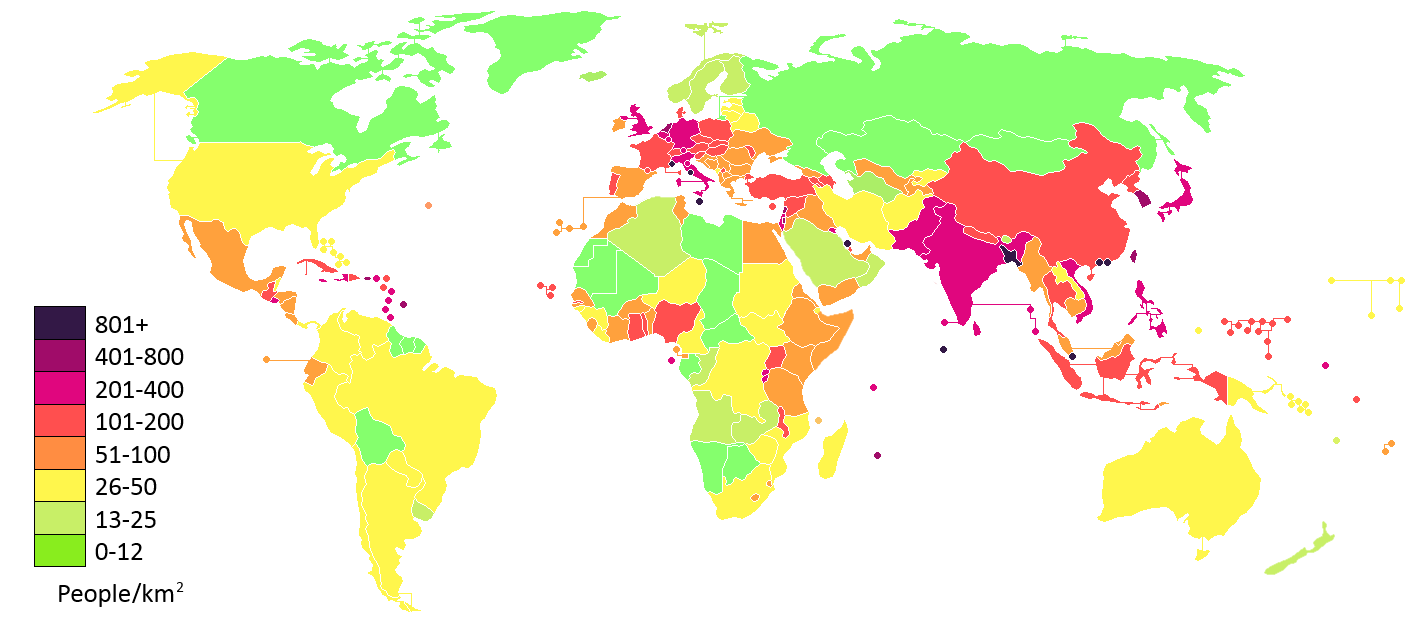
Sorry but you still are a huge, relatively unpopulated country[1].
[1] http://upload.wikimedia.org/wikipedia/commons/4/4d/World_pop...
Yes, they are, fundamentally.
I am an American living in Italy, and I'm confused by all the nationalistic blah blah. I have friends here who are a lot more important to me than people in the US. Am I supposed to consider people who happen to be born in the same country somehow more important? I can't manage that, sorry.