https://www.reddit.com/r/transit/comments/1l3qcn3/nyc_in_200...
So a classic NYC problem of paying for upgrades to infra to support OPTO, and then not actually being able to use it, for "reasons".
In fact every time the train stops and there's a noticable pause before the door opens, that is caused by the operator having to move from the driving controls to the door controls.
Sure it’s rare. But what happens when it does happen, last thing you want is passengers self evaccing onto 3rd/4th rail energised tracks.
The major impact is at stations without level boarding where assistance which should be from the platform doesn’t arrive.

Click on "Show step-free accessibility", quite useful.
But it was built this way, there were no operators to lay off, and no unions to bargain with.
In many countries one person operation can work on metro systems, but NY is probably about 50 years of investment behind in infrastructure before that's a good idea.
At every station I've ever been to, the boarding is level, and the gap is small.
Many (though not all yet) stations have elevators large enough for a disabled person in a wheelchair.
All buses (operated by the same MTA as the usbway) have a foldable ramp for wheelchairs, used quite routinely.


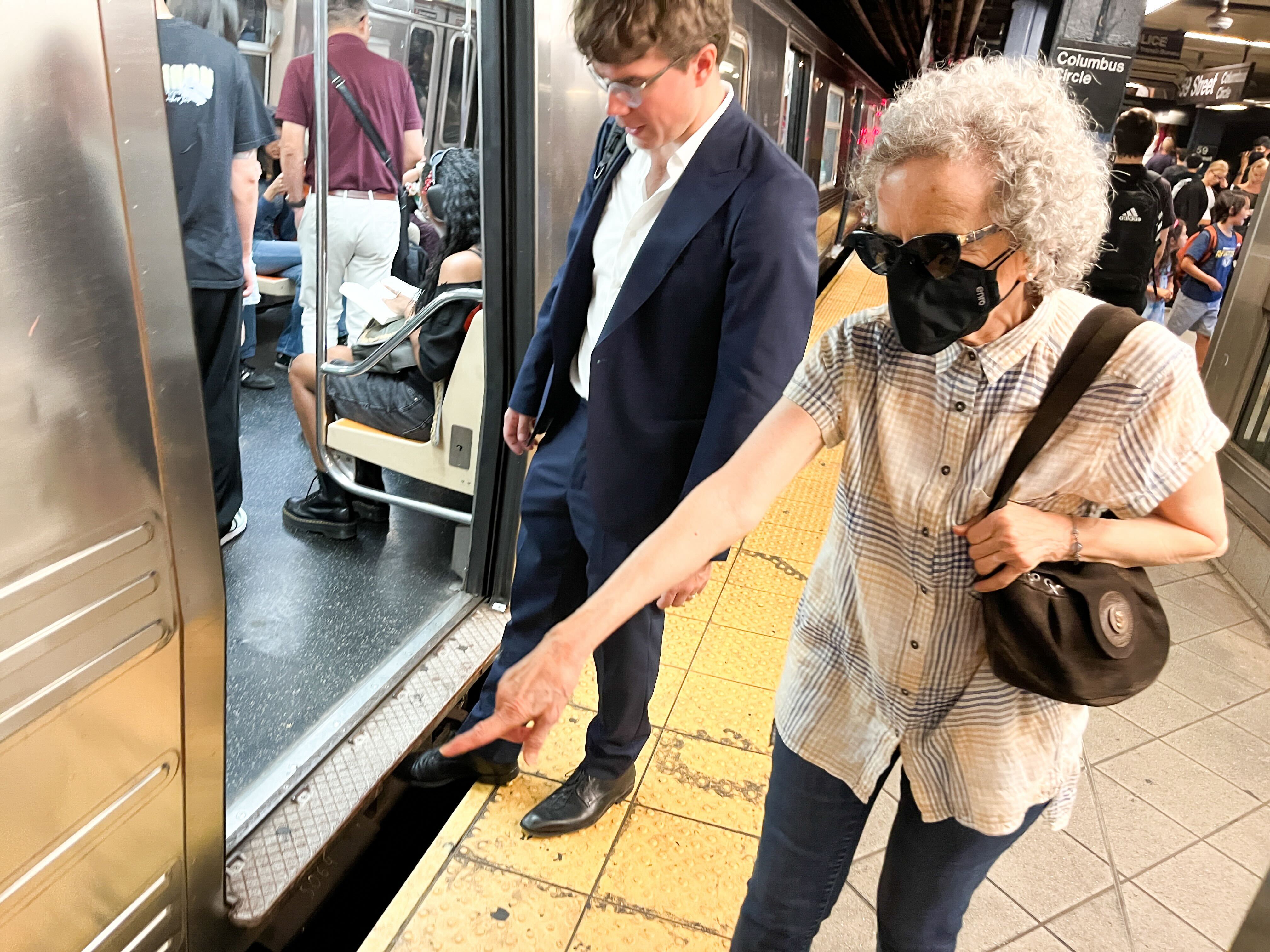
Platforms can sink and otherwise decay over time. Many of the stations are quite old.
Low platforms, by contrast, are nowhere near the height of the train floor.
> 14th Street–Union Square northbound 4 trains have a 5.5-inch vertical gap, 59th Street–Columbus Circle northbound B trains have a gaping seven-inch horizontal gap, and Times Square–42nd Street eastbound 7 trains have both: a 5.5-inch vertical gap and a five-inch horizontal gap
https://www.curbed.com/2022/10/mta-subway-platform-gaps-laws...
> There is no free money.
When you are talking about the MTA budget no. But at the higher government levels there often is. Lots of lower-income people's income ends up right back in the economy or reduces other costs (like healthcare of people on government health plans). Plus it oven gives people the resources (time and money) to get a job that is valuable to society. (From things like going to a education course to something like being able to have a shower before your interview and a phone to receive job offers on.) There are of course "losses" like money exiting the country or consumption of raw resources (which is likely going to happen whether they have a useless job or are just given some form of welfare) but it isn't nearly as expensive as the critics like to pretend it is.
I don't know, it got the US out of the Great Depression.
Work programs can be great, if you're doing valuable work that helps the public and strengthens your nation. The US, to this day, has the largest public work program - the military. If you think about what the military actually is, it's a work program.
I'm not against make-work per se, but we are currently in an era where we need to improve public sector administrative capacity. It's really hard to do that while saddling agencies with make-work, because the latter is so bad for esprite de corps.
It would better to e.g. expand peace corps / Americorps. And if they want to staff do-nothings on subways, they can, but it needs not involve the MTA.
It’s a make-work bill designed to maximize the number of operators on the payroll. As the article explains, the justifications don’t really add up.
> This is revealed in the last sentence, claiming that OTPO would cause “further loss of jobs to NYC.” This bill is not about safety, but rather an unfunded program designed to protect one single job type from eventual obsolescence.
Single operator has proven to be completely fine around the world. Some are starting to move to zero operator. Bills like this are designed to keep the number of jobs high. Given the expense, it inevitably comes at a cost of reductions in service elsewhere. There is no free money.