Most cities need more limited access highways not just more lanes. Suburbs extend much further along highways for obvious reasons, yet they get built on the way to somewhere else not just for regional transportation.
A perfect example being the south east of DC getting extremely underdeveloped relative to the west. But you can see the same pattern around many US cities.
The benefits more than make up for those costs, ensuring those who benefit also contribute to upkeep is a delicate balance but things like congestion pricing can go a long way.
Part of the solution is to have more freeways and thus spread exits more evenly across the city. Another part is to adjust city streets around those exits so they can accommodate a large influx of traffic. Similarly you optimize traffic flow inside the city by eliminating things that limit flow like street parking etc.
Going at least a little 3D is definitely required, but not necessarily big dig levels of 3D.
Maybe it's great from a suburban point of view still.
Alternatively, going underground removes the noise and dust assuming the city wants to pay for it.
The west was in Virginia and didn't face nearly as much opposition. 50 years later, the economic growth has been concentrated in Virginia where adequate transportation facilities were built.
Are you talking Belvior/Mason Neck or King George/Westmoreland/Northumberland counties? If it's the latter, a lack of development would be tied to the extra distance of working back up the peninsula. (I was born in the former)
asia and europe get by fine with rail. if china can build 20 subway systems and 50 HSR routes in 10 years so can america
Infrastructure like subway stations drive up local prices which means people who don’t use them tend to migrate somewhere else.
We suburbanites avoid doing city stuff because the 11th-14th commutes (that week) would suck.
A big part of this is having unsubsidized parking, if you or your company is paying 20+$/day on top of driving the incentives change.
US Fright is doing ok, but it got heavily dependent on coal which is going away fast.
https://www.statista.com/statistics/183410/united-states-cla...
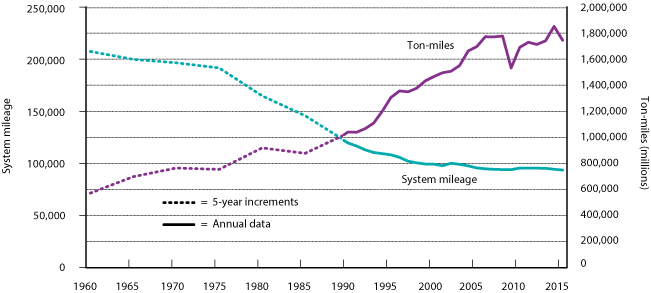
One solution which ignores all the issue presented is relatively high speed rail networks which avoid congestion to quickly reach city centers. Rail averaging ~100 MPH turns an unbearable commute into a viable one, assuming the tickets aren’t overpriced.
Level 4/5 Self driving cars are another possibility, the time is still lost but watching TV or even napping on the way home is a very different proposition. Better road networks similarly extend things somewhat.