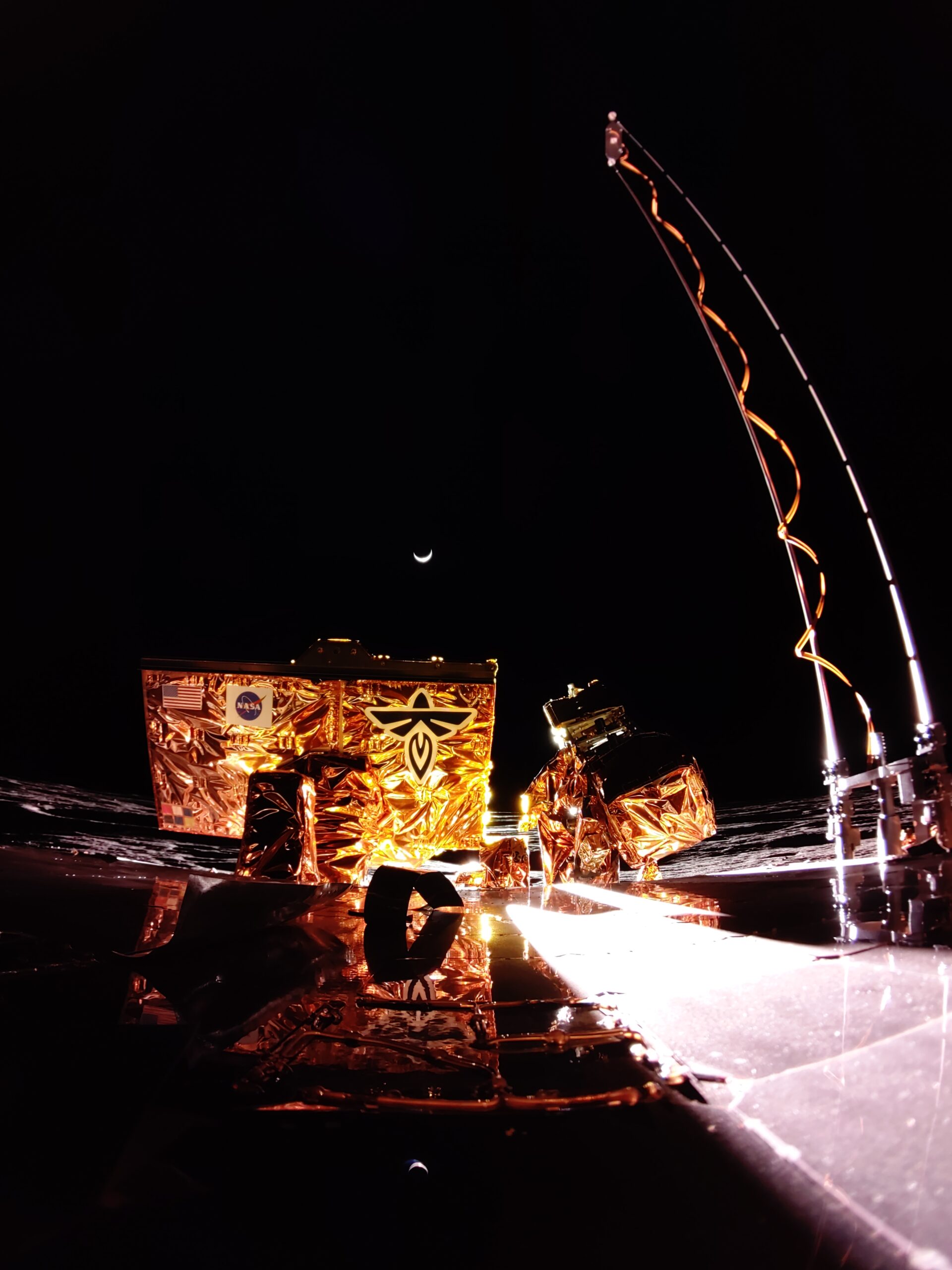
If you want to capture stars, it needs to be longer. Looking it up says that 20 seconds is roughly the minimum. Which is also around what would overexpose the entire moon in your example. So that's what I'm saying -- the dark side of the earth doesn't seem like it could be overexposed because we can't see any stars.
I agree that I'd expect to see stars when the moonshine on earth is overexposed. Maybe it's just glare that makes the light from earth's crescent orb-shaped. In an image of a different camera where the sun is obscured[0], the earth crescent is well visible, and no moonshine on earth. Firefly's page on the mission has enough detail[1] to put your and my speculation to rest :-)
[0] https://fireflyspace.com/wp-content/uploads/2025/03/Blue-Gho...
[1] https://fireflyspace.com/news/blue-ghost-mission-1-live-upda...
For a photo like this I use an exposure of around one second.