It's a win for all sides and I've seen it used extensively here in Germany.
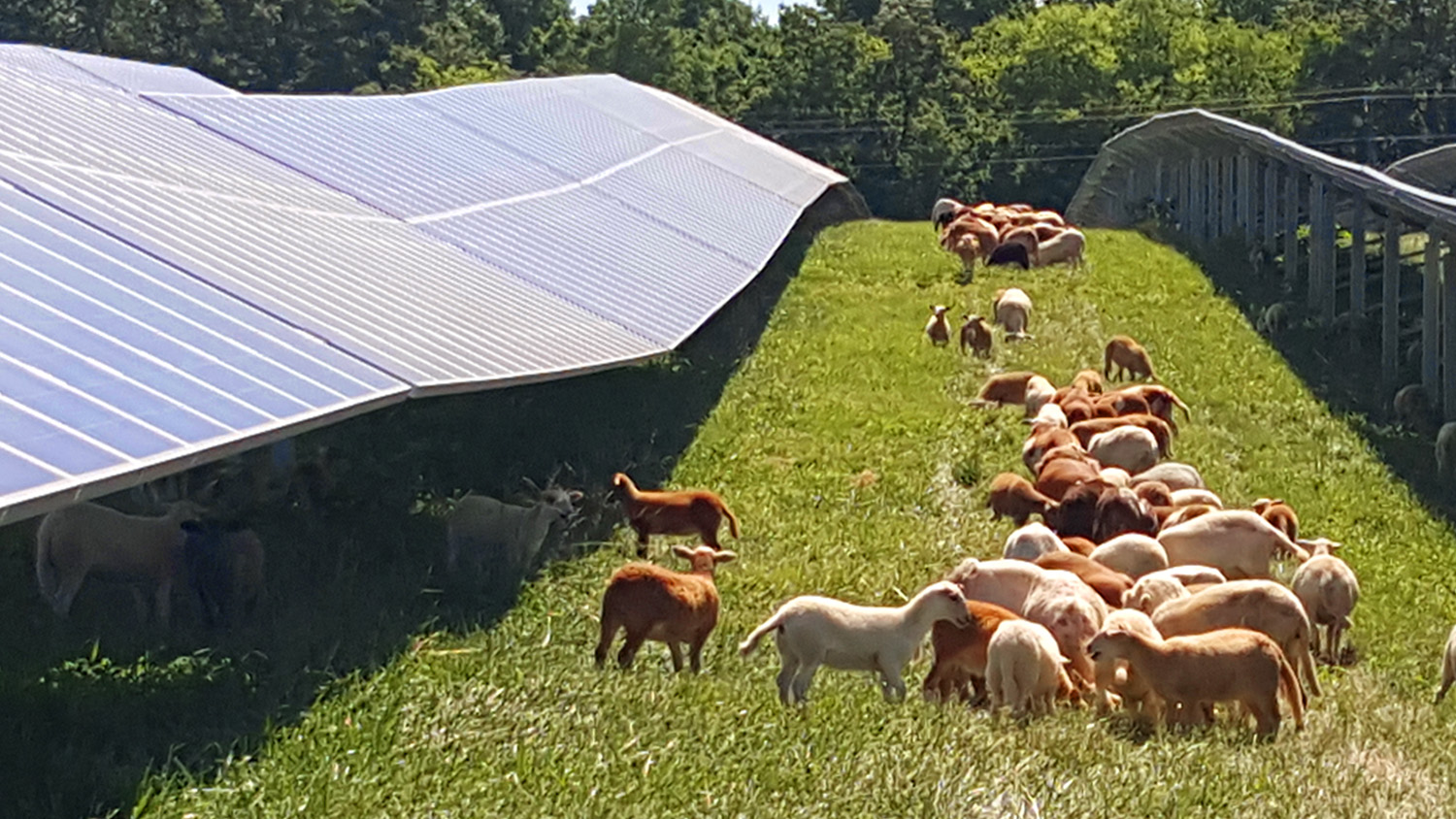
I am passing by a solar farm as I am writing this. And The grass below and beside the panels looks the same.
Here is a pic I found on the internet:
https://cals.ncsu.edu/wp-content/uploads/2016/09/Sheep-Solar...
But you get a ton of electricity
Cereal crops are bred to be able to use more sun than most plants; most chase other goals than the big seeds we select for.
This is also why bifacial solar panels are so much more efficient.
I'm sure it's definitely true when using the same technology in both sides of the comparison (solar panels), but is it so cut and dry compared to current and/or future iterations of alternatives like this? https://en.m.wikipedia.org/wiki/Solar_power_tower
The Philippines has a great deal of sheltered water that could host floatovoltaic installations that can opoerate more efficiently than on land.
One of the great advantages of solar is that many small installations, close to where power is needed, are better than one big one. We may hope they are taking advantage of this capability, too often ignored.