Using lignite only slowed the reduction of coal, nuclear was almost completely replaced by renewables.
https://www.energy-charts.info/charts/power/chart.htm?l=en&c...

Not to mention all the previously closed plants.
Every MW of nuclear shut down while coal is still running is coal displacing nuclear.
You can see here [1] that on a time frame of 2000 to 2022 Germany is yet to replace reduction of nuclear generation (Kernkraft) with renewables. Construction of renewables in 2023 has only accelerated 50% relative to 2022 [2].
[1] https://www.tech-for-future.de/wordpress/wp-content/uploads/... [2] https://www.energy-charts.info/charts/installed_power/chart....
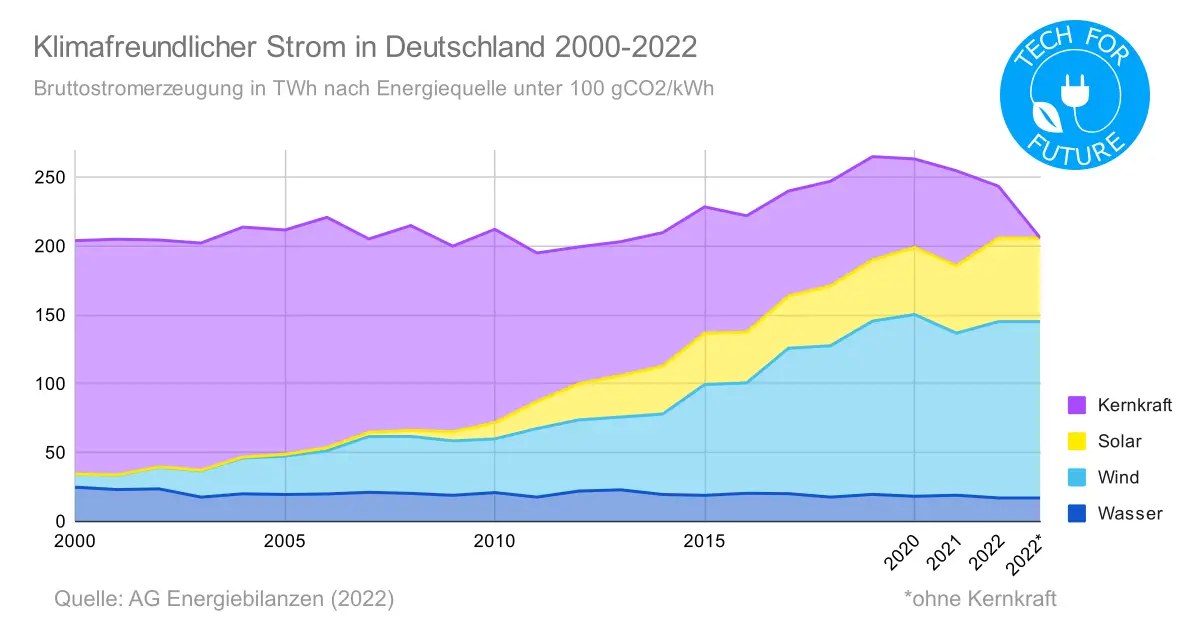
Which is another misrepresentation of statistics given that we use less electricity today than 20 years ago.
See this page for "all varieties" of the same graphs. Generally coal is on a downward trajectory, except the blip for the Covid years.
https://www.cleanenergywire.org/factsheets/germanys-energy-c...
>The decision to phase out nuclear has long been made (for good reasons).
No, it was made for bad reasons.
>Keeping them active or even building new reactors of that kind is not an economically viable solution. The price Germany pays for this is higher carbon emissions for the time being until renewables push coal out of the mix. What Germany gains, on the other hand, is the removal of the most expensive form of energy
_Existing_ nuclear reactors are the cheapest possible source of electricity. You already had to build them and will have to close them. Left is the cheapest part, of actually operating them.