I'd blame Buckminster Fuller for the cult-like descriptions of it as he did seem to be as much a marketer as a designer.
My take-away from tensegrity is that it's a design whereby the elements are either purely tensile (strings) or purely compressive (struts) which makes a structure very light and strong. However, it's often a lot simpler (cheaper) to make a design that uses modern materials that function well under compression and tension.
Things like this:
https://img.mrvcdn.com/g/fb/kf/S9514e6355f474ca4b09db84ad4e3...
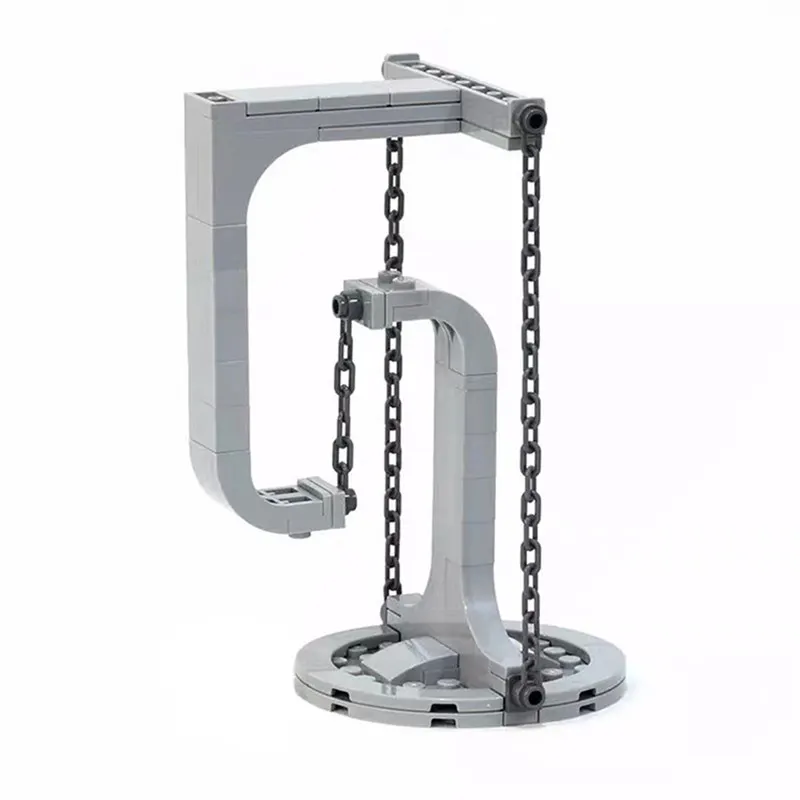
It's a thing that's only being held in that position by chains under tension.
It looks very weird at first, but after looking closer it starts making sense. For the upper piece to fall for instance, the outer chains would have to collapse, but the middle chain makes that impossible. For it to tilt, one chain would need to get longer, but it can't. Etc.
I bet a lot of the stuff looks like it's from a cult to you. real cults are probably very different, don't you think? but i doubt you've experienced them for real. tho you enjoy the word as a term of abuse, right?
well at least you know how to get a reaction from people. :) ;p xx ;p
maybe you'll find this page more helpful for definitions: https://tensegritywiki.com/index.php?title=Definitions_of_Te...
Compression is like stacking bricks. Bricks are very strong in compression, but very weak with tension, which is why we have arches and flying buttresses.
Steel is great for both which is why we have skyscrapers.
Compression forces are easier to intuit, so for example we tend to think if the human body as a stack, each bone resting on the one below it.
But in reality the human body is also tensegretic. All the muscles and tendons and ligaments pull you upright. This is also how we have suspension bridges.
A purely tensegretic structure would use no compressive force, you can create a tensegretic dodecahedron with chopsticks and rubber bands, it will have no two chopsticks touching each other, yet it maintains the structure.
You can probably find instructions for how to make one in 10 minutes at home and you might achieve a different intuition about how real world structures operate.
What is tensegrity?
Tensegrity is the way the world organizes itself. Build or buy a model and experience it yourself!
Why learn about it?
Whatever your goal in life, it's good to understand how the world works. Tensegrity, discovered about 60 years ago, is a new way of understanding forces at play. Whether you are building a business, designing household objects, building robots, or trying to live sustainably in a resource-challenged world, tensegrity offers innovative ways of thinking about how parts and wholes interact.
What is Tensegrity Wiki, The Encyclopedia of Tensegrity?
This website is a wiki dedicated to exploring the field of tensegrity, a subset of energetic-synergetic geometry. It is intended to use the "power of crowds" to fine-tune and make available accurate knowledge about tensegrities. This includes all aspects of tensegrity including structural tensegrity sculptures, dynamically adjusting tensegrity robotics, biotensegrity as expressed in cellular mechanics, biotensegrity as expressed in mammalian anatomical fascial/bone structure, tensegrity therapy as a set of mind-body practices, tensegrity as it illuminates ancient philosophies of harmony, music and dance inspired by tensegrity, and so on.