singapore: https://www.lta.gov.sg/content/ltagov/en/getting_around/publ...
beijing: https://www.travelchinaguide.com/images/map/beijing/beijing-...
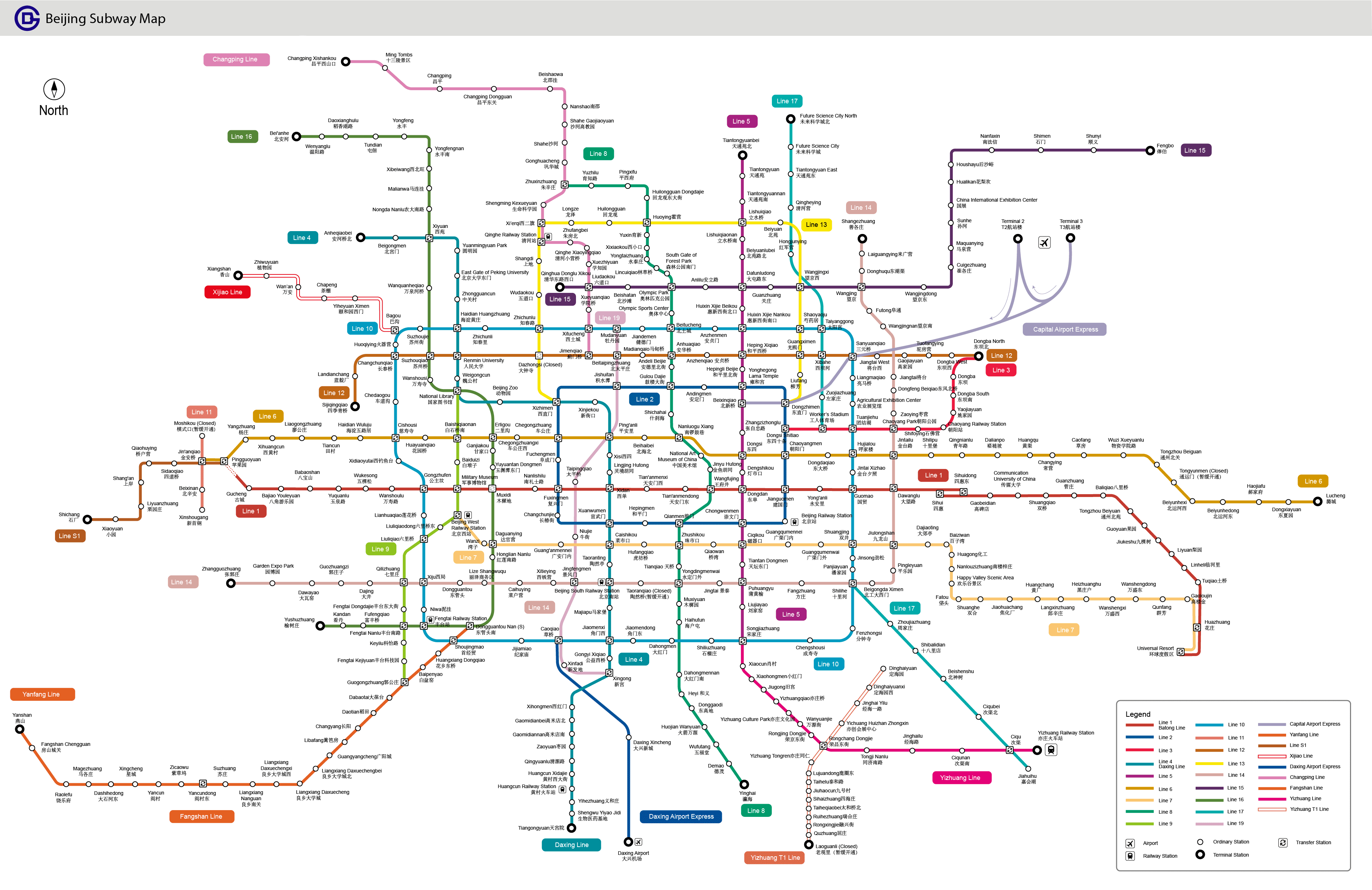
Some grid patterns and some circles. Of course not truly everything is close to a station, but the stations tend to be at important points, and points of interest / desirable living locations will appear around the existing stations.
I just don't understand this whole argument of "A lot of car drivers today probably wont accept that". Sitting in non-moving traffic in a car is truly horrible, I mean it's absolutely the worst, there's nothing fun about it, you're standing still, wasting time, taking 30 minutes for something that can be biked in 10 minutes. When you can instead just walk a few minutes, sit in a train, walk a few more minutes, sit in another train, walk to destination, all in 20 minutes, and you can do stuff on your phone in the meantime.
Even if you love the car so much, having a subway will maybe make driving a car acceptably fun again, since more people taking subway means less cars on the road so a chance you can actually drive instead of stand still all the time.
It is fine to say that US has evolved for the individual car, and it's very hard to change. But I don't get why you say that it's the same everywhere else...
EU's metros are a bit dated compared to that, but still very useful.
In the NY one, I was sometimes thinking walking is about as fast if you add up the slow train speed with the waiting time. In SF, there is none?!