I'm not blind, mind you, although I can read Braille by touch. And sometimes I feel like Braille is the tactile version of this: https://www.boredpanda.com/blog/wp-content/uploads/2020/07/r... - sure, you can decode the letters, but you waste seconds doing so.
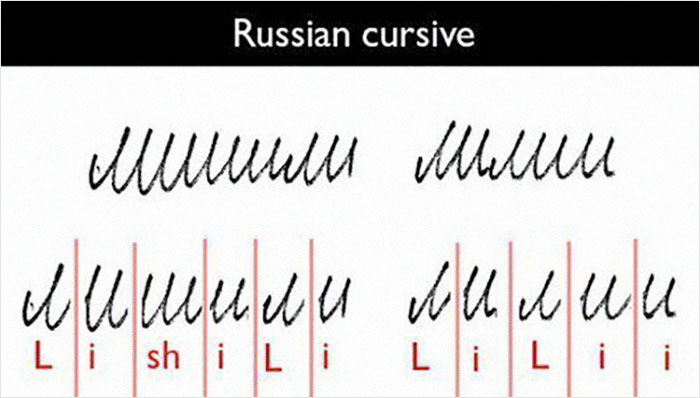
Fakoo doesn't address that, and I feel that it's a more pressing concern than making the letters look like Latin letters.
This is a strangely popular myth.
> This is a strangely popular myth
Praheps that starengly pouplar mtyh about rediang is gronuded in the nautre of cogitnive prcoesess.
ThE OvErAlL SHapE MatTeRs ToO, and that's what makes case-mixing so annoying.
https://learn.microsoft.com/en-us/typography/develop/word-re...
> ThE OvErAlL SHapE MatTeRs ToO, and that's what makes case-mixing so annoying.
This is false.
Regarding Braille, my grandmother became mostly blind at old age. Having maintained an interest in books, while finding herself increasingly restricted with regard to her radius of action, she tried to learn Braille, but eventually gave up. At her age, she couldn't feel the differences anymore. Tactile resolution and significance do matter. (I'd imagine, in her case a similarity to what she had been used to may have also helped.)
Generally – while not knowing much about the viability of the specific implementation –, I think, Fakoo is a great idea.