For that matter typesetting rules vary by language as well — not just the obvious hyphenation rules busnspacimg as well. Just pick up a book in, say, French or Russian and you can tell at a glance (without even looking at the letters) that it’s not in English.
However, I don't agree with your point about typeset text. You're right that the styles differ, but if you have learned one style, and know the language of the text, you will not need any significant amount of time to read a different style of typesetting.
Russian of course normally uses the Cyrillic alphabet, not the Latin one, so obviously you do have to learn a whole new set of symbols to understand it even if you can read Latin symbols. And of course French uses slightly more letters/letter forms than English, with the sedile and four accents (egu, grave, circonflex, and very rare treme).
I didn’t mean the typesetting differences made reading a different language in any way hard, merely pointing out that there are lots of different aspects to text in different languages even when the alphabets are basically the same.
Oh, you want speakers? merely counting people who read Hanzi + Arabic-Alphabet readers + the Indian subcontinent gets you more half the world‘s population. And there are hundreds, maybe over a thousand writing systems.
Latin is much more wide-spread than that! You neglect whole of America and Australasia and half of Africa.
https://upload.wikimedia.org/wikipedia/commons/9/9d/Writing_...
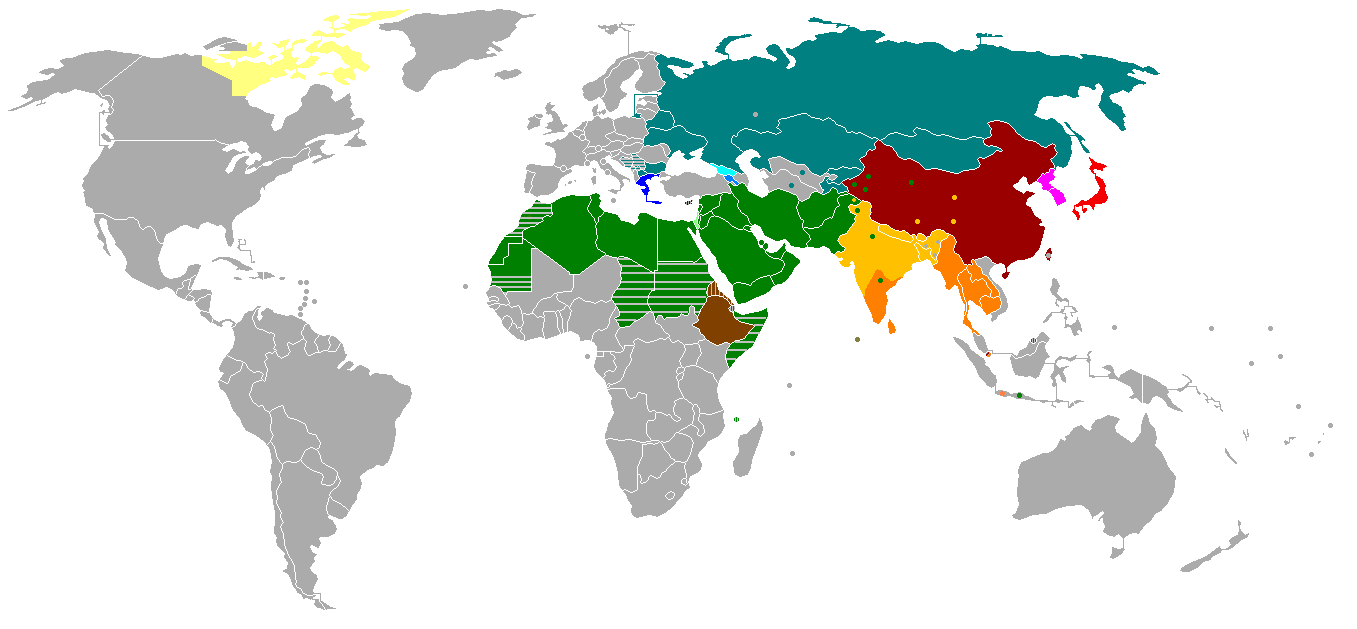
> So a big imbalance!
When we sum up realistically, then world-wide the amount of users of writing systems with case/"cameral" are about equally balanced with those without.
Case is only used in a few alphabets, mainly Latin-, Cyrillic-, and Greek-derived ones.