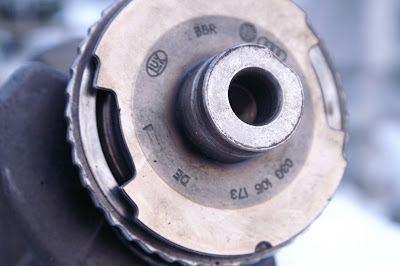
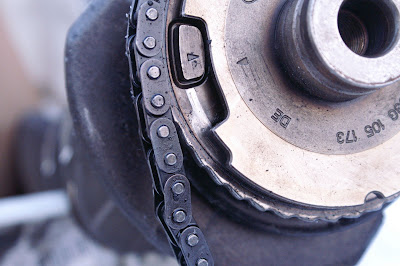
In contrast German cars wear out mechanically or kill you slowly with electrical system deterioration. Parts are meticulously calculated to need replacement at a set point of vehicle life. One example: Audi (VW group) 2.0 TDI BLB Engine is made to fail at ~200K no matter what you do, from oil pump to head micro fractures. Crankshaft sprocket at 200K
http://lh6.ggpht.com/_m_33vQTtsxM/SyuSlFIeSXI/AAAAAAAAG9o/rt...
http://lh3.ggpht.com/_m_33vQTtsxM/SyuSn5YALLI/AAAAAAAAG9s/ul...
http://lh3.ggpht.com/_m_33vQTtsxM/SyuSp1yUs4I/AAAAAAAAG9w/mO...

VW answer: this part is non serviceable, whole crankshaft needs to be replaced :D Why is it made out of putty while smaller sprocket (the one taking more force) is still ok? Why is it designed not to be replaceable? Good 'old timer/not by the book' mechanic is still able to replace it (heat whole crankshaft, use big hammer). In good heavily driven cars 200K is usually first crankshaft turn/grind, engine block itself should be good for >500K easily. Not here. Smells like planned obsolescence, if not on purpose then as a byproduct of cutting part safety margins to the bone to save cents on the dollar.
Honda's are pretty reliable but they tend to fail in spectacular and expensive ways.