[1] https://worldpopulationreview.com/country-rankings/hottest-c...
               Average Low (°C)          || Record Low (°C)
             | Dec  | Jan  | Feb  | Mar  || Dec   | Jan   | Feb   | Mar
    Oslo     | -3.9 | -4.7 | -4.7 | -2.1 || -19.7 | -20.5 | -20.7 | -16.9
    Toronto  | -3.1 | -6.7 | -5.6 | -1.9 || -30.0 | -32.8 | -31.7 | -26.7
The record low for Feb in Oslo (1991 - 2020 data) is -5.3°F. That's an average winter night for me. https://www.aos.wisc.edu/~sco/clim-history/stations/msn/msn-...

Another way of looking at this... heating degree days.
https://www.weatherbase.com/weather/weatherall-print.php3?s=... vs https://www.weatherbase.com/weather/weatherall-print.php3?s=...
Oslo has 6286.8 heating degree days. Toronto, Ontario has 7342.8.
Toronto is substantially colder than Oslo (edit...) when it comes to the extremes of weather.
(edit: correction) - Oslo's is https://www.weatherbase.com/weather/weatherall.php3?s=88410&...
which has the heating degree days as 7787.8 which is now comparable to Toronto.
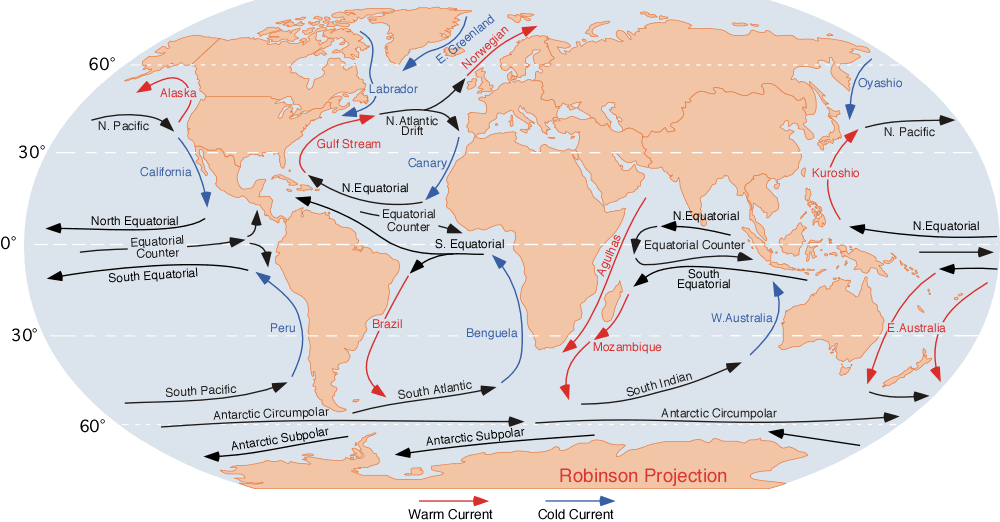
It is very difficult to get it colder than the water. Note also that Oslo is on a warm current - https://upload.wikimedia.org/wikipedia/commons/9/9b/Corrient... - the Norwegian current is a continuation of the Gulf Stream (compare the California current which is a cold one)
https://en.wikipedia.org/wiki/Oslo
> Oslo has a humid continental climate (Köppen climate classification: Dfb)[48] or, if the original Köppen winter threshold −3 °C (27 °F) is used, an oceanic climate (Cfb) in the 1991–2020 base period.
https://en.wikipedia.org/wiki/Oceanic_climate
> Examples of oceanic climates are found in Glasgow, London, Bergen, Amsterdam, Dublin, Berlin, Hamburg, Vienna, Bilbao, Oviedo, Biarritz, A Coruña, Bayonne, Zürich, Copenhagen, Prague, Skagen, and Paris. With decreasing distance to the Mediterranean Sea, the oceanic climate of northwest Europe gradually changes to the subtropical dry-summer or Mediterranean climate of southern Europe
> The oceanic climate exists in an arc spreading across the north-western coast of North America from the Alaskan panhandle to northern California, in general the coastal areas of the Pacific Northwest. It includes the western parts of Washington and Oregon, the Alaskan panhandle, western portions of British Columbia, and north-western California.
Compare this to the continental climates.
https://en.wikipedia.org/wiki/Minneapolis#Climate
https://en.wikipedia.org/wiki/Boulder,_Colorado#Climate
https://en.wikipedia.org/wiki/St._Louis#Climate
https://en.wikipedia.org/wiki/Chicago#Climate (has the population of 1/2 of all of Norway)
With no large bodies of open water, the air temperature is not moderated by the release of heat from the water and can go further to extremes on both ends.
Oslo is colder than like 90% of the inhabited parts of the planet...it's probably fine to use it as an example when talking about cold weather performance of EVs