That sounds kind of like a plan. Delay until something random happens.
You can clearly see the demand induce correlated with vietnam, gulf war, 9/11 invasion
https://assets.bwbx.io/images/users/iqjWHBFdfxIU/iun0_jAGaJM...
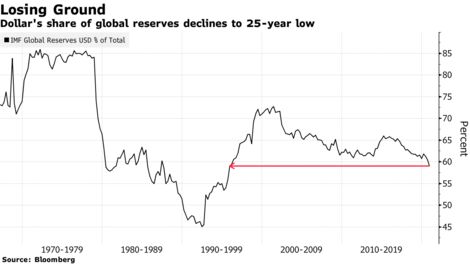
It's not like they're sitting on piles of cash or other investments that are losing value. If costs go up they'll have to raise prices, just as the prices for what they're buying went up due to rising costs further upstream.
I figured the pandemic cleared out most of the small businesses that would have failed within five years anyway (half do). I wouldn't assume the small businesses left would have as much trouble with inflation as larger ones that operate at greater scales with tighter margins.
Further, they didn't adapt digitally to the take-out heavy model. The prices went up across the board, too. You get a worse meal for 10% more than you used to get a good meal.
A multivariate model of all the inputs would show that many variables matter. They're losing demand, they're paying more for inputs, they're not able to get employees, rough spiral to be in.
The restaurant world, in particular, seems to have heavily bifurcated between owner-as-entitled-extractor and owner-as-management. I'm not surprised to hear that someone who failed the transition to take-out is also blaming labor for his business's hard times.
Not to say that there wasn't some determinism in terms of location, target market, and target demographic. But good judgement, simple business management skills, and just generally being able to roll with punches made a huge difference in terms of survival rate.
PPP and SBA loans kept these companies alive. The bill hasn't come due yet. This is what people don't understand.
There are a LOT of stories online of companies taking the money and posting fake job ads where they never hire people while laying off a significant portion of their workforce. I think there are a lot of games being paid to get PPP forgiveness by companies that don't deserve it.
But there has been the development and deployment of a major productivity innovation over the last two years. It's called Zoom. Or WebEx/Teams/Meet/etc. And while it doesn't work for everybody, the fact that tens of millions of people suddenly have experience working and running their business remotely means that if it does work for someone, their efficiency goes up.
I’ve just got a feeling that there will be some hidden cost to innovation at large companies (less chance encounters) and a hit to culture (building a good remote culture is really hard) over time. These are not easily quantified, and I’m not sure the costs outweigh the benefits of a remote work force (health and safety, candidate pool, retention, flexibility, etc.).
But it may be a trend in 5-10 years where companies with an in-person focus start eroding market share of remote-first established companies.
The labor market was pretty tight before the pandemic and has just become even tighter. Americans are less supportive of permissive immigration policies, birth rates are falling precipitously which means there is no end in sight. So companies which figure out how to do remote right (rather than accept is as a temporary adjustments) will have the edge as they can access a broader labor market (entire NA plus EU, maybe others if they can figure out time zones and outsourcing).
your employees might not need a car any more, either. the number one depreciating “asset” in the average person’s life becomes optional.
this innovation’s been around in tech for decades, and people have started billion-dollar companies this way. (for example, GitHub was profitable for years before it set up its first physical office.) but it’s not just tech now; it’s finally going mainstream.
this is a very big deal.
Does zoom increase or decrease productivity relative to email and phone calls? I suspect it decreases productivity.
Edit: I should have made the /s more prominent. This is sarcasm.
Hahahaha. Hilarious that anyone thinks that debt will be paid down significantly, let alone in full. Pro tip: US debt is here to stay and will get worse long before it gets better - if ever.
if its the poor that are getting handouts from the govt they should be the ones that have to pay it back.
(so goes the logic)
Keeping in mind small business is collectively the largest employer and contributor to US output... let's remember the coming rate hikes will greatly reduce available cash to small businesses that operate with credit lines, credit card debt or via home equity lines. That is a LOT of US businesses. Now add to this increased input costs due to inflation. Now add increased tax rates. You can also expect lending requirements will tighten.
So, it's worth considering the odds of worker prosperity (vs) the odds of a wave of business failures and associated unemployment/underemployment in many (but by no means all) sectors.
Personally, I think the Fed & Treasury will continue fiscal stimulus and capitulate hard in the face of a deep recession. More of the same can kicking, and we'll see what seems like prosperity. In reality, it's a delay of an inevitable downturn unless some magical productivity innovation or goods/services advance emerges to rescue the US economy.