However if you think about it logically from a health perspective - if your respiratory system goes under severe stress that will likely exacerbate any respiratory issues that were in your system beforehand. It is surprising that the risk is so great for the following year, but not shocking considering how taxing this disease is on peoples health.
https://www.cidrap.umn.edu/news-perspective/2021/12/severe-c...
Their methodology doesn't look super sketchy when it comes to COVID vs no COVID, but I am not sure what they're trying to do by comparing mild with severe COVID without even controlling for counfounding factors.
[1] https://www.frontiersin.org/articles/10.3389/fmed.2021.77843...
[2] https://www.frontiersin.org/files/Articles/778434/fmed-08-77...
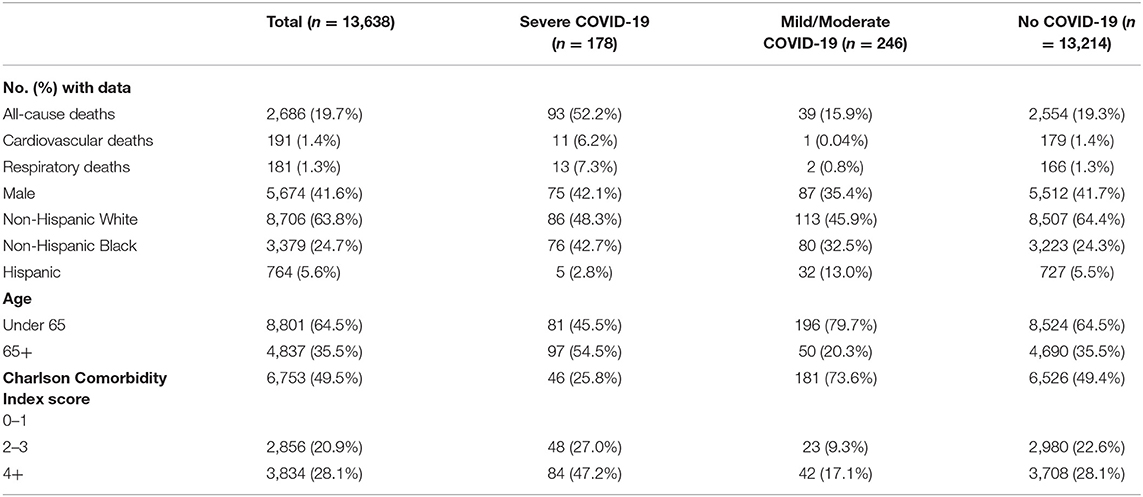
I'm curious how those studies would disentangle the effect of "COVID damages your health, and severe COVID damages your health more so you're more likely to die in the next year" from the effect of "if you are in worse general health, a COVID infection is more likely to be severe, and also you are more likely to die in the next year". Even if you try to control for factors like age, sex, smoker vs nonsmoker, BMI, etc etc you're likely to miss something. But maybe they did something clever with their control group that serves as a good proxy for "people who would have had severe covid and survived, but didn't get infected".
I'm interested to see which study you're referring to.