It is different in a big way. That extra device would most likely only transit this one user's messages. The Element bridge transits a ton of users and as such is an attractive target for mass surveillance.
> That device could've well been [..] hosted in the cloud.
The capability of self-hosting is very niche. Only technical people could pull that off. Element is working hard to make using this bridge so easy that your grandmother could do it.
In the end it isn't a huge deal, as most conversations are extremely innocuous, and those I care about I'll take the time to verify. But after all the trouble to proselytize Signal, I get nervous about large public projects that could, in my opinion, strictly reduce the security of my secure messaging system.
Yes, I totally agree that this would be a huge hassle. But what's your proposed alternative? Reaching out to every programmer in the world and convincing them to never write any software that can act as a Signal client? Or pushing for legal prohibition on any non-Signal developers creating software that can act as a Signal client?
Doesn't mean I'm in favor of such ridiculous things as you've suggested here.
Well, you can always switch to Matrix and have democratized and secure native messaging which uses a cryptographic protocol comparable to Signal. ;)
Also, obligatory xkcd: https://imgs.xkcd.com/comics/standards.png
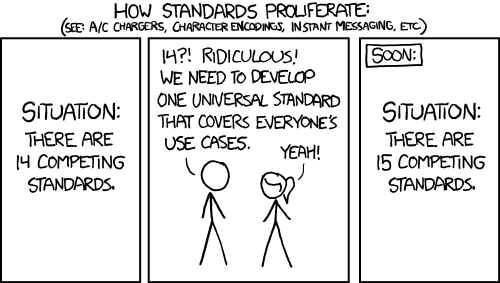
I've been through the pain of convincing people to Signal due to lack of better alternatives at the time. And I've done it yet again for Matrix. In this case, each move brought us closer to a global optimum so I'm not sorry for it.
An Element bridge is just a Signal client hosted on Element's infrastructure. Them using an Element bridge is no different than them using an extra device you didn't know about. That device could've well been insecure, or shared by many people, or hosted in the cloud. If you care about this, you should ask.