https://en.wikipedia.org/wiki/Gol_Transportes_A%C3%A9reos_Fl...
The Legacy's pilot footrest places the end of your shoes dangerously close to the transponder standby button.
https://www.bangaloreaviation.com/wp-content/uploads/2014/04...
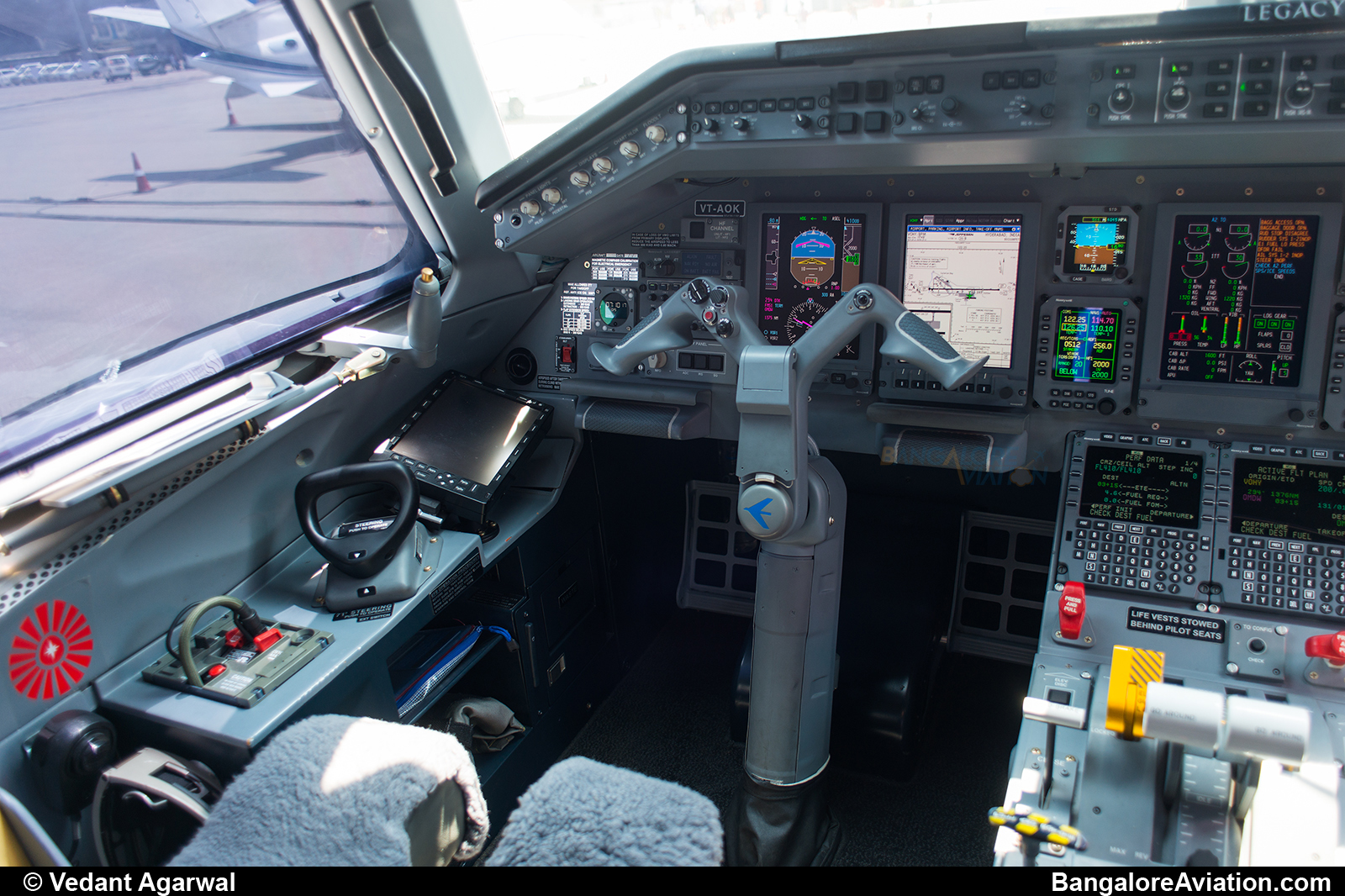
The footrest is below the white screen with the navigational chart on it. The radio and transponder panel is the black screen to the right of that, with the yellow and green text on it. The 0512 is your transponder code (squawk); the button to the left of that and down one row turns it off.
This resulted in the Legacy losing its TCAS ability, and the 737 it collided with being unable to see the Legacy.
There's a pilot at the controls so that the technology doesn't have to be perfectly secure.
If you want to walk around broadcasting fake ADS-B or Mode C signals, someone will probably find you in hours, and the only effect it will have is maybe reducing the throughput of the busiest airports if the weather happens to be particularly marginal that day.
TCAS II provides the pilot with specific instructions on how to avoid the conflict with traffic. These instructions are known as a “Resolution Advisory” (RA) and may instruct the pilot to descend, climb, or adjust vertical speed. TCAS II systems are also able to communicate with each other to ensure that the RA provided to each aircraft maximizes separation.
From https://nbaa.org/aircraft-operations/communications-navigati...
My understanding is these automated instructions override those from ATC