US WWII “internment” and “relocation” centers were actual concentration camps (“relocation center” was itself a euphemism, but “internment” referred to a formal legal distinction impacting treaty obligations.)
If someone says that something is "_literally_ a concentration camp" I think that most people will think of ovens and genocide.
Perhaps it's a regional thing, but that is how I interpreted it.
Though what they did certainly bore a strong resemblance to the Boer war concentration camps/manzanar,etc. whose purpose was to "concentrate" people into one place rather than industrially slaughter them.
Maybe it's just me, but I think it would have been more clear if you said internment camp if your intent was to refer to the broader context and not invoke a comparison to nazis.
https://en.wikipedia.org/wiki/Internment
Where it also makes the point that the nazi camps were primarily extermination camps.
Maybe take it up with them and get back to me if you feel truly passionate about this issue.
>Maybe it's just me, but I think it would have been more clear
Gosh, it's awfully ironic that this sentence would happen in a thread about how language policing is used as a distraction from important issues.
Is it more important to you how people use the term concentration camp or the fact that ICE lock up children in internment/concentration/[ insert favorite word here ] camps?
Well, that escalated quickly.
I don't think I ever said anything for or against what ICE is doing, in fact I tried not to because the only thing I wanted to say was that when using the words "literally concentration camps" people might read that as "camps designed to kill people" since that is the way I've been taught it (in history classes) and heard it (in general use).
I don't even live in the US so I have no say in this in a democratic sense. If I did I'd be against the way migrants are treated and want more humane treatment, but I don't think that should be relevant to what I said.
Seems unlikely.
From my perspective this conversation is as if someone said "working for XCompany is actual slavery" and I said "Perhaps don't use 'actual slavery' as a term for something that isn't that?"
There is usually a political motive behind what controversial things are called. There was an active push from the oil lobby swap out the terms for the climate disaster from “global warming” to the more innocent sounding “climate change”. Then recently some media companies made the political decision to start using the term “climate disaster” or “climate crisis”.
> working for XCompany is actual slavery
I don’t think this is equivalent (even though it sounds like it to your ears). The ICE facilities can accurately be described as concentration camps. The victims are kept against their will—i.e. imprisoned—in camps in dedicated camps. This is an accurate term. Slavery only applies when you are forced to work for little or no salary. I.e. I often use the word actual slavery when referring to prison labor. This is a political decision on my part. And you are free to criticize this choice of word. And you would be right to say it diminishes the term when compared to the horrible cattle slavery in the Americas until the 19th century. But it is still an accurate term.
I'm not really sure what your motive for trying to police my language was. All I know is that the reasons you have given me all seem rather unlikely.
A camp like Ravensbrück was a concentration camp (for women) while Auschwitz-Birkenau was both a concentration and extermination camp.
https://upload.wikimedia.org/wikipedia/commons/b/be/WW2_Holo...
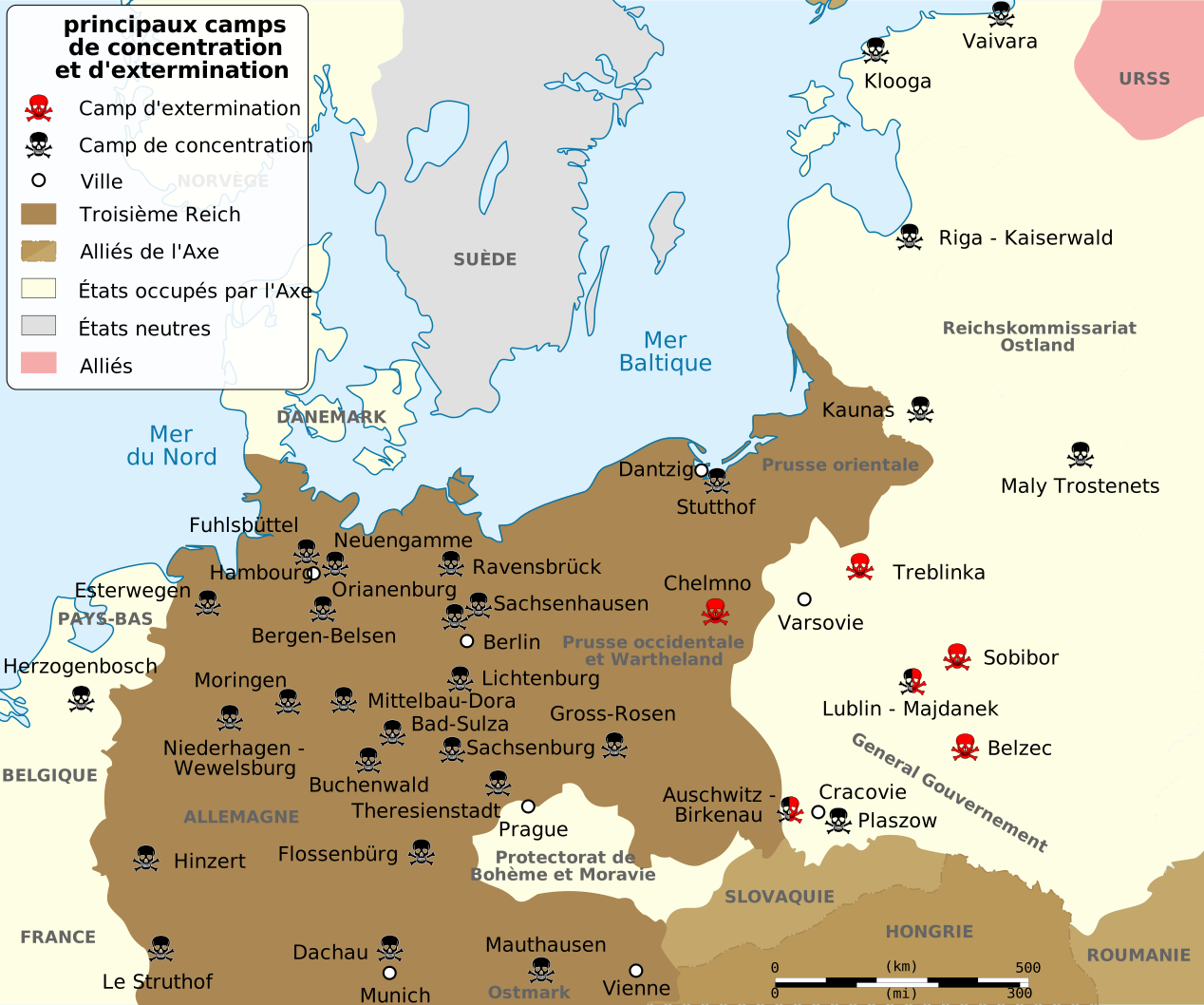
what's the paradigm of a concentration camp? if we go straight for Auschwitz we'll get nowhere, how about the Boer concentration camps? Origin of the term after all.
What was the purpose? To concentrate the Boer population during a total war against them, so they couldn't supply and hide the belligerents.
What was the outcome? Tens of thousands of preventable deaths, mostly from disease. Success in the war, from the British perspective.
So, let me turn my spectacles to your example of, may I quote?
> an actual concentration camp
Which appears to be a migrant detention center. To put it succinctly, migrants who enter the country without filling out paperwork, and get caught, end up in one of these places for months-to-years while USG figures out what to do with them.
So a Boer concentration camp is filled by the British riding into a farmstead or town, kidnapping the women and children, and driving them out to a field and sticking them in a tent. A migrant detention center is filled with someone enters the United States without following the rules which govern that sort of behavior, and then, gets caught.
Where is the war?
Where is the excess death?
Ah well. I'm out of time and patience to express my contempt for your abuse of language and disrespect for the real horrors which you cheapen with this kind of facile speech.
Enjoy the 4th of July.
Central America, where the US has a history of funding politically aligned factions in conflict, contributing to today's instabilities which drive people to our border.
> Where is the excess death?
Mostly Central America, but keeping people in crowded stressful conditions during a pandemic can probably account for a few more.
> To put it succinctly, migrants who enter the country without filling out paperwork, and get caught, end up in one of these places for months-to-years while USG figures out what to do with them.
The US first funds wars in these people's home countries, then refuses to let them in when they want to live in a safer country, then rounds them up and puts them in camps because they came in anyway. That sounds like a concentration camp to me, even if the death rate is lower than other instances of the same thing.
Pedantic attacks on word usage is fun, though. Let me try it:
> ICE, of course, runs an actual concentration camp which has a slightly more troublesome history than the word master.
The history of the word "master" includes the trans-Atlantic slave trade and the institution of slavery in the US, a well known and extremely long running atrocity. That doesn't seem less troublesome than current ICE activity.
But if you consider what is being said, instead of seizing on exact wording, you can see the points that the action of running these camps is more important than the choice of word used to describe a code repo, and that as a form of concentration camp, the camps are bad - not that slavery wasn't a big deal (my facetious straw man), and not that the US are the British and the detainees are the Boers.
A few responses seem to focus on two of the words chosen in that post, and ignore this point about misplaced focus on choice of words.
ICE, of course, runs an actual concentration camp which has a slightly more troublesome history than the word master.
Language policing is to racism what recycling is to global warming - an attempt to shift the focus away from elite responsibility for systemic issues to "personal responsibility" and forestall meaningful reform by placing emphasis on largely non-threatening symbolic gestures.