Edit:
Imagine a super popular Mexican company had chosen "Niu York" as the name of one of the most popular software products in the world. Wouldn't that bother you?
AFAIK “Monterrey”, “Monte Rey”, and “Monterey” are all alternate spellings from the Spanish-speaking world of “Monterrei”, the place name in Galicia from which many uses of the name (including the California place name) come, often (again, as in the California case) with personal titles of nobility as intermediaries.
> Imagine a super popular Mexican company had chosen "Niu York" as the name of one of the most popular software products in the world. Wouldn't that bother you?
Well, if I cared about the company or product, it might bother me a little that they failed to get the usual Spanish version of the place name (Nueva York) right, which most Spanish uses, including in product names, tend to use. But probably not even that, no. Maybe mildly amused.
Clearly Apple should have called it Men-h₃rḗǵs, right?
By the way, does it bother you at all that "Mexico" isn't properly spelled? Or is that OK because there aren't enough native speakers of Nahuatl to make a case for "Mēxihco"?
It wasn't until the late 20th century that the Royal Academy finally conceded that the standard spelling of Mexico should be with an X. This accommodation, however, was made begrudgingly, as you can tell perhaps by reading between the lines of their official position on the matter:
https://www.rae.es/dpd/M%C3%A9xico
Spanish spelling is standardized in a way that is almost unimaginable in the English-speaking world today. The driving institution behind this standardization is the Royal Academy, which has influence not only in Spain, but also throughout Latin America. It would not be unprecedented at all for a city or province to change the spelling of its name in order to conform to Spanish's universal spelling rules.
Rather than being a corruption of the original spelling, the current spelling of Monterey, California seems to be one of the variations in use locally at the time of the invasion.
Seems unlikely as the /rr/ sound and orthography comes from the Latin, before Spanish even existed.
https://history.utah.gov/wp-content/uploads/2018/07/Radefeld...
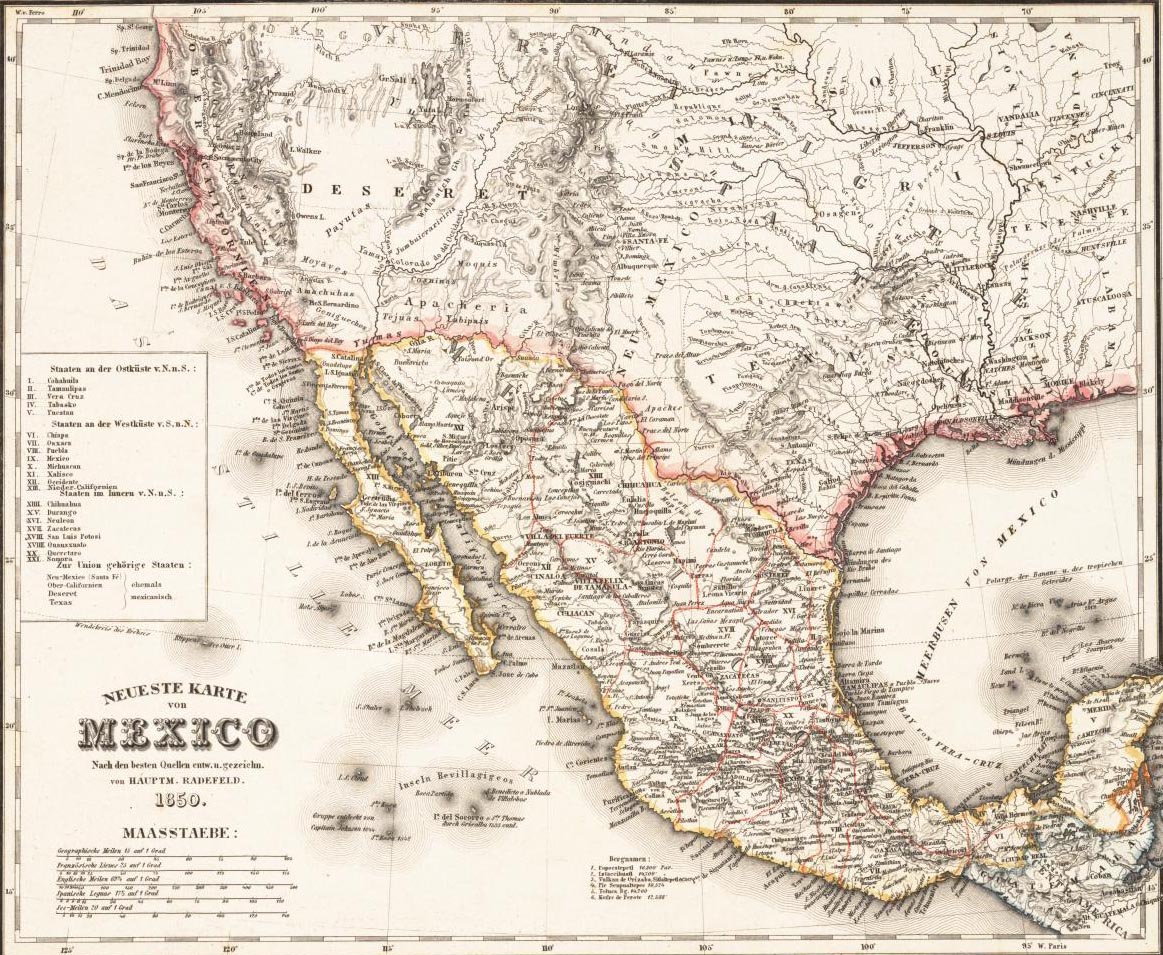
This American map published at the time of the Mexican-American war labels it "Monterey B."
https://history.utah.gov/wp-content/uploads/2018/07/Mitchell...
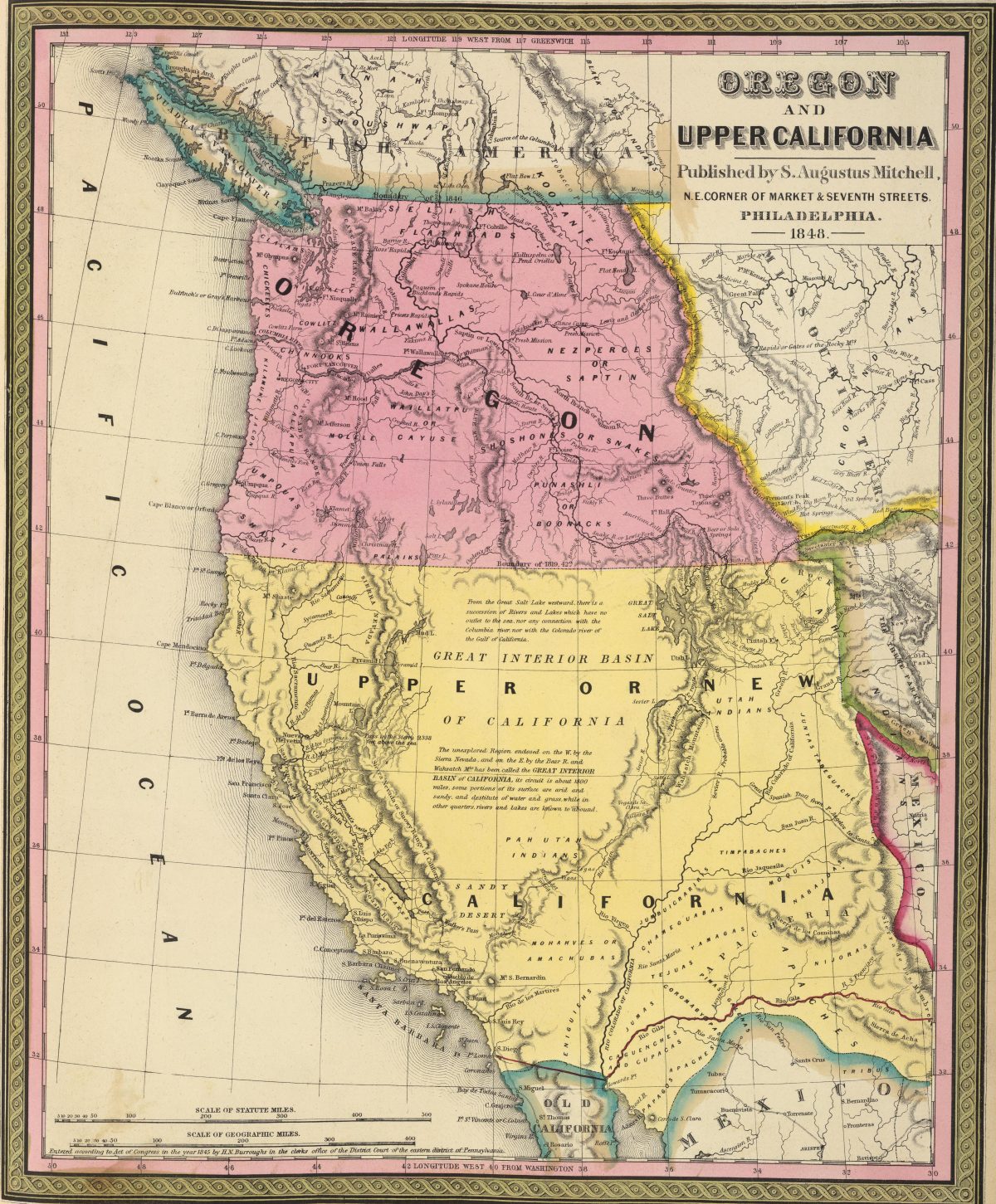
This American map published before the war also labels it "Monterey B."
https://mapgeeks.org/wp-content/uploads/1845-Map-of-Californ...
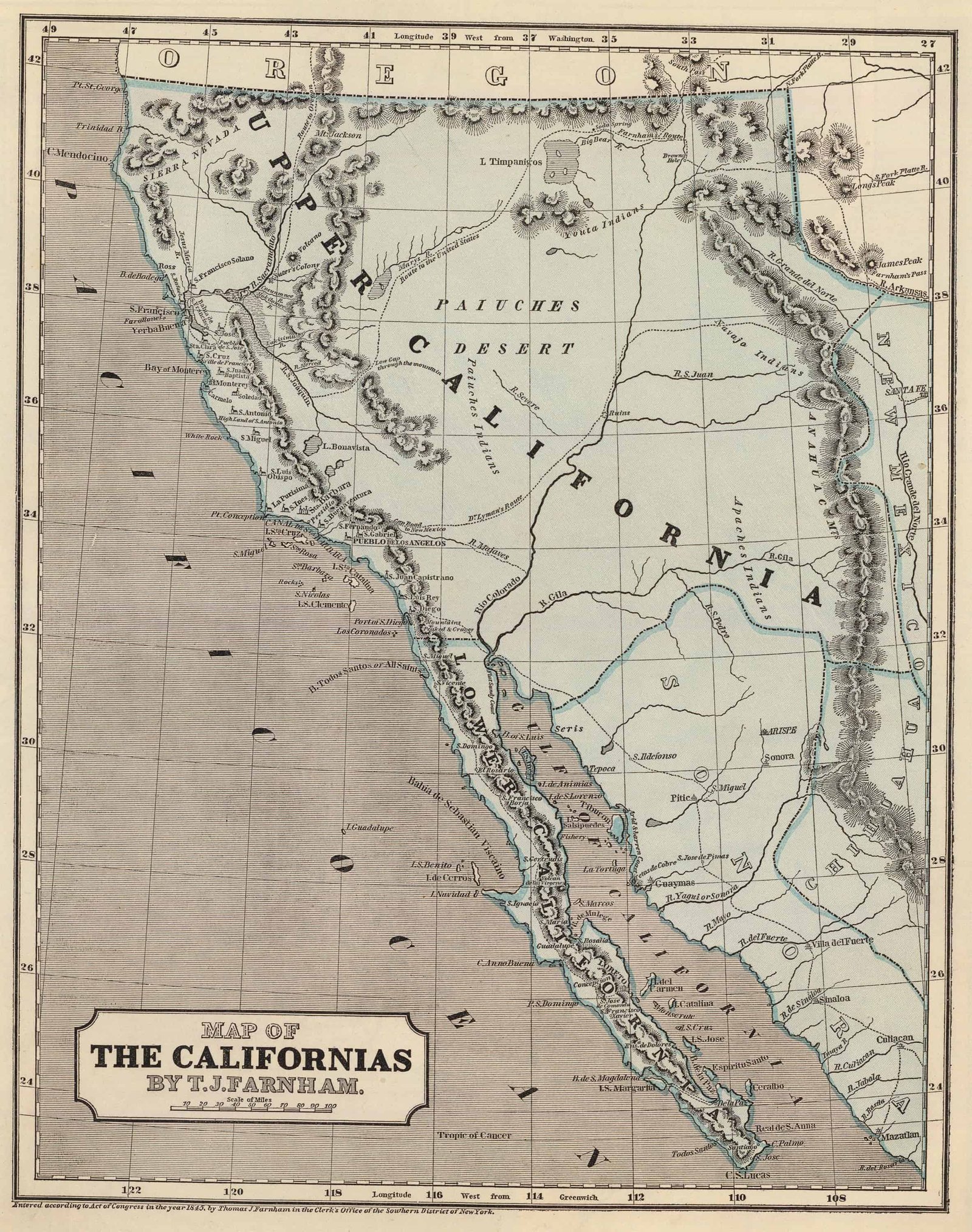
Here's a map produced by a British cartographer showing the spelling to be "Puerto de Monterey" in 1745:
https://en.wikipedia.org/wiki/History_of_California#/media/F...

This 1650 Dutch map seems to spell it "Monterey", although the handwriting is archaic and a little bit difficult to interpret:
https://www.wdl.org/en/item/2661/view/1/1/
Perhaps most convincingly, this Spanish map published in Madrid in 1802 documents a 1603 expedition, one of the first to navigate the California coast. It uses the spelling "Puerto de Monte Rey".
https://digitalcommons.csumb.edu/hornbeck_spa_1_a/22/
None of which is to say that the "Monterrey" spelling wasn't used. The following English-language map from 1838 uses the "proper" Spanish spelling:
https://upload.wikimedia.org/wikipedia/commons/a/ac/Californ...

I'm sure there are plenty of other examples using a spelling of "Monterrey" as well.
There is basically no place on the entire planet that has never changed its name. Big Sur, Catalina, Mavericks, those places used to be called something else, too.
I'm not saying should have used the original name, but rather that it should have picked a different location.
Monterey isn’t a word, it’s a name. It’s written correctly.
Monterrey in Spanish is written with 2 Rs.
Yes, I know the city in California is spelled with just a single R. Its original name was actually "Puerto de Monterrey". It probably changed to a single R when Mexico sold California (and other territories) to the US in the mid 1800s.
Edit:
See, told you this would offend US sensibilities.