Isn't that a direct outcome of the reversibility aspect? [0] Technically it has 2 of everything.
[0] https://upload.wikimedia.org/wikipedia/commons/thumb/0/07/US...
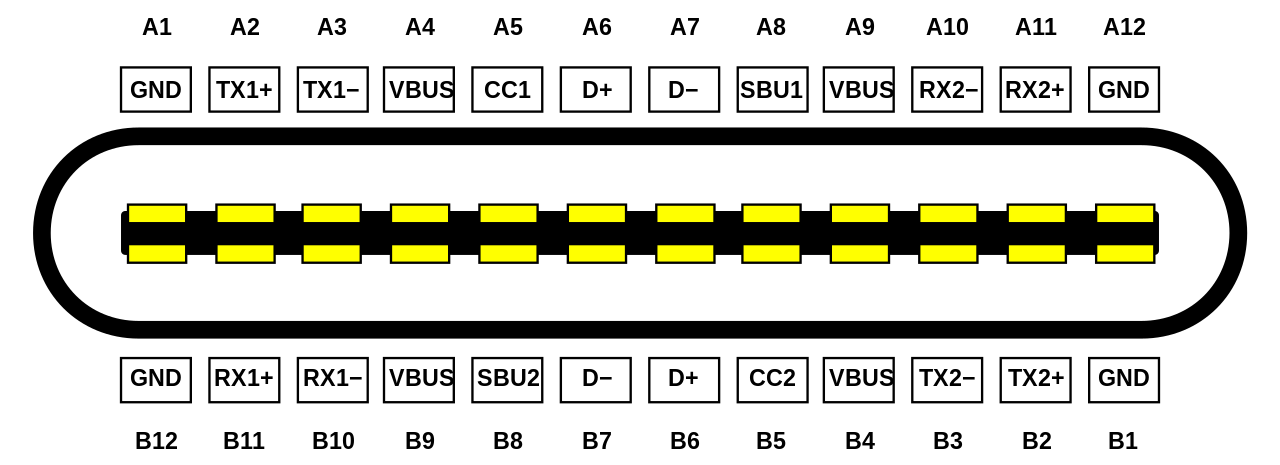
Not everything. The USBFS pair (D+/D-, at the center of the connector) is mirrored; the two D+ lines are connected together. This is not true of the four USBSS pairs -- TX1+/- and TX2+/- are separate, and can both be used at the same time for different purposes. The CC1/2 lines (which aren't mirrored either) are used as part of the process to negotiate how these pairs are used.
I meant it the other way around. The non-reversible type A does not have this extra pair regardless of standard. But the type C is reversible and short of having pins automatically reconfigure based on the detected position, the only straightforward way to achieve this reversibility is to double the number of pins. So one side of the type C connector perfectly mirrors the other (but flipped for reversibility) mechanically and electrically.
I'm fairly certain they are using double the number of USBSS because they're available due to the mirroring. It was the easiest way. Unlike the control channel or side band, you can actually benefit from using all the pairs for data transmission since they're already there.
Not precisely. The type C connector has four distinct USBSS pairs; the type A connector only has two. This allows the type C connector to be used to carry DisplayPort or other high-speed data alongside USB.