In any case, it's not close at all either for that specific example or in general, not least considering that a nuclear plant can produce 24/7 and that solar often does not reach peak production because of the weather.
"A solar PV facility must have an installed capacity of 3,300 MW and 5,400 MW to match a 1,000-MW nuclear facility’s output, requiring between 45 and 75 square miles. For comparison, the District of Columbia’s total land area is 68 square miles." [1]
[1] Nuclear Energy Institute @ https://www.nei.org/news/2015/land-needs-for-wind-solar-dwar...
1,000 acres, https://en.wikipedia.org/wiki/Beaver_Valley_Nuclear_Power_St...
1,782-acre, https://en.wikipedia.org/wiki/Byron_Nuclear_Generating_Stati...
2,767 acres https://en.wikipedia.org/wiki/Callaway_Nuclear_Generating_St... for just 1,190 MW.
Some are significantly more compact for example 391-acre https://en.wikipedia.org/wiki/Catawba_Nuclear_Station, but that’s surrounded by water.
And it's possible to build much denser plants. The Shin-Kori facility in Korea is massive energy relative to the land it uses. Nuclear power is far more energy dense than solar or wind. This is just thermodynamic fact.
Callaway is 1,190 MW on 2,767 acres at 87.70% over it’s useful lifespan, but that’s ignoring permits + construction = 10 years and decommissioning which takes ~30 year. Even a generous 55 year operating lifespan is still reduced to 87.7 * (60 / (60 * 10 + 30)) = 48% capacity factor. Using a 20% capacity factor for solar (aka non tracking in a good but not great area).
That’s 1,190 MW * 48/20 = 2856 MW. A very good modern panel is hitting 220w/m2 add spacing, equipment etc, and 110w/m2 is a safe bet. That’s 2856 * 1000 * 1000 / 110 = 26,000,000m2 or 26 km2 or ~6,424 acres solar vs 2,767 acres nuclear. Lower efficiency panels bump that by 25% or so.
Clearly a win for nuclear, but not a 100,000 acre win.
PS: That said, this is largely a moot point as even with reprocessing we would quickly run out of fuel with large scale indoor farming.
You also have to adjust for the overproduction necessary to make intermittent sources a reliable primary provider of electricity. In far north or southern latitudes, angle of inclination is such that solar panels collect ~70-50% less energy than near the equator. This gets worse with seasonal fluctuations, which are more extreme the closer to the poles you get. Add weather on top of this and it can drop even further.
This might not seem like too big an issue, but keep in mind that most of the world's electricity consumption is in North America and Europe. These places don't have as good weather for solar.
100,000 acres is roughly the ratio that the article came up with, a factor of 75.
> PS: That said, this is largely a moot point as even with reprocessing we would quickly run out of fuel with large scale indoor farming.
No, we wouldn't: https://www.forbes.com/sites/jamesconca/2016/07/01/uranium-s...
https://en.wikipedia.org/wiki/SAFSTOR “For nuclear power plants governed by the United States Nuclear Regulatory Commission, SAFSTOR (SAFe STORage) is one of the options for nuclear decommissioning of a shut down plant. During SAFSTOR the de-fuelled plant is monitored for up to sixty years before complete decontamination and dismantling of the site, to a condition where nuclear licensing is no longer required. During the storage interval, some of the radioactive contaminants of the reactor and power plant will decay, which will reduce the quantity of radioactive material to be removed during the final decontamination phase.”
For example, Crystal River 3 (Florida) “Duke Energy announced in Feb-2013 that the Crystal River NPP would be permanently shut down.” “Systems Removal & Building Remediation(2070–2072)“ and that’s if things go well. https://en.wikipedia.org/wiki/Nuclear_decommissioning
As to indoor farming.
“It’s not just that the 4 billion tons of uranium in seawater now would fuel a thousand 1,000-MW nuclear power plants for a 100,000.”
That sounds like a lot, but of you want ~100w of power per m2 that’s 0.1GW of power per km2. So your 1,000 GW power plants are only replacing 10,000km2 of farm land. Meanwhile agriculture takes 51,000,000km2 worth of land. In other words replace 20% of global farmland and you got ~100 years worth of uranium from all the worlds oceans, it’s replaced by rocks.
But, “And those rocks contain 100 trillion tons of uranium.” gives you 2,500 years which is not bad, but that’s not going to be replaced.
PS: You might be able to beat 100w/m2 indoors, but remember this is also for 20% of farmland.
How did you arrive at these figures? I think you missed a conversion from pounds to tons.
Current global uranium consumption is in the hundreds of millions of pounds annually - hundreds of thousands of tons. And this is without reprocessing. Nuclear power already generates 10% electricity globally. Even if we assume a 200x increase in consumption from 200 million pounds to 20 billion pounds that still only 10 million tons of consumption annual. 100 trillion divided by 10 million is a lot more than 2,500.
If the land is reserved and left to nature that is still a positive thing because that helps the environment and biodiversity. But I'm sure that they could put solar panels on it if they wanted.
The point is that this land is not required for production and in any case solar require much, much more land, so, no, it's not even close.
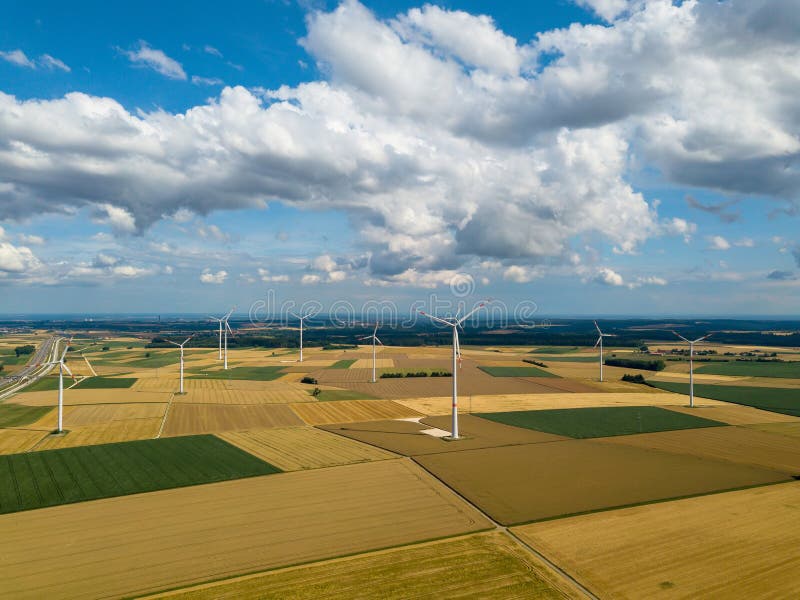
When you adjust PV for capacity factor the difference ends up at over an order of magnitude.
75% capacity factor * 50y / (50y + 10y construction + ~30y decommissioning) = 42% capacity factor which is higher than solar but not by that much.
But let’s assume you’re at a 1.5x capacity factor advantage. So 1.5 GW of solar = 1.0 GW of nuclear. 1.5GW / 220w/m2 = 2.9 square miles of panels plus panel spacing and whatever infrastructure is needed. Double it to be really pessimistic and your under 6 square miles.
That's not how it works. PV capacity factor is 11-12% to the 90-95% of nuclear meaning you need to install about an order of magnitude more PV effect not 1.5x.
As we are talking land use, construction and decommissioning is a major hit to nuclear. But with solar you can operate continuously by just swapping panels and replacing wires etc as needed.
Basically, in steady state a 50 year nuclear power plant spends the first 30 years with the previous reactor being decommissioned, and it’s last 10 years with it’s replacement being built. Effectively you need 1.8 locations for a single power plant.
Also, I used a specific 75% capacity factor over it’s operating lifespan in that calculation. Some are higher, but the trend is down over time so you want to use an old reactor as your baseline. Here is 72.5% Decommission date 29 June 2020 https://en.wikipedia.org/wiki/Fessenheim_Nuclear_Power_Plant
>"Replacing panels is just a cost question"
Sure, I bet you won't need more than 2 guys and a pickup truck to install, maintain and replace the 120 million panels it would take to create the equivalent to a site with 4 modern reactors. After all, that's only 35 000 panels to install every day if you want to build the site in 10 years. Everything is magical with solar.
>"2c/kWh"
That's a hypothetical figure for 2050.
https://en.wikipedia.org/wiki/Crystal_River_Nuclear_Plant https://en.wikipedia.org/wiki/Rancho_Seco_Nuclear_Generating... https://en.wikipedia.org/wiki/Shippingport_Atomic_Power_Stat... https://en.wikipedia.org/wiki/San_Onofre_Nuclear_Generating_...
Etc
I mean in theory sure it seems like it should happen, but in practice not so much.
I would presume it's a matter of very few new nuclear reactors being built. Some smaller sites will be decommissioned regardless though.
Anyway to use a specific example Capacity factor 26.6% (average 2015–2018) https://en.wikipedia.org/wiki/Topaz_Solar_Farm.
Bulk panels are $0.29 per W or 290$ per kW. PS-P72-330W https://sunelec.com/
If 1kw is worth 0.01997 $/h * 24 * 0.266 * 365 * 20 = 930$. Of course they don’t instantly break exactly in year 20. They lose efficiency over time so averaging ~90% over 25 years which is ~100% over 22 years. https://sunelec.com/wp/wp-content/uploads/2020/09/P72_outlin...
I can’t find an exact breakdown of costs spent on panels vs interest, instillation, inverters etc. But, at most we are talking about fractions of a cent worth of subsides to hit 2c/kWh.
That's a calculation based on 1kW of installed capacity, which is about 3 of those 345W panels so the earning per panel over its lifetime (in sunny southern California btw) is about $310.
Also the $ sign goes in front of the number.
For example the the Brunswick nuclear power plant in North Carolina, covers 1,200 acres or 4,860,000 square meters for 1,858 MW = 382 w/m2. It’s stated lifetime capacity factor is 75% which is much higher than solar, but that’s ignoring the long construction and decommissioning process afterwards.
You can find both higher and lower energy density examples, but I personally was surprised how close they where.