https://www.pewresearch.org/hispanic/wp-content/uploads/site...
Where I live low skilled labor is paid well simply because otherwise you wont find anyone who wants to do the job. That is how it should work, educate everyone and there will be a shortage of low skill labor driving up their wages.
- Many overseas markets opened to more outsourcing. Nixon "going to China" was one of the big ones.
- The rest of the world had pretty much fully recovered from WWII and started being more competitive with US manufacturing.
- The collapse of Bretton Woods and the removal of the gold peg for the US dollar freed central banks to pursue aggressive monetary policy.
- Automation really took off in the 1970s, and the computer revolution really got going.
- Women entered the work force in large numbers. In case anyone misreads: I am not against this. I'm just pointing out the supply and demand effects.
- Unions started declining for numerous reasons including the rise of anti-union politics and corruption in unions themselves.
- Increased racial equality is another thing I'm not against, but I am forced to point out that it increases the supply of labor in many labor markets that had been at least partly closed to non-whites.
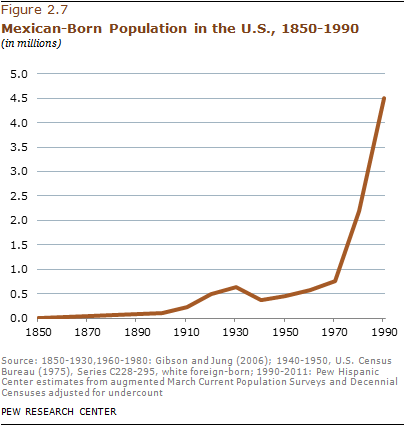
- Finally, more immigration is definitely on the list too.
... there's a lot more, but those are the big ones. Almost everything I listed is deflationary to labor prices. So many things hit in the 70s it's like the floor dropped out. It's amazing US labor has managed to hang on at all.
Imo wage stagnation in the US seems to be far more attributable to deregulation, decline of unions and pressure from public companies to constantly cut costs to justify rising stock prices.
I am not exactly sure when it started, but if the topic is immigration impact on stagnating wages, I believe unless I am mistaken that the US-Mexico border was in fact a lot more open up to the 50’s, at least for cheap seasonal agricultural workers, until an ex marine general took over immigration enforcement sometime in the 60’s (or maybe 70’s?) with the perverse effect of forcing more seasonal immigrants to stay rather than risk going back home and not being able to come back.
However, the wealthy love this policy. Cheaper labor to build their homes, mow their lawns, clean their homes, and staff their low skill employment needs both at home and their businesses.
Please explain how you know this. Was there ever any bottom at all for the cost of low-skilled labor?
More people means more workers, generally, I accept that. But more people also means more consumption, generally. And that requires more labor. Surely you don't think that normal population growth implies cheaper labor, right?