First, keep a log of each viewing session. Note time and date, location, sky conditions, what you viewed. If you're so inclined, make sketches of what you see. Its nice, later on, to have a record of what you've look at and how it may have changed when you go back to it.
Second, find a local astronomy club you feel comfortable with. Most people will go out of their way to help a newbie. Attend any star parties that they may hold. They're great ways to see how others work and to see what other types of scopes can do. You will also learn how to better use what you have.
In any case, enjoy your scope. They can be great fun and they really bring home how wonderous the skies are.
Later, we somehow attached my camera to the telescope -- it must have just screwed on to the front, as you would attach a filter, since it's not a DSLR with a removable lens. It does have an excessively long zoom (600mm, it's a Sony RX10 Mk IV).
It took some fiddling to get the two devices to work together. We had to realign the telescope by finding stars on the camera's screen, work out where to manually focus the camera, and what settings (noise reduction etc, as well as ISO, aperture, shutter speed and so on) to use.
Combined, we were able to take these photographs of some nebulae[2-3] and a galaxy[4]. I don't remember, but I think the point was that these were not visible just by looking through the telescope.
It's a reasonably expensive camera, but gave noticeably better results than the astronomer's own Canon EOS 760D. If you don't have something similar, try borrowing a friend who likes wildlife / bird / sport photography or similar.
[2] https://matt.blissett.me.uk/photos/2018/2018-09-04-1/13.jpg?...
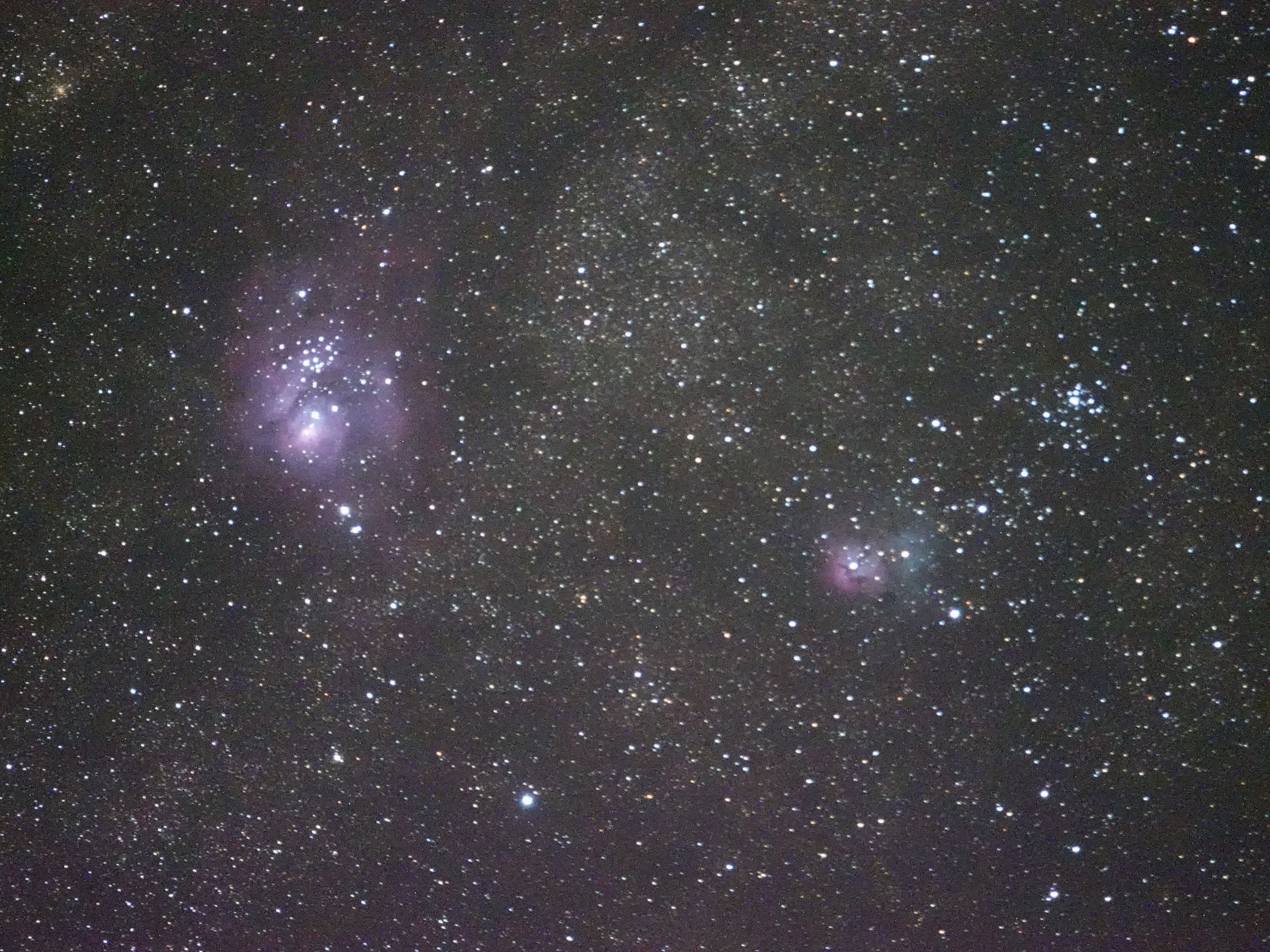
[3] https://matt.blissett.me.uk/photos/2018/2018-09-04-1/12.jpg?...
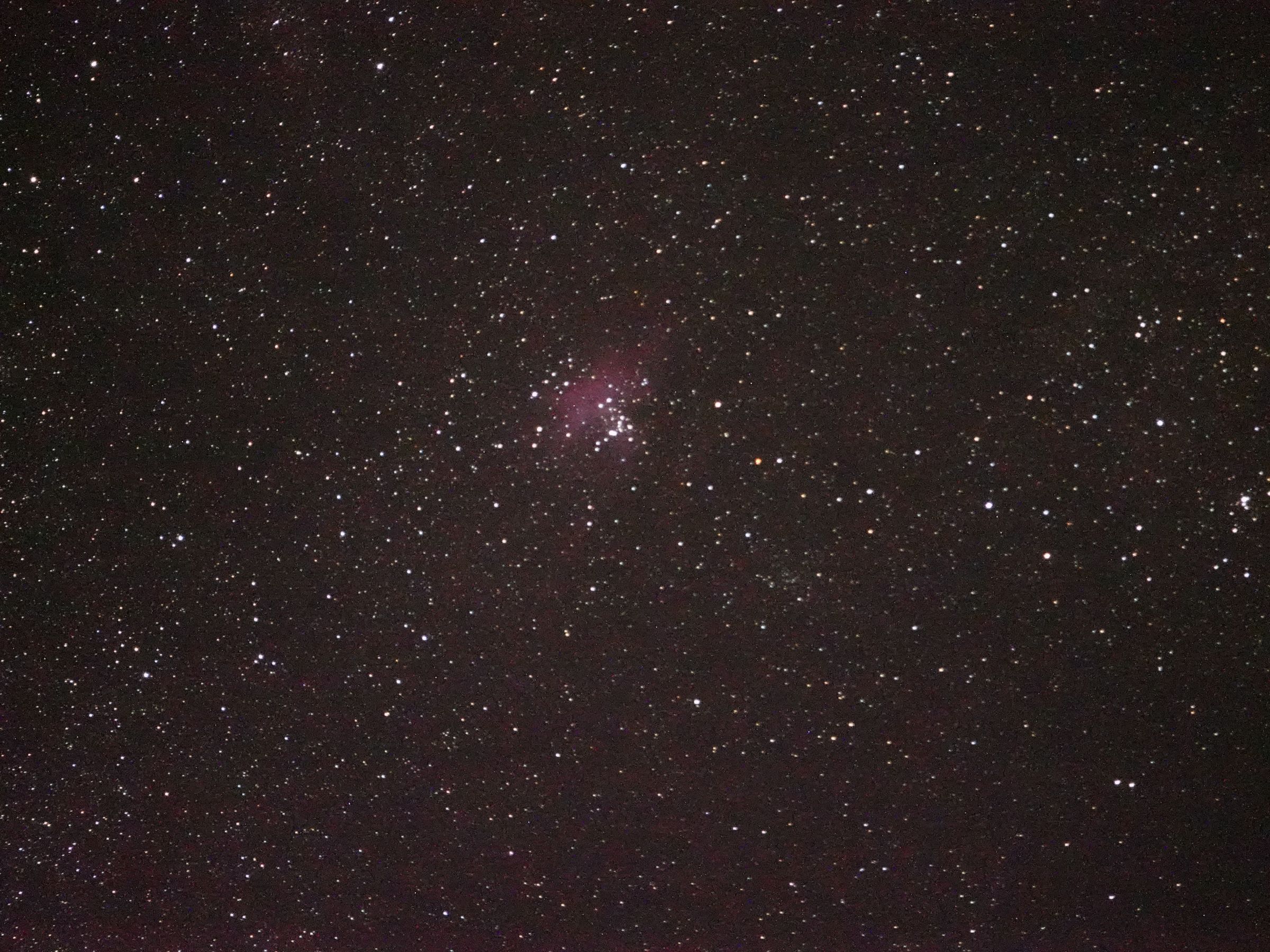
[4] https://matt.blissett.me.uk/photos/2018/2018-09-04-1/17.jpg?...
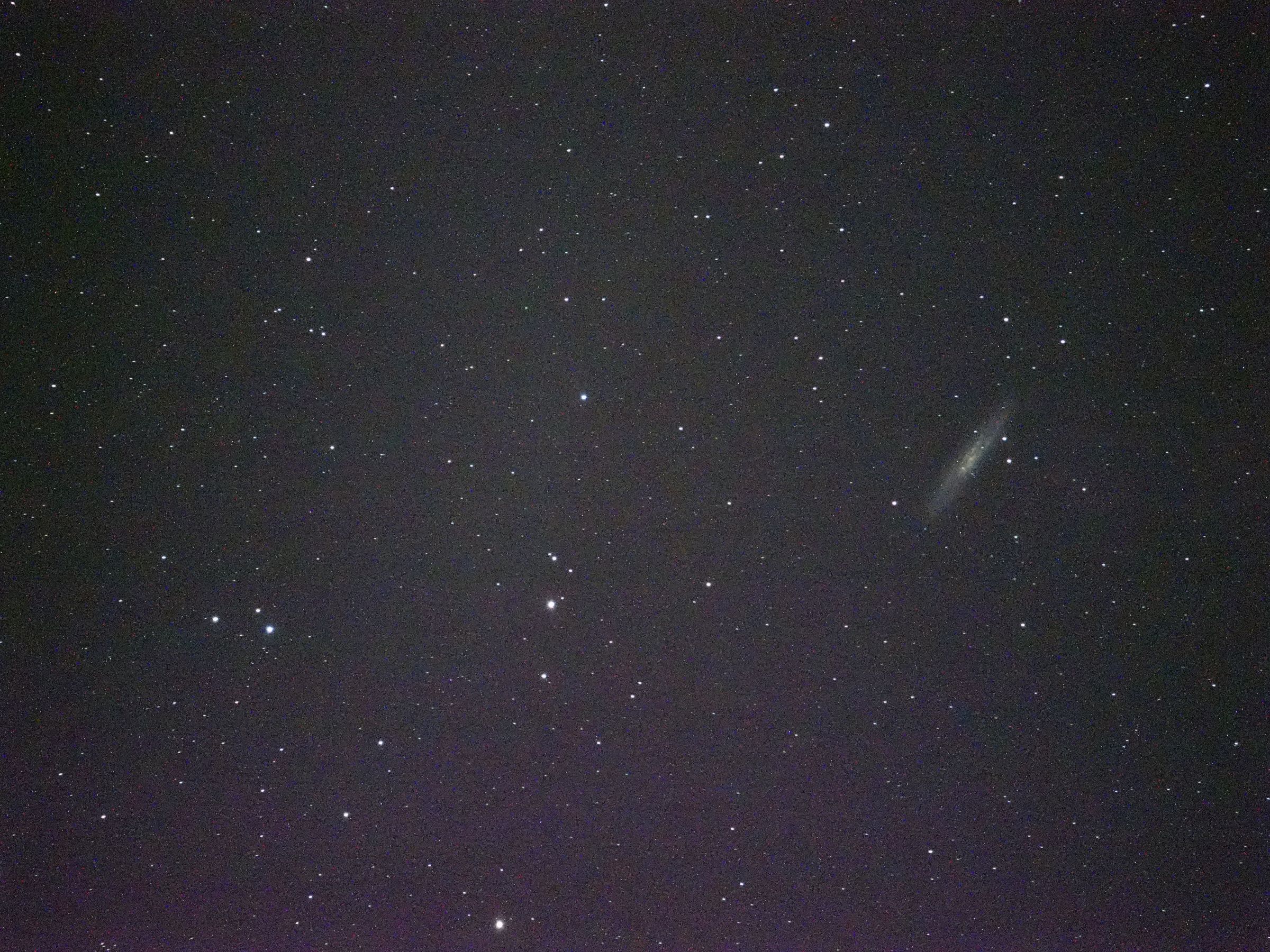
(All are 30s exposures at f4 with ISO 8000. Remove the ?w=2400&h=1800 if you want to see the original size. If someone recognizes the nebulae and galaxies, please let me know what they are -- I lost the notes I took at the time.)
12.jpg [4] and 17.jpg [5] are still in the queue.
[1] http://nova.astrometry.net/user_images/4204596#annotated
[2] https://en.wikipedia.org/wiki/Lagoon_Nebula
[3] https://en.wikipedia.org/wiki/Trifid_Nebula
[0] http://nova.astrometry.net/user_images/4205995#annotated
Oh - and sunspots. Meaning you turn your telescope around and project the picture of the sun.
But one day soon, I am going to order a real one. (But I also always wanted to have my own observatory. And I guess, if I have that, .. I can't wait for my own space based telescope. Ah yes, the greed ..)
Anyway, enjoy what you have :)
I could make out the rings of Saturn from my backyard and it was a special type of magic, an unforgettable experience the first time it happened.
One thing to know though, you won't see the planets as they often appear in pictures, those are usually made from hundreds of long exposure shots stacked and processed to bring out the detail. You pretty much just see small bright spots in the sky with a little surface detail if your optics are good enough. There is something about seeing far away planets with your own eyes however which feels magic and photos can't compare to the experience.