https://www2.bfi.org.uk/news-opinion/sight-sound-magazine/re...
One criticism:
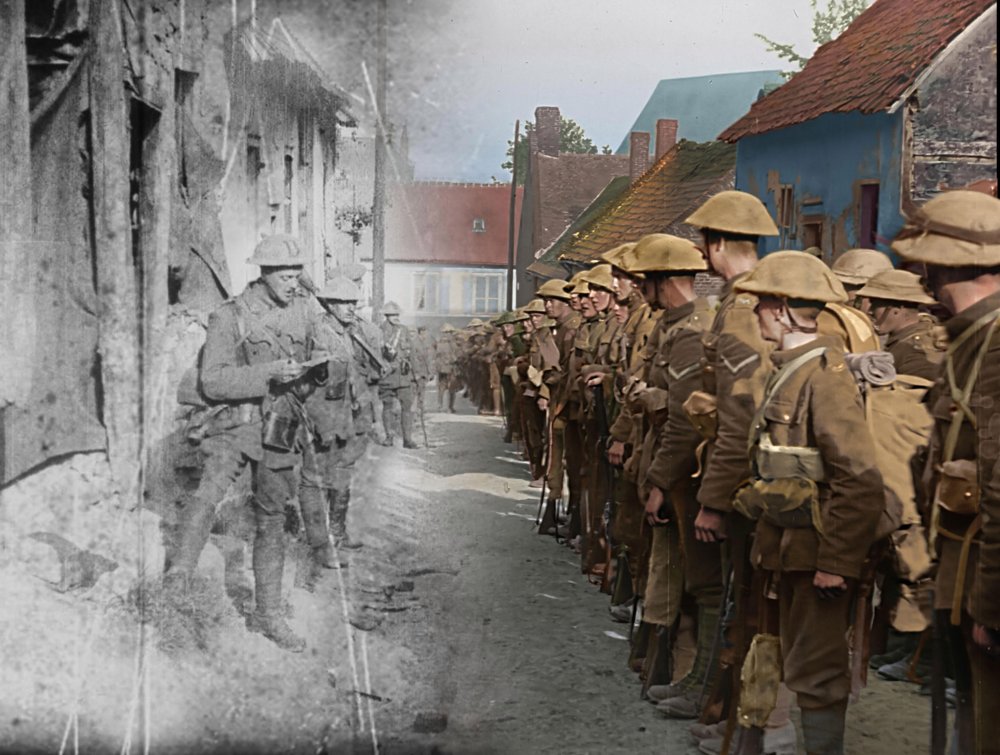
"However, it’s a bizarre sight that greets us, and not just because we lose the top and bottom of each frame. The effect is initially impressive, but that soon wanes. Almost every man has a creamy, peachy skin tone, and the grass in each shot is a warm, yellowy green. The sky is blue. If it weren’t for the daubs of bright red blood, and the bomb craters, this would risk being a unnaturally prettified image of war, with remarkably consistent scenery. These are really incredible images – so homogenising them in this way does them a disservice. It’s not easy either to dispel the thought that all these colours (as well as many of the sounds) are simply guesswork: the colour of hair, blankets, signs and wildflowers having been plucked out of the air." (https://silentlondon.co.uk/2018/10/16/lff-review-they-shall-...)
That's an interesting commentary on how much technology has advanced, and how we have become so desensitized to it. Consider that when silent films first started, the movie of a train coming right at the camera scared the audience so much that they ran out of the theatre to get out of the way of the train, IIRC.
I agree on your point regarding engaging audiences. Saving Private Ryan and Dunkirk probably taught more people about WW2 than many classes or books.
Finally, there's an education factor at play. Young people deserve the best possible chance they can get to engage with their history, especially when it offers such a tremendously impactful lesson. And like it or not, I think 90% of people are going to be more engaged, not less, by well-curated, well-produced and respectful recreations of the past. Jackson recorded the SFX using original historical weapons, and colored uniforms using historical examples.