http://www.eclipse.org/ajdt/EclipseCon2006/shots/junitTestsP...
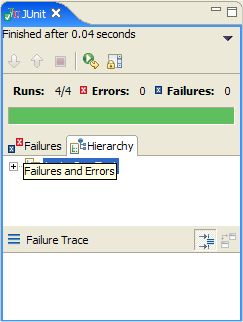
The idea is that you write a few lines of code, test it (most likely you'll get red), and you keep fixing your code until you get green, and only then you proceed to the next task.
As far as I know, it started with jUnit on Eclipse, and then others implemented the concept on other languages / IDEs.
In Smalltalk/Squeak, you can write the Unit tests and the code you're testing alongside each other, live, from the debugger. It certainly makes things easier being able to see the live objects, in deciding how they should behave. And by testing the objects in situ, you pretty much know your code is going to run as you expect.
The term "green bar" is used, by extension, to refer to the notification that all tests passed, even in colorless console-based frameworks.
(Naturally, I'd run the program afterwards to make sure it really worked - but if it didn't, I could just consider that a bug in the tests, write the test, fix the code, and close the bug. Everybody likes closing bugs, so there's the reward...)
Doctest is great too, since it's pretty common to use the Python interpreter as the first indication that your code works. Then you just paste the session transcript into the docstring, and you're done.